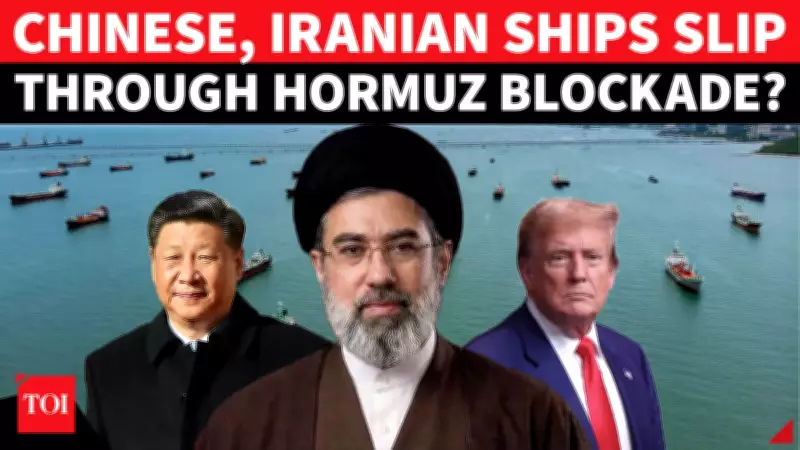
Iranian and Chinese Vessels Navigate Strait of Hormuz Amid U.S. Blockade
In a significant development, ships associated with Iran and China have reportedly passed through the strategically vital Strait of Hormuz, despite the United States initiating a military blockade on Iranian ports. This action challenges the enforcement of U.S. restrictions in one of the world's most crucial maritime chokepoints.
Maritime Tracking Data Reveals Defiance
According to insights from the maritime tracking firm Kpler, at least two vessels managed to cross the Strait of Hormuz shortly after the blockade was imposed. The vessels included a bulk carrier and a tanker, both of which proceeded without any interception by U.S. forces. The situation grew more complex when a U.S.-sanctioned tanker linked to China also traversed the strait, after initially appearing to turn back.
Iran's Mocking Response to the Blockade
Iran responded to these events with sharp and sarcastic commentary. The Iranian embassy in Ghana notably joked that the captain of the tanker had discovered a method to "skip the ads," a mocking reference to evading the U.S. blockade. This rhetoric underscores Tehran's defiance and attempts to downplay the effectiveness of American military measures.

Broader Context and Implications
The Strait of Hormuz is a critical waterway for global oil shipments, and any disruption or defiance here can have far-reaching consequences. The passage of these vessels highlights potential vulnerabilities in the U.S. blockade strategy and raises questions about its enforcement capabilities. This incident occurs against a backdrop of heightened tensions, with recent reports suggesting:
- Former U.S. President Trump considering limited strikes on Iran after failed talks.
- Hezbollah conducting missile and drone strikes on Israeli military targets.
- Trump rejecting further negotiations with Iran, leading to spikes in oil prices.
- Iran warning of forceful responses to U.S. naval deployments in the region.
The defiance by Iranian and Chinese ships not only tests U.S. military resolve but also signals a potential escalation in regional conflicts. As global powers navigate these turbulent waters, the strategic importance of the Strait of Hormuz remains a focal point for international security and economic stability.