Iranians in India Paint Grim Picture of Tehran's Reality
Iranians residing across India are receiving horrifying updates from their loved ones back in Tehran. The messages describe a city in chaos, with hospitals overflowing with corpses and authorities using heavy machinery to clear bodies from the streets.
Families Forced to Pay for Bullets That Killed Their Children
Abgine Khaki, a Tehran native now living in southern India, spoke with her parents on Tuesday evening. While they confirmed their safety, they painted a dire picture of their surroundings.
"My father told me hospitals are full of bodies," Khaki revealed. "The administration is using bulldozers to clean the streets. They're not even handing over the dead to families unless they pay — around 500 million Toman, which equals about $4,000 or Rs 3,60,000."

She expressed outrage at additional demands from some officials. "Some officials are demanding the price of the bullet, too. What kind of state does that to its own people?" Khaki questioned.
From Protests to Battle for Survival
What began as widespread demonstrations against the regime has transformed into something more desperate. Many Iranians now describe the situation as a fight for basic survival.
Khaki explained the economic desperation gripping ordinary citizens. "People can't even afford bread and eggs. Our parents' generation regrets not speaking up when they could. Now they are backing us. We want this regime gone. At any cost."
Communication Blackouts and Constant Fear
For Iranians abroad, the information blackout creates additional anxiety. Bahaar Ghorbani, who recently moved to Finland from India, managed a brief connection with relatives during a temporary lifting of communication restrictions.
"On Tuesday, when international calls were permitted for a short time, she was able to connect with relatives — but only for 30 seconds," Ghorbani shared. She still doesn't know whether her parents in Tehran are safe.
She described the daily reality in Tehran. "There's a curfew every day from 3pm until early morning. The Revolutionary Guard are on the streets, but people still come out. They know they could die, but they come anyway."
Ghorbani noted a dangerous escalation in force. "Security forces had stopped using pellet guns. They are firing live bullets now. They're not sparing anyone — not women, not children."
Iranians in Delhi Stage Embassy Protest
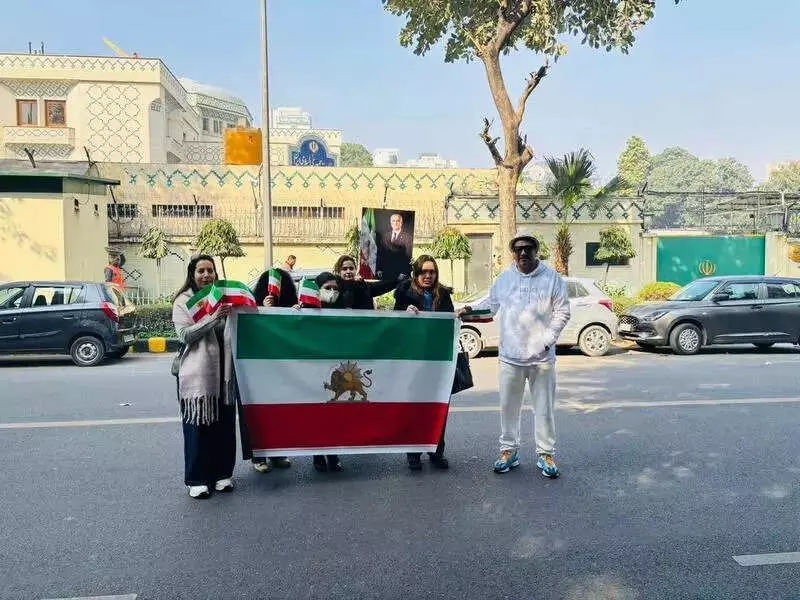
In New Delhi, a group of Iranians gathered outside their embassy on Wednesday. They waved the pre-1979 national flag featuring the Lion and Sun emblem in a symbolic act of defiance.
Mohammed, one of the protesters, explained their purpose. "We came here to speak up for our brothers and sisters. We want Indians to know what's happening — and we want their support." He spoke to reporters over the phone from the protest site.
Indian Government Issues Urgent Advisory
The Indian embassy in Iran issued a critical advisory on Wednesday. It urged all Indian nationals, including students and pilgrims, to leave the country by any available means, including commercial flights.
Currently, at least 3,000 Indian students remain in Iran. Approximately 2,300 of these students hail from Kashmir.
Kashmiri Families Express Growing Anxiety
Some families managed to contact their children earlier this week. The reports showed a consistent pattern of students confining themselves to hostels and avoiding any outdoor movement.
Mohammed Amin Bhat from Srinagar has a daughter studying medicine in Shiraz. "The advisory has made us more anxious," he admitted. "Flights are expensive, and because of the internet blackout, we can't even send tickets across. We just tell them to stay safe."
Shamiq Parvaiz, also from Srinagar, faces similar worries. His 19-year-old cousin recently joined Tehran University of Medical Sciences in December.
"We don't even know if she's seen the advisory," Parvaiz expressed. "It was posted on Twitter — but who's even able to access that now? We need the Indian government to step in and help."

The situation remains tense as families separated by borders struggle with limited information and growing fears for their loved ones' safety.