

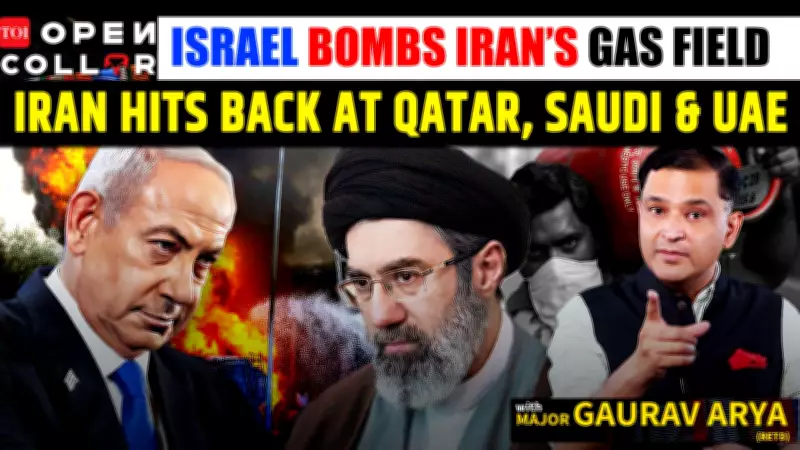
Israel Strikes Iran-Qatar Gas Field, Iran Retaliates Against Gulf Energy Sites
In a dramatic escalation of Middle East tensions, Israel has launched an attack on the world's largest natural gas field, which is jointly shared by Iran and Qatar. This aggressive move has triggered a shocking retaliation from Iran, which targeted energy sites across the Gulf region instead of directly striking Israel. The situation has rapidly intensified, drawing global attention and raising alarms about the stability of critical energy supplies.
Major Gaurav Arya Breaks Down the Crisis
In the latest episode of OPEN COLLAR, defense analyst Major Gaurav Arya provides a detailed breakdown of this unfolding crisis. He explains the strategic implications of Israel's decision to hit the massive gas field, a key resource for both Iran and Qatar. The attack represents a significant provocation that has pushed the region closer to a broader conflict.
Iran's response has been particularly noteworthy. Rather than aiming at Israeli targets, Iran chose to strike energy infrastructure in the Gulf, a move that analysts suggest is designed to exert economic pressure and disrupt global oil and gas markets. This retaliation underscores Iran's willingness to engage in asymmetric warfare, targeting assets that have far-reaching international consequences.

Rising Tensions and Global Warnings
The escalating conflict has prompted warnings from former US President Donald Trump, who has publicly commented on the situation. Trump's statements highlight the geopolitical stakes involved, as the United States maintains a keen interest in Middle East stability. Meanwhile, China has adopted a quiet, observant stance, monitoring developments that could affect its energy imports and regional influence.
With oil and gas supplies now under direct threat, energy-dependent countries like India are facing potential disruptions. India, which relies heavily on imports from the Middle East, could see significant economic impacts if the crisis worsens. Major Arya emphasizes the need for India to assess its energy security strategies in light of these events.
Broader Implications for the Middle East
This incident is part of a long-standing pattern of volatility in the Middle East, where oil, power, and war often intersect. The attack on the gas field and Iran's subsequent strikes have exacerbated existing tensions among regional players, including Saudi Arabia and Israel. The Strait of Hormuz, a critical chokepoint for global energy transit, remains a potential flashpoint in any wider conflict.
As the situation develops, the international community is closely watching for further escalations. The crisis not only threatens regional peace but also has the potential to trigger a global energy crisis, affecting economies worldwide. Major Arya's analysis urges viewers to understand the bigger picture, where geopolitical maneuvers and resource control drive ongoing instability in the Middle East.






