Italy's Iconic 'Lovers' Arch' Collapses on Valentine's Day Amid Severe Storms
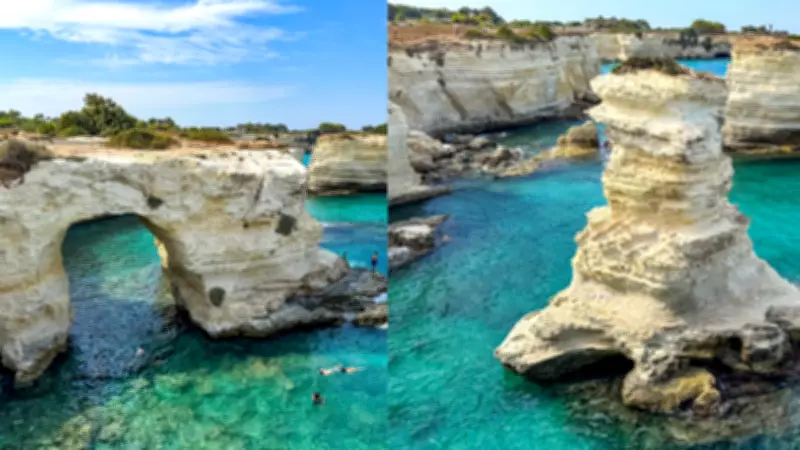
A beloved natural rock formation, famously dubbed the "lovers' arch," on Italy's Adriatic coast collapsed on Valentine's Day, following days of intense storms, as confirmed by local officials. Authorities have issued warnings that other vulnerable sections of the fragile coastline may also be at significant risk of similar damage.
Nature's Unwanted Valentine's Day Gift
The arch was part of the Sant'Andrea sea stacks near Melendugno in the Puglia region and had long been a cherished spot for romantic wedding proposals and tourist photographs. Melendugno Mayor Maurizio Cisternino expressed deep sorrow, telling the local Corriere Salentino newspaper that the collapse was "an unwanted Valentine's Day gift" and "a very hard blow" to the area's image and tourism industry.
Cisternino attributed the collapse to persistent heavy rain, powerful winds, and rough seas that relentlessly battered the coastline. "Nature has taken back what it created," he remarked, as cited by CNN, highlighting the natural forces at play.

Centuries of Formation and Historical Significance
Formed over centuries through the erosion of calcarenite stone cliffs by wind and waves along the Adriatic Sea, the arch had a rich history. Initially serving as a strategic lookout to warn against pirates, it later evolved into a popular destination for couples and tourists. This popularity spurred the development of hotels and resorts in the area, many named after the iconic arch.
In recent years, Instagram photos have drawn thousands of couples to the site, though the exact number of visitors remains unknown due to its free and open access to the public, as noted by Cisternino.
Climate Change and Extreme Weather Impacts
Warmer sea temperatures linked to climate change are considered a contributing factor to the extreme weather conditions that damaged the arch. The structure had already been weakened by Cyclone Harry in January, exacerbating its fragility. Concerns about the landmark's vulnerability had been raised for years prior to the collapse.
"It's a tragedy we knew was inevitable, we just didn't expect it to happen so soon," Cisternino told local media on Sunday, underscoring the long-standing awareness of the risks.
The collapse serves as a stark reminder of the delicate balance between natural landmarks and environmental changes, with potential implications for coastal tourism and conservation efforts in the region.