

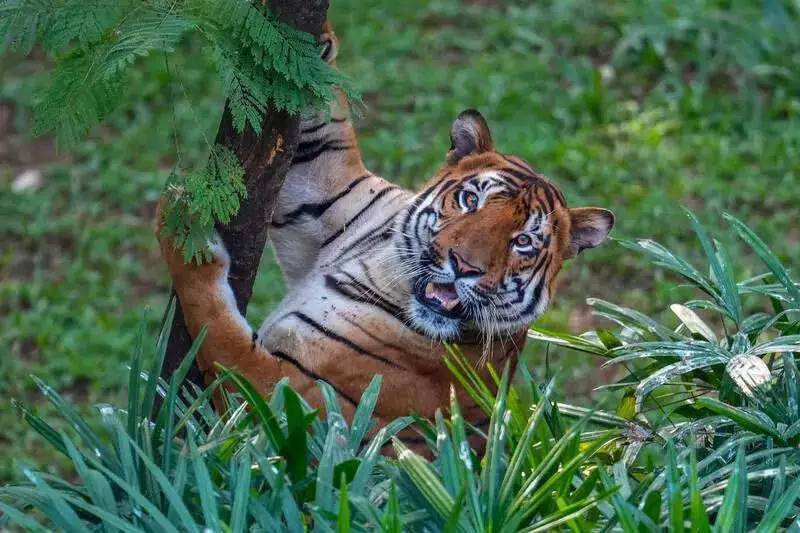
The Kerala Forest Department has initiated preparations for the sixth edition of the National Tiger Census, scheduled to run from December 2025 through April 2026. This comprehensive wildlife survey will extensively cover forest areas across the state, focusing on monitoring the population and habitat of India's national animal.
Three-Phase Census Strategy
The ambitious census operation will be conducted in three distinct phases across 37 forest divisions in Kerala. The first phase, beginning December 2025, involves field staff traversing 673 designated blocks along predetermined transects and paths. During this initial stage, officials will document the presence of both carnivores and herbivores, with special emphasis on tiger sightings and evidence.
Forest personnel will utilize the innovative M-STrIPES mobile application to record crucial data about animal presence, forest quality, and the impact of human activities on wildlife habitats. This digital approach ensures standardized data collection and real-time monitoring of the census progress.

Training and Technical Preparation
Preparation for the massive exercise is already underway, with the Periyar Tiger Conservation Foundation and Parambikulam Tiger Conservation Foundation jointly organizing comprehensive training programs for forest staff. A recent review meeting assessed the training schedule and progress in acquiring necessary equipment for the census.
The second phase of the operation will focus on analyzing the field data collected during the initial stage. This analytical process will help identify key areas for the third and most crucial phase—camera trapping.
Advanced Camera Trapping Initiative
The final phase involves deploying camera traps across selected forest areas, primarily in the Periyar and Parambikulam Tiger Reserves and adjacent forest territories. Officials have identified 1,860 specific grids, each measuring two square kilometers, for installing these sophisticated monitoring devices.
The camera trapping methodology will enable researchers to identify individual tigers through their unique stripe patterns and gather scientific data for accurate population counting, explained a forest department representative. This technology-driven approach has proven highly effective in previous census exercises.
Field data collection and camera trapping activities will continue through March 2026, after which the Periyar and Parambikulam Foundations will compile and analyze all gathered information. The final report will be submitted to the National Tiger Conservation Authority by April 2026.
The last national tiger census conducted in 2022 recorded 3,682 tigers across India, with 213 of these majestic cats identified in Kerala's forests. The upcoming census aims to provide updated figures and crucial insights into tiger conservation efforts in the state.






