

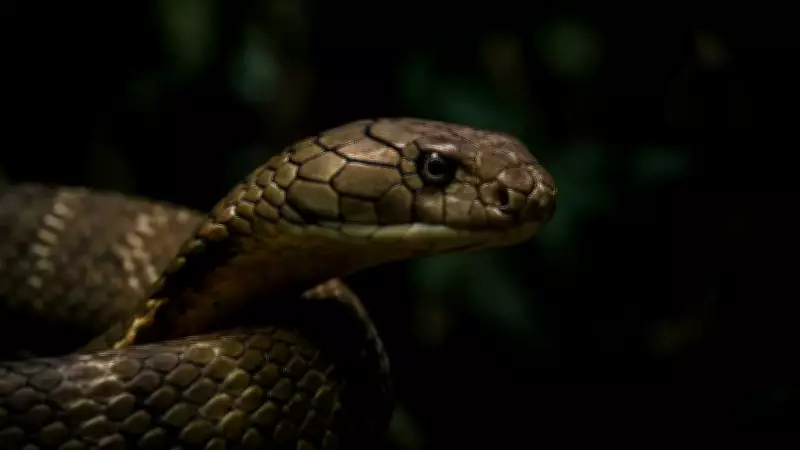
King Cobra Reclassified: Scientists Identify Four Distinct Species Across Asia
For nearly two centuries, the scientific community and the general public alike believed the king cobra to be a single species, widely distributed across the vast regions of South and Southeast Asia. This long-held assumption is now being dramatically overturned. A comprehensive new study, employing rigorous genetic and morphological analysis, suggests that what was once considered a single species is, in fact, four distinct and separate species, each having evolved independently in its own unique geographical region.
Unraveling a Taxonomic Mystery
This revelation means the iconic king cobra observed in the forests of India is genetically and physically distinct from its counterpart in the Philippines. To arrive at this conclusion, scientists conducted an exhaustive investigation. They meticulously analyzed genetic data, examined body patterns and scale arrangements, studied dental structures, and even re-evaluated historical museum specimens. The research team reportedly dedicated significant time to cross-referencing historical records and carefully assigning scientific names to ensure accuracy and clarity in this taxonomic revision.
The King Cobra: A Profile of Power and Surprise
The king cobra is globally renowned for its imposing size, capable of reaching lengths of up to 5.5 meters. However, its reputation extends far beyond mere length. It is a highly venomous serpent, with a diet primarily consisting of other snakes and occasionally small mammals. Its scientific name, Ophiophagus hannah, meaning "snake-eater," is a fitting descriptor. Despite its formidable appearance and iconic hood display, experts note that king cobras are generally shy creatures. They often prefer to retreat when disturbed, though they can deliver a rapid and potent strike if seriously provoked. The species was first formally described by Theodore Cantor in 1836. Over subsequent decades, herpetologists began noting subtle variations in banding patterns, head morphology, and even behavior among king cobras from different locales, hinting at the deeper diversity now confirmed.

The Four Newly Recognized King Cobra Species
The landmark study proposes the division of the king cobra into the following four distinct species, each with its own range and characteristics:

- Northern King Cobra (Ophiophagus hannah): This species represents the "classic" king cobra image. Its range is now defined as encompassing parts of eastern Pakistan, northern and eastern India, the Andaman Islands, sections of the Indo-Burma region, and central Thailand. It typically exhibits fewer and less pronounced white bands on a darker, often olive or brownish body. Genetic analysis confirms its distinct lineage from its southern relatives.
- Sunda King Cobra (Ophiophagus bungarus): Inhabiting the Sunda Shelf region, this species is found across the Malay Peninsula, the Greater Sunda Islands (including Borneo and Sumatra), and the southern Philippines. It is visually distinctive, often displaying strong, clear white or yellowish bands along its body, making it more conspicuous than the Northern species. The name bungarus is revived from older, previously overlooked scientific literature.
- Western Ghats King Cobra (Ophiophagus kaalinga): This species holds particular significance for Indian biodiversity. It is endemic to the Western Ghats mountain range, including areas like the Agumbe forests in Karnataka. It appears more localized and potentially more vulnerable. Its body structure, scale patterns, and genetics clearly differentiate it. Banding is usually subtler, with appearance varying based on its specific forest habitat.
- Luzon King Cobra (Ophiophagus salvatana): Potentially the most fragile of the four, this species is found exclusively on Luzon Island in the northern Philippines. It is notable for often lacking the bold body bands seen in other species, presenting a plainer, smoother coloration—a trait that initially intrigued researchers and was later confirmed by genetic analysis as a unique evolutionary lineage.
This taxonomic reclassification underscores the incredible, often hidden, biodiversity within iconic species and highlights the importance of continuous scientific inquiry and genetic research in understanding and conserving our planet's wildlife.





