

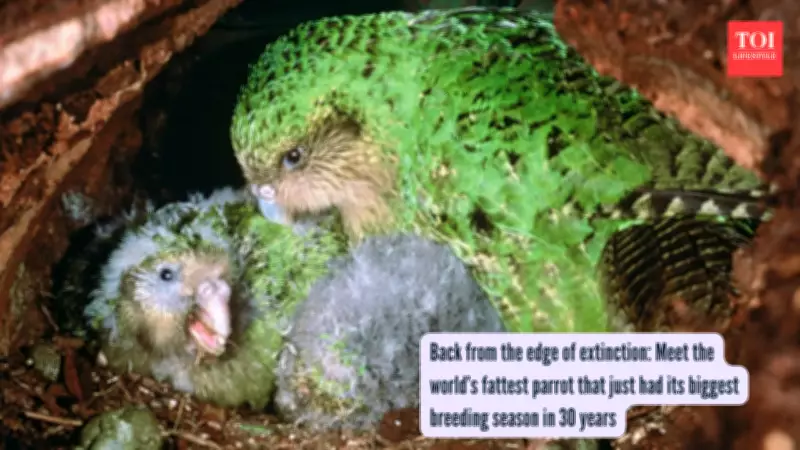
Kākāpō Parrots Experience Record-Breaking Breeding Season in New Zealand
Nature hosts countless creatures that each fulfill a distinct role in maintaining the delicate equilibrium of the biodiversity pyramid. When any species faces vulnerability and a decline in population numbers, this essential balance becomes significantly disrupted. Approximately three decades ago, one beloved bird species began teetering on the brink of endangerment. However, recent developments have brought remarkable news, as reported by the New Zealand media outlet RNZ, revealing an outstanding breeding season for this unique avian.
Meet the World's Heaviest Parrot: The Kākāpō
The kākāpō is a large, flightless parrot that inhabits exclusively the islands of New Zealand. It is frequently described as the world's fattest and heaviest parrot species. According to data from New Zealand's Department of Conservation, male kākāpōs can weigh up to approximately 4 kilograms, making them substantially heavier than most other parrot varieties across the globe.
This distinctive bird features a unique green and white-gray plumage, exhibits nocturnal behavior, and leads a quiet existence on forested islands. These very characteristics contributed to its heightened vulnerability to introduced predators over the years. Intensive hunting, significant habitat loss, and invasive animals such as rats and cats pushed the kākāpō population perilously close to extinction by the 1990s.

Today, every remaining kākāpō exists in the wild under meticulous management as part of the Kākāpō Recovery Programme. This comprehensive conservation initiative combines the dedicated efforts of rangers, scientists, volunteers, and iwi, the indigenous Māori tribes of New Zealand.
A Breeding Season to Remember
The most recent breeding season has emerged as a landmark event for the species. In an official update released on April 3, representatives from New Zealand's Department of Conservation announced that 105 kākāpō chicks had successfully hatched from 256 eggs laid. As of the report, 98 chicks remained alive, with one egg still incubating.
According to RNZ, this represents the highest number of chicks recorded since such meticulous documentation began thirty years ago. Consequently, this season has earned the prestigious label of "biggest on record" for the Kākāpō Recovery Programme.
The kākāpō is renowned for breeding only once every few years, and many females typically raise just a single chick per season. This reproductive pattern is a primary reason why population recovery has been exceptionally slow. The unusually high hatch count this season strongly suggests that the species may be making a gradual but tangible comeback from the brink of extinction.
Challenges Behind the Good News
Despite these encouraging numbers, not all the new chicks are out of danger. Sarah Manktelow, a ranger with the Kākāpō Recovery Programme, informed RNZ's Kākāpō Files podcast that seven chicks have unfortunately died so far, while four others have been transferred to Dunedin Wildlife Hospital for specialized medical treatment.
Kākāpō chicks are only considered adults once they reach about 150 days old, which will occur around mid-July. Therefore, conservation rangers are maintaining vigilant observation in the critical weeks ahead to ensure the survival and health of these young birds.
Conservationists Remain Hopeful
Deidre Vercoe, the Department of Conservation's operations manager for kākāpō, expressed optimism in a statement to Mongabay, emphasizing, "Every new chick brings the species further from the brink of extinction." She added that "there's always a sense of hope and optimism for the future."
With an estimated 235 kākāpōs currently living in the wild, this record-breaking breeding season serves as a powerful reminder that, through careful and sustained management, even a species teetering on the edge of extinction can still find a second chance at survival and recovery.






