The Kolkata Municipal Corporation took a significant step on Tuesday. They presented an integrated waste management plan to two key authorities. The proposal went before the West Bengal Pollution Control Board and the East Kolkata Wetland Authority.
Ambitious Recycling Target
This comprehensive plan has one clear goal. It aims to achieve one hundred percent recycling of all waste generated within Kolkata. The KMC is actively seeking environmental clearance to move the project forward.
The proposal focuses on a large-scale upgrade. It involves a major expansion of the existing Dhapa landfill complex. Officials want to transform the site into a modern facility.

Authorities Urge Caution
However, officials from the WBPCB responded with caution. They asked the KMC to return with a much more detailed project report. The board issued a clear warning about potential violations.
Any breach of the East Kolkata Wetlands Act could seriously harm the project's prospects. This wetland area is a Ramsar-designated ecosystem. It operates under very strict environmental regulations.
These rules explicitly prohibit permanent construction in ecologically sensitive zones. This presents a major challenge for the corporation's plans.
What the New Facility Would Include
The proposed integrated waste management facility is quite extensive. It includes multiple processing units designed for different materials. The list of planned components is impressive.
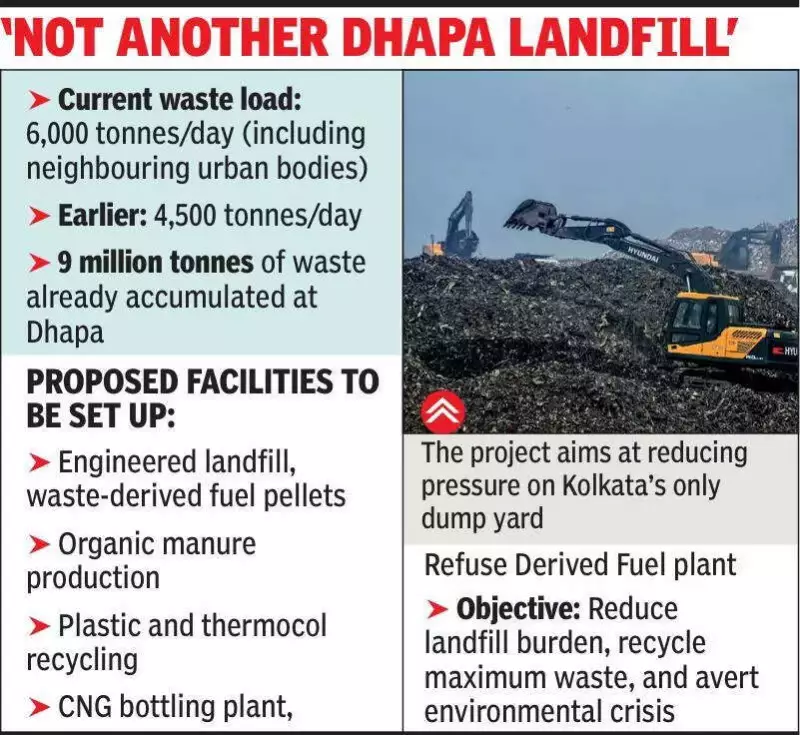
- An engineered landfill section
- A hydro-testing centre specifically for CNG
- A plant for manufacturing pellets from high-calorific-value waste
- A unit for producing organic manure
- Specialized recycling units for thermocol and plastic
- A CNG bottling plant
- A refuse-derived fuel plant
Pollution control officials provided some clarification on the rules. They stated that while permanent structures are not allowed, authorities may consider semi-permanent facilities. This could offer a potential path forward for the project.
Kolkata's Growing Waste Problem
KMC officials explained the urgent need for this project. The city's waste burden has increased sharply in recent years. Daily waste handling has jumped significantly.
It rose from about four thousand five hundred tonnes to nearly six thousand tonnes. This increase followed the inclusion of waste from several new areas.
- Bidhannagar Municipal Corporation
- New Town Kolkata Development Authority
- Panihati Municipality
- Neighbourhoods under the Howrah Municipal Corporation
The situation is compounded by a massive existing problem. Nearly nine million tonnes of waste is already present at the Dhapa site. This historic backlog adds tremendous pressure.
Moving Forward with the Plan
According to a KMC official, the corporation has engaged a consultant. This expert will prepare the required detailed project report. The official acknowledged the advice received from authorities.
"We were advised to use bio-friendly materials for setting up the processing units. We will keep that in mind," said the official.
KMC officials strongly emphasised a key point about the project. It does not involve creating a brand new 'third Dhapa' landfill. Instead, the plan focuses on expansion and modernisation.
The goal is to reduce pressure on Kolkata's only major dump yard. The new facility is planned for a seventy-three hectare plot of land. This land is already owned by the KMC.
It sits adjacent to the existing landfill site. Local farmers previously carried out agricultural activities on this land. The process of land acquisition is currently underway.
A Critical Need for the City
Officials stated the plan includes two crucial elements. It involves biomining and capping of old landfill sections. They believe this approach is critical for a simple reason.
It will help extend the operational life of the Dhapa complex. The city desperately needs a long-term solution for its mounting waste. This project represents a major attempt to find that solution while navigating strict environmental protections.