

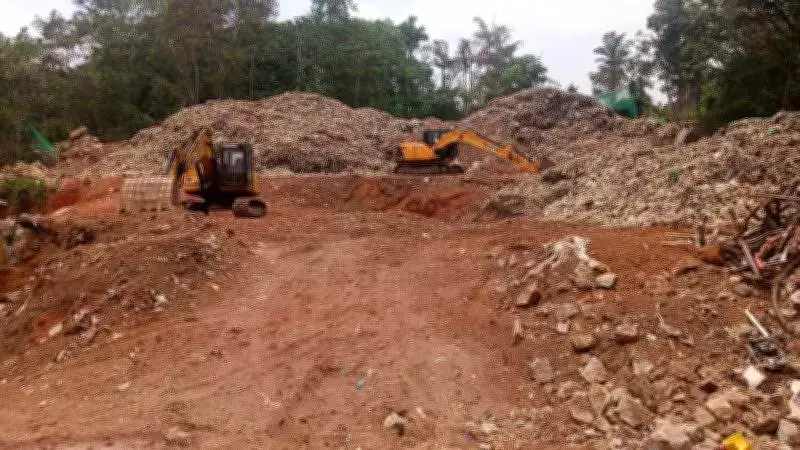
Kollam's Ugrankunnu Waste Land Reclamation Project Nears Completion
The extensive bio-mining initiative aimed at reclaiming land at Ugrankunnu in Kottarakkara, Kollam, is approaching its final stages. This project targets a site that served as a dumping ground for legacy waste over many years, transforming an isolated area into a usable space once again.
Progress and Process of Bio-Mining at Ugrankunnu
As part of this critical environmental effort, accumulated waste is being systematically excavated and segregated. The combustible components, known as Refuse-Derived Fuel (RDF), are being transported to the Dalmia Cement factory located in Coimbatore. To date, an impressive 249 metric tonnes of RDF have been dispatched, contributing to waste-to-energy solutions.
Estimates indicate that approximately 9,090 cubic metres of waste remain at Ugrankunnu, primarily composed of materials such as plastic, footwear, and glass. This highlights the scale of the cleanup required to restore the land.

Final Stages and Future Development Plans
The backfilling process, which marks the conclusive phase of the bio-mining operation, is scheduled to commence by the end of this month. Once completed, the 40-cent plot, previously obscured by heaps of waste, will become available for various developmental activities. This transformation promises to revitalize the area, opening up new opportunities for community use and infrastructure projects.
Collaborative Efforts and Historical Context
The bio-mining works are being executed by the Kerala Solid Waste Management Project (KSWMP), with crucial financial support provided by the World Bank. Historically, Ugrankunnu remained a secluded zone with minimal human interaction for years, gradually evolving into a major dumping site. Waste from local shops and markets accumulated here due to the absence of adequate processing facilities.
To address this issue, SMS Company, based in Nagpur, Maharashtra, was awarded the contract through a transparent tender process. Their mandate involves clearing the waste and restoring the land to its original, pristine state, ensuring environmental sustainability and public health benefits.






