

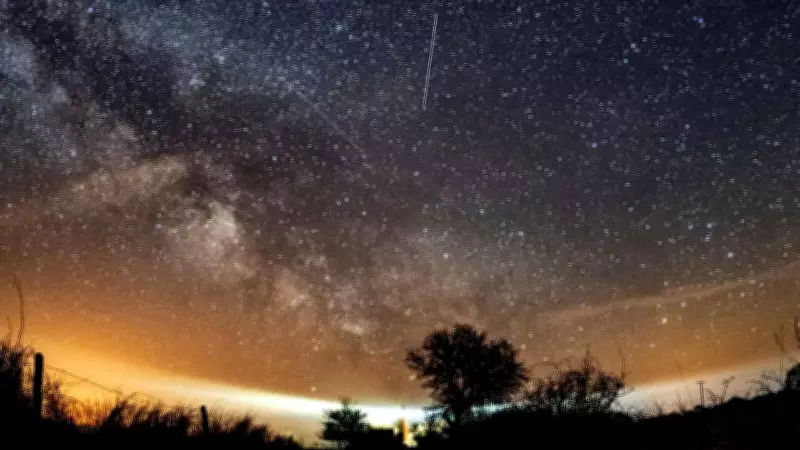
Lyrid Meteor Shower Peaks Tonight: UK Skywatchers Anticipate Clear Viewing Conditions
The Lyrid meteor shower, one of humanity's oldest recorded celestial events with observations spanning over 2,500 years, reaches its peak activity this week. This annual phenomenon remains active from approximately 16 to 25 April each year, with maximum intensity typically centered around 22 April. For sky enthusiasts across the United Kingdom, meteorological forecasts predict exceptionally favorable viewing conditions during this year's peak period.
Optimal Viewing Conditions Across the UK
Clear skies are anticipated over extensive regions of the United Kingdom as the Lyrid meteor shower attains its maximum intensity. This regular April astronomical event returns annually, often quietly, yet consistently captures attention when atmospheric conditions align favorably. Current weather projections indicate prolonged stretches of transparent skies across multiple areas, a meteorological circumstance not always common for the UK climate.
The Lyrids have maintained activity since mid-April, with the most vigorous display expected during the night of 22 April extending into the early morning hours of 23 April. Under the darker skies of rural locations, observers may witness faint luminous streaks traversing the celestial dome, occasionally punctuated by bursts of heightened activity.

Meteorological Forecast and Viewing Recommendations
High-pressure systems are projected to dominate weather patterns during the peak observation window, typically bringing settled atmospheric conditions and diminished cloud coverage. Substantial portions of England, Wales, Scotland, and Northern Ireland are expected to experience predominantly clear or partially clear skies overnight. Some cloud formations may temporarily affect western regions during the early evening, particularly sections of Northern Ireland and western Wales.
Eastern England might encounter transient cloud patches drifting through the atmosphere. Nevertheless, overall meteorological circumstances are widely regarded as advantageous for astronomical observation. Temperature readings are forecast to decline rapidly following sunset, with rural zones potentially experiencing noticeably chilly conditions by late evening. In northern England and Scottish regions, temperatures could approach freezing levels, characteristic of typical April nocturnal weather yet sufficiently cold to necessitate warm attire for extended viewing sessions.
Optimal Viewing Timing and Techniques
The prime observation period generally commences after 22:00 British Summer Time when complete darkness envelops the sky. The early hours following midnight are frequently recommended, as meteor activity becomes more discernible when celestial backgrounds are darker and atmospheric interference diminishes. Light pollution represents a crucial consideration, as urban illumination can substantially reduce visibility of faint meteors. Dark rural locations typically provide superior observational conditions, with even minimal distance from artificial lighting sources yielding noticeable improvements.
These meteors appear to radiate from the constellation Lyra, which ascends in the northeastern sky, though they may manifest in any celestial direction without requiring fixed observational coordinates. No specialized equipment is necessary to appreciate the display, though human eyes typically require 15 to 30 minutes to fully adapt to darkness, during which exposure to bright screens or artificial lighting can reduce visual sensitivity.
Lunar Conditions and Visibility Enhancement
The Moon will present as a slender crescent during the peak observation period, remaining visible in the northwestern sky for part of the night while contributing modest background illumination. After approximately 02:00 BST, lunar setting occurs across numerous regions, yielding darker celestial conditions. This post-moonset interval is often considered most favorable for detecting fainter meteors, with visibility generally improving as skies achieve complete darkness and atmospheric stability.

Scientific Origins of the Lyrid Phenomenon
The Lyrid meteor shower occurs when Earth traverses debris streams generated by cometary or, in specific instances, asteroidal passages. These cosmic particles are typically minute, often comparable in size to sand grains. As they encounter our planet's atmospheric layers, friction with surrounding gases incinerates them, producing luminous trails recognized as meteors. Meteor showers materialize when multiple meteors become visible within relatively brief temporal windows.
Every meteor shower maintains association with a specific parent celestial body. For the Lyrids, this progenitor is Comet Thatcher, which completes solar orbits approximately every 415 years. Annually, as Earth intersects this comet's debris stream, the Lyrid meteor shower manifests as a predictable astronomical occurrence. The display gradually intensifies, achieves brief peak activity, then diminishes over subsequent days, with residual meteor appearances continuing for several nights following maximum intensity.
This event constitutes part of a broader cyclical pattern of annual meteor showers occurring throughout the calendar year, each connected to distinct cometary debris streams intersecting Earth's orbital path. The Lyrids persist as both a scientific phenomenon and a historical celestial spectacle, continuing their millennia-long tradition of illuminating April night skies with ephemeral cosmic artistry.





