Maharashtra Chief Minister Champions Mumbai as Climate Finance Hub for Developing Nations
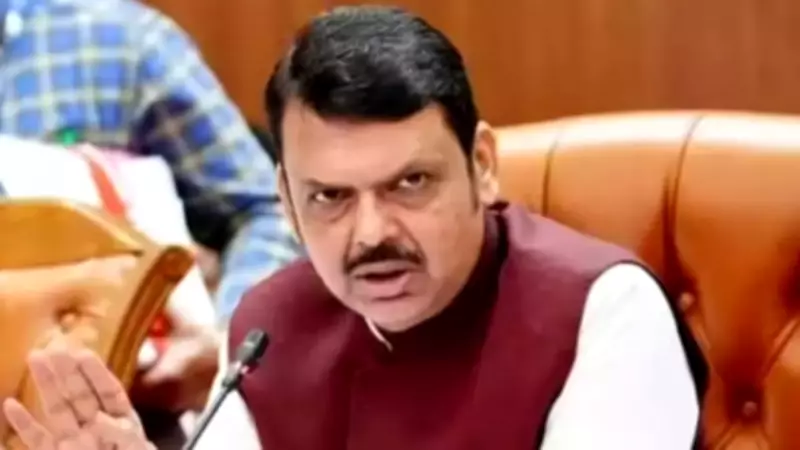
At the inauguration of the three-day Mumbai Climate Week held at the Jio World Convention Centre, Maharashtra Chief Minister Devendra Fadnavis boldly positioned the state as a national frontrunner in climate action. He declared Mumbai a pivotal "gateway" for channeling climate finance to countries across the Global South, emphasizing the urgent need for massive financial mobilization.
Unveiling a Strategic Blueprint for Climate Finance
"The sheer scale of the climate transition required cannot be shouldered by public budgets alone. The developing world urgently requires trillions of dollars to facilitate this critical shift," Fadnavis asserted. The climate transition encompasses the comprehensive move away from polluting fossil fuels towards renewable energy sources, alongside enhancing adaptation strategies to cope with rising global temperatures and increasingly erratic rainfall patterns.
During the event, officials formally introduced a comprehensive climate finance access and mobilisation strategy. This crucial framework was developed through a collaborative effort between WRI India and the Maharashtra Institution for Transformation (MITRA), designed to streamline and attract necessary investments.

Signing Key Partnerships to Strengthen Climate Resilience
The Maharashtra government, in conjunction with the Mumbai Metropolitan Region Development Authority (MMRDA), solidified its commitment by signing a series of Memoranda of Understanding (MoUs) with prominent global and national partners. These agreements aim to bolster concrete climate actions across multiple fronts.
- A partnership with the United Nations Environment Programme (UNEP) focuses on urban heat mitigation and building nature-based resilience.
- Collaboration with the C40 Cities Climate Leadership Group will establish climate implementation accelerators and enhance metropolitan climate finance mobilisation.
- An agreement with the Urban Land Institute India targets sustainable infrastructure planning and fostering low-carbon urban development.
Addressing the Core Challenges of Climate Governance
Labeling climate change as "today's greatest governance challenge," CM Fadnavis outlined the essential components for a successful transition. He stressed the need for substantial capital, robust risk-sharing frameworks, and innovative blended finance models. These must be coupled with strong execution confidence and dedicated support for emerging, early-stage green technologies.
"When Mumbai is inundated with excessive rainfall, it transcends mere meteorological data. It translates into halted train services, flooded homes, and disrupted livelihoods," Fadnavis poignantly remarked, highlighting the tangible human and economic impacts.
Charting Maharashtra's Ambitious Energy and Sustainability Roadmap
Detailing the state's forward-looking energy strategy, Fadnavis revealed that Maharashtra currently possesses an installed capacity of approximately 48 gigawatts, with renewable sources constituting 21% of this total.
"Our target for 2030 is to escalate our capacity to 84 gigawatts, with more than 50% derived from renewable sources," he announced. "By aggressively scaling up green hydrogen production, electric mobility infrastructure, biofuels, and sustainable construction, states that act decisively and early will naturally attract top talent, significant capital, and cutting-edge innovation. Maharashtra is determined to be that early mover. We are proactively integrating principles of sustainability and resilience right from the initial design phase of all infrastructure projects."
He further underscored specific vulnerabilities, noting, "Our agricultural community is grappling with shifting rainfall patterns and acute water stress. Our extensive coastline demands long-term protective measures. The livelihoods of our fisheries and rural populations are intrinsically tied to predictable and stable ecosystems."

National and State Leaders Echo Commitment to Green Transition
Union Minister for New and Renewable Energy, Pralhad Joshi, provided a national context, reporting that three million household connections have been successfully completed under the PM's Surya Ghar solar power scheme in just two years. He highlighted a remarkable 235% surge in India's solar energy capacity over the past decade—from 2.8 gigawatts in 2014 to an impressive 141 gigawatts today—with the nation's total renewable energy capacity now reaching 270 gigawatts.
State Environment and Climate Change Minister Pankaja Munde emphasized the necessity for "practical, scalable, and financeable solutions" to drive effective climate action. She advocated for the systematic embedding of climate considerations into all future urban and city planning processes.
Shishir Joshi, CEO of Project Mumbai, the organizing body for the event, expressed a visionary outlook: "Mumbai is poised to transform into a dynamic climate laboratory for the Global South. We are fostering genuine public-private partnerships that will yield scalable, replicable solutions to shared environmental challenges."
The inauguration ceremony also featured the formal release of a commemorative stamp dedicated to Mumbai Climate Week. Organizers confirmed that the event's agenda will concentrate on pivotal themes including climate finance mechanisms, urban resilience strategies, renewable energy expansion, sustainable mobility solutions, and citizen-led initiatives, all with a strong emphasis on practical implementation and fostering cross-sector collaborations.