

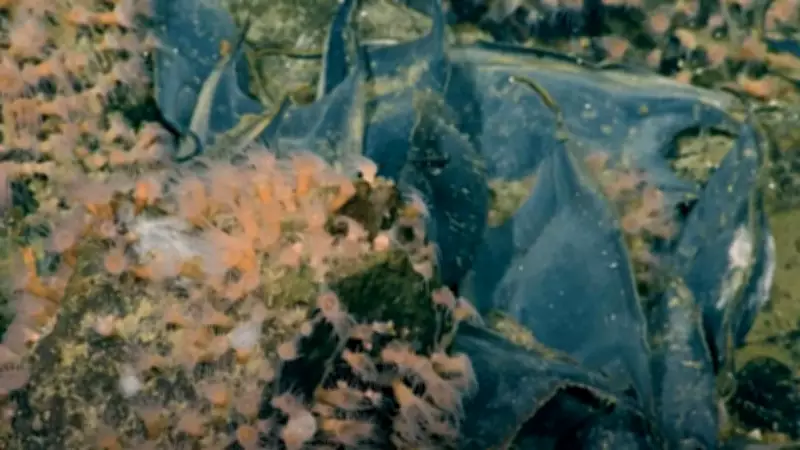
Massive Pacific White Skate Nursery Discovered on Canadian Underwater Volcano
Marine researchers have made a remarkable discovery off Canada's Pacific coast, finding more than a million large, leathery egg capsules resting on the summit of an underwater volcano. The unprecedented find comes from extensive surveys conducted at the Tuzo Wilson Seamount Complex, where warm water rises through fractured rock beneath the seafloor, creating unique environmental conditions.
Unprecedented Discovery at Tuzo Wilson Seamount
The egg cases belong to the Pacific white skate (Bathyraja spinosissima), a deep-sea species that typically lives thousands of feet below the surface and is rarely observed in its natural environment. The sheer number of eggs, combined with their location in a geothermally active zone, has captured significant attention from marine biologists and oceanographers worldwide.
The underwater volcano is not merely a geological feature but functions as a critical nursery, supporting early life stages in a setting shaped by heat, depth, and extreme isolation. This discovery challenges previous assumptions about deep-sea reproduction and habitat use.

Distribution and Breeding Patterns
Researchers observed that the egg capsules were spread across the volcano's summit rather than concentrated in a single pocket of heat. This distribution pattern suggests the skates return repeatedly to this specific area to lay their eggs, indicating the site serves as a long-term breeding ground rather than a location for a single reproductive event.
The warm water seeping upward through cracks in the volcanic rock creates a steady, slightly warmer environment across a wide area. While the temperature increase is subtle and doesn't create extreme conditions, it appears sufficient to influence where the Pacific white skates choose to reproduce.
Species Characteristics and Habitat
The Pacific white skate inhabits depths ranging from approximately 2,600 to 9,600 feet, where sunlight never penetrates and temperatures remain near freezing. Adult skates can grow to about 6.5 feet in length, though direct sightings are exceptionally rare due to the inaccessibility of their deep-sea habitat.
This makes direct observations of reproduction especially valuable for scientists studying the species, as their biology remains poorly understood. The presence of such a large, concentrated nursery offers researchers a unique opportunity to study development, behavior, and habitat use without relying solely on scattered, chance encounters.
Egg Case Structure and Development
Each egg case measures approximately 20 inches across with a flattened, slightly curved shape that has drawn comparisons to oversized ravioli. Inside each protective case, a developing embryo is supported by a substantial yolk supply that provides all necessary energy for growth over several years.
Development in these deep-sea conditions proceeds slowly, reportedly taking up to four years before hatching occurs. This extended timeline reflects the cold, stable environment in which the embryos develop. Producing such large eggs requires significant energy investment from the mother skate, representing an evolutionary trade-off: fewer offspring but with enhanced chances of survival if environmental conditions remain stable.
Geothermal Influence on Development
The geothermal activity at the seamount appears to play a crucial role in embryonic development rates. Warmer water surrounding the egg cases may reduce the time needed for gestation, even if only slightly. Researchers suggest that even small temperature increases can have noticeable effects at these extreme depths.
If embryos develop faster due to geothermal warmth, they spend less time in vulnerable developmental stages, potentially improving survival rates once they hatch and begin moving into deeper waters. The temperature difference, while subtle, proves biologically significant in this unique deep-sea environment.

Historical Context and Significance
Similar breeding behavior was documented in 2018 near hydrothermal vents, where Pacific white skate eggs were found close to naturally heated areas of the seafloor. Genetic analysis confirmed those eggs belonged to the same species. However, the newly discovered nursery in Canadian waters appears substantially larger than previous observations, suggesting that using geothermal warmth for reproduction may be more widespread among Pacific white skates than scientists previously understood.
This discovery represents a significant advancement in deep-sea marine biology, providing unprecedented insights into the reproductive strategies of elusive species and highlighting the importance of geothermal features in supporting marine biodiversity in extreme environments.





