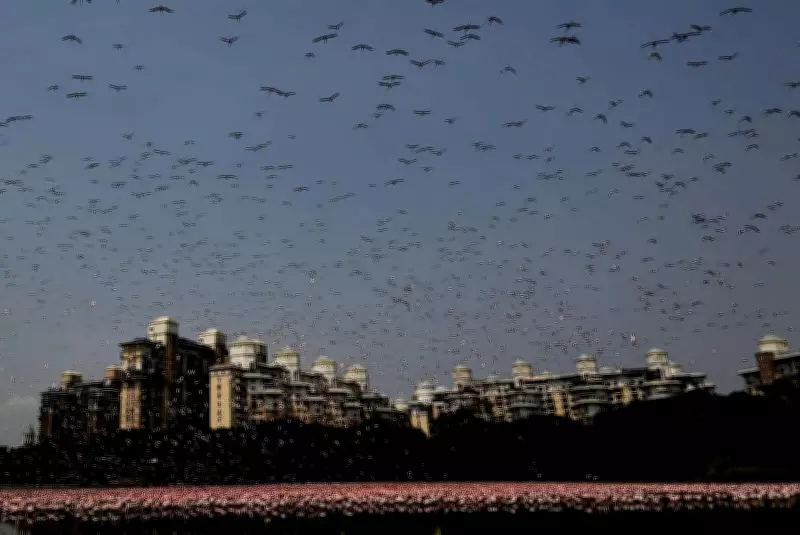
On World Environment Day, celebrated on June 5, citizens' groups from across the Mumbai Metropolitan Region (MMR) united to launch Climate Action Now (CAN), an environmental mobilisation plan. The initiative addresses issues such as redevelopment challenges, rapid loss of green cover, destruction of wetlands and mangroves, and the often-overlooked threat of rising sea levels. The event was hosted by the NatConnect Foundation on Thursday.
Proposal for Flamingo Blue Carbon Urban Complex
Environmentalists from the MMR expressed support for creating a 'Flamingo Blue Carbon Urban Complex' by transforming mangroves, wetlands, and mudflats into a long-term ecological revenue system. They suggested that the state government could capitalise on the MMR's blue-carbon ecosystems by establishing a dedicated carbon-credit exchange or 'Blue Carbon Credit Bank'.
Under the proposed mechanism, polluting sectors such as cement, aviation, construction, shipping, and heavy industries, which generate significant carbon emissions, could purchase certified blue-carbon credits linked to protected ecosystems in the MMR. The revenue generated from these credits could potentially finance mangrove protection, wetland restoration, biodiversity conservation, flood mitigation systems, and long-term climate-resilience infrastructure across the region.

CAN Roundtable and Declaration
The CAN roundtable brought together various environmental groups, including Sagar Shakti, Swarnsrishti Habitat Restorer Foundation, Parsik Greens, Sajag Nagrik Manch, Powai ALM, Save Flamingos/Mangroves, Save Belapur Hills, and Human Chain Online. A CAN declaration issued at the conclusion of the roundtable condemned the increasing attacks on mangroves, wetlands, and mudflats. It urged the government to explore innovative ways to monetise ecological assets instead of making quick gains by burying them for real estate development.
The declaration described wetlands, mangroves, rivers, forests, floodplains, and biodiversity zones as 'critical ecological infrastructure' essential for climate resilience, flood protection, public health, and urban survival. It warned that climate change, ecological degradation, and unsustainable urbanisation pose direct threats to biodiversity, water security, environmental stability, and quality of life across the MMR.
'Mangroves are among the world's most effective natural carbon sinks, absorbing an estimated six to 10 tonnes of carbon dioxide per hectare annually while storing massive quantities of carbon underground in coastal mud and sediment systems for decades and even centuries,' the CAN declaration stated.
Demands and Recommendations
The declaration called for the notification and protection of wetlands across Maharashtra, restoration of degraded tidal ecosystems, protection of flamingo habitats, creation of biodiversity corridors, and recognition of blue-carbon ecosystems as strategic climate assets. The CAN platform also demanded that redevelopment across the MMR should become an opportunity to reclaim green cover, restore open spaces, and integrate climate-sensitive infrastructure such as rainwater harvesting, groundwater recharge, rooftop solar systems, recycled water use, and low-carbon urban planning.
Participants called for stronger environmental governance, independent monitoring systems, transparent compliance reporting, annual sustainability reviews, and public accountability mechanisms to ensure ecological protection. The declaration emphasised that climate resilience cannot succeed through symbolic events or fragmented policies but requires collective participation involving citizens, fishing communities, scientists, institutions, corporates, and policymakers.
'We seek to build a future where development and ecology coexist responsibly, where environmental protection becomes central to governance, and where climate resilience becomes the foundation of urban planning and public policy,' the declaration stated.
'Protecting nature is cheaper than rebuilding cities after climate disasters,' the participants said, urging governments, industries, and citizens to act before ecological damage becomes irreversible.