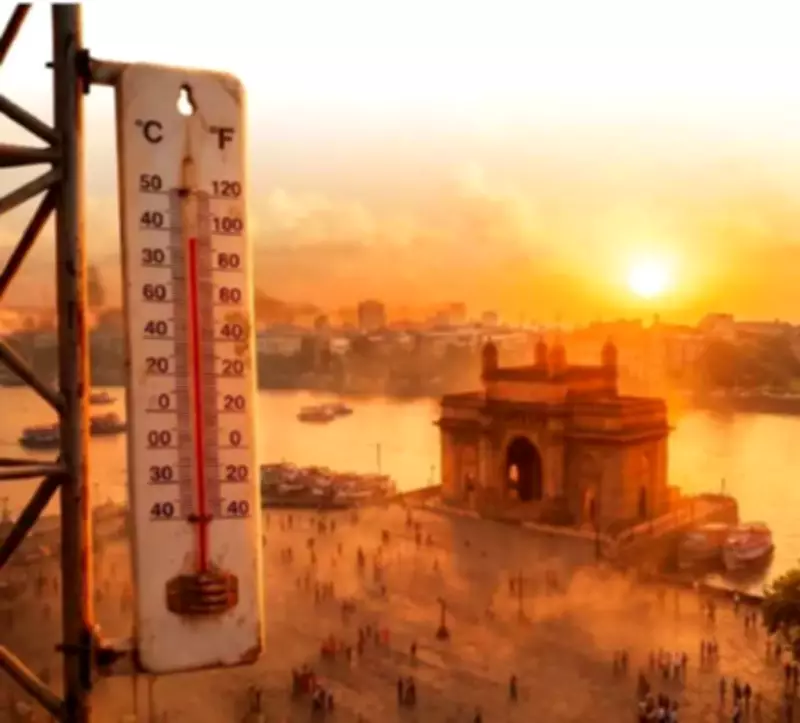
Mumbai could witness a rise in average temperatures by 1 degree Celsius and an additional six to seven days of heavy rainfall by the 2030s, according to fresh climate projections released on Friday by Azim Premji University in Bengaluru.
Projections for India's Coastline
The analysis examines climate conditions along India's coastline for the period 2021 to 2040, comparing them with a baseline from the 1960s under various global warming scenarios. Since the current year is already 2026, some of these changes are beginning to emerge, noted Santonu Goswami, a professor at the School of Climate Change & Sustainability at Azim Premji University.
Key Findings for Mumbai
For Mumbai, the projections indicate that minimum temperatures could rise faster than daytime highs, a trend also observed in other studies. Winter minimum temperatures are expected to increase the most, by as much as 1.3 degrees Celsius over the next decade under a moderate global warming scenario.

Wet-bulb temperatures, which combine heat and humidity and are closely linked to heat stress on the human body, are projected to rise steadily by around 1.3 degrees Celsius over the 2021-2040 period. Average humidity is also expected to increase.
Mumbai could experience close to two days with temperatures exceeding 40 degrees Celsius by the late 2030s, a level almost unheard of in the city. Overall summer maximum temperatures are projected to rise by about 0.9 degrees Celsius.
Comparison with Other Coastal Districts
Among coastal districts, Ernakulam in Kerala is projected to see the sharpest increase in summer maximum temperatures at 1.3 degrees Celsius.
Impact on Monsoon
Regarding the southwest monsoon, the study projects an increase of roughly 300 to 350 mm in annual rainfall across Mumbai city and suburbs, along with about a week more of heavy and very heavy rain days each year.
Need for Localized Planning
Goswami emphasized that cities like Mumbai must plan for these conditions, noting that district-wide averages often obscure neighborhood-level differences. For instance, it is much cooler under some trees than on open roads, he said.