Understanding Iran's Crisis Through Vali Nasr's 'Iran's Grand Strategy'
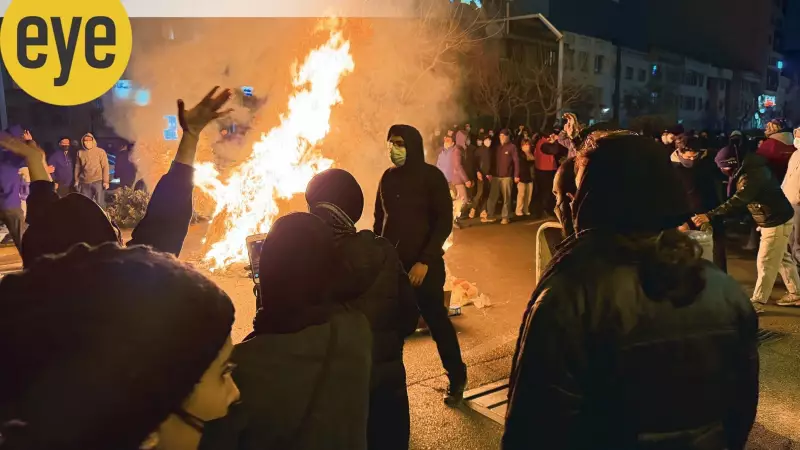
Iran faces its worst civil unrest since the 1979 revolution in 2026. The United States watches closely, with President Donald Trump repeatedly threatening to intervene on behalf of protesters. For Ayatollah Ali Khamenei's regime, confrontation with Washington is familiar ground. Tehran has honed its skills in this arena over the past 47 years.
This timing makes Iranian-American political scientist Vali Nasr's latest book, Iran's Grand Strategy: A Political History, particularly relevant. Nasr breaks from much Western analysis that views Iran through a US-centric lens. Instead, he focuses on Iran's own worldview. He explores how Iran perceives the West and defines its strategic role in West Asia.
Core Argument: Independence and Defiance
The book's central thesis is clear. Iran's post-revolutionary establishment has never been driven solely by ideology. A deeper force has guided it: a fierce determination to stand independently. The regime has reorganised state and society to resist the West-led international order. It has done this even at the cost of deepening isolation.

Nasr emphasises that the Mullah regime has long seen the US as the primary threat to Iran's national security. Every major action fits this view. The nuclear programme, the 'forward defence' strategy of arming proxies like Hamas and Hezbollah, extending its defensive perimeter across the Arab world—all these are expressions of a coherent grand strategy. The ultimate goal is to defy American power.
This theme of Tehran and Washington as primary antagonists makes the book a riveting read. It gains urgency with recent news alerts. Trump has urged Iranians to 'keep protesting,' promising that 'help is on its way.'
Historical Roots: Revolution and War
Nasr traces the current antagonism to deep historical roots. The 1979 revolution had many causes. One key factor was the Shah's close alignment with the US. Scholars like Nasr link this rupture back to the 1953 British-American coup that overthrew Prime Minister Mohammad Mosaddegh.
Nasr extends this argument further. He contends that 'independence' is woven into the revolutionary state's worldview and strategic thinking. The revolution, he argues, ultimately achieved what Mosaddegh—a pro-democracy figure—had fought for. This inherent antagonism towards the West has only intensified over time. Nasr states it has come to define Iran's strategic culture.
The author assigns great importance to two formative episodes after the revolution:
- The 1979-81 Hostage Crisis: This 444-day standoff held outsized significance. The fledgling Islamic Republic not only survived the confrontation but drew a crucial lesson. Survival owed much to fusing Islamic ideology with popular resolve to confront the US. From this moment, denying Washington a strategic foothold in the region became a defining objective.
- The 1980–88 Iran–Iraq War: Nasr presents this as a period that reshaped Iran's understanding of national security. Religion and security fused again. By likening the conflict to the Battle of Karbala, Iran placed faith in service of a national purpose: preserving a secure, sovereign Iran.
Nasr closes Part I of his book with a powerful formulation. The revolution gave birth to the Islamic Republic. The hostage crisis defined its posture towards America. But the Iran-Iraq War ultimately 'shaped the state the revolution wrought.'
Khamenei's Era and the Cost of Resistance
Part II examines Ali Khamenei's approach after succeeding Ruhollah Khomeini. It focuses on preserving the revolution at home, consolidating regional power for a Shia state encircled by Sunni rivals and Israel, and elevating the nuclear programme as a centrepiece of Iran's resistance strategy.
Nasr emphasises a crucial point: the mounting cost of this strategy. He notes that 'a sustainable strategy requires popular support, especially if it demands great sacrifice from the people.'

Western 'maximum pressure' sanctions devastated Iran's middle class. They pushed businesses into greater dependence on the revolutionary state. Iran's decision to sign the nuclear deal aimed to relieve this crushing burden. Yet it contradicted four decades of accumulated distrust towards the US. Nasr argues it revealed a measure of pragmatism within the establishment to preserve the Islamic Republic.
Trump withdrew from the deal just three years later. Sanctions returned, posing renewed threats to Iran's economy and national security. Nasr insists the economic impact of sanctions cannot be overstated.
Counterintuitively, he also argues that sanctions had an unexpected effect. Following Mahsa Amini's killing in 2022, the older generation largely held back from protests. Sanctions had deepened their reliance on the state, discouraging them from 'rocking the boat.' This chapter is aptly titled 'The Price of Resistance.'
The 2026 Protests and the Regime's Future
Against this backdrop, the 2026 protests mark a departure. They differ not only in scale but in composition. Members of the older generation are now joining the unrest.
Nasr's book serves as a valuable guide. It helps us understand how the revolutionary regime has behaved since its inception. It also offers clues on how it may respond now to intensifying protests and the spectre of a Trump intervention.
Iran today is the product of a national security doctrine built around resistance. If security and defiance of American power form the bedrock of the regime's existence, how should we expect it to react to Trump now?
Nasr offers a clue in the book's closing pages. Drawing on American historian John Lewis Gaddis, he argues Iran could 'either act as a fox which knows many things or a hedgehog which knows one big thing.' This means choosing between adaptability and commitment to a single grand idea.
Nasr characterises Khamenei as a hedgehog. The critical question remains. Can he and his regime acquire the fox's malleability to survive whatever lies ahead?