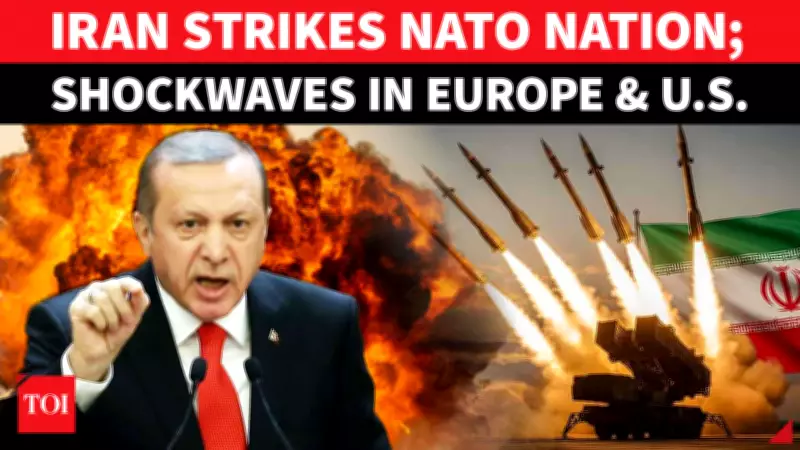
NATO Defences Intercept Iranian Ballistic Missile Over Turkey, Escalating Regional Tensions
In a dramatic escalation of the ongoing Middle Eastern conflict, NATO air and missile defence systems successfully intercepted and destroyed an Iranian ballistic missile over the eastern Mediterranean Sea on Wednesday. The incident marks the first direct threat to a NATO member state since hostilities erupted five days ago, following US and Israeli strikes that resulted in the death of Iran's Supreme Leader Ayatollah Ali Khamenei.
Turkey Confirms Interception and Issues Stern Warning
The Turkish Defence Ministry officially confirmed the interception, stating that the missile was detected after crossing through Iraqi and Syrian airspace before heading towards Turkish territory. Fortunately, there were no casualties reported from the incident. However, Ankara issued a pointed and unequivocal warning, asserting its right to respond to any hostile actions while simultaneously urging all involved parties to exercise restraint and avoid further escalation.
This development significantly expands the geographic scope of a war that initially seemed confined to direct engagements between Iran, the United States, and Israel. Turkey, a crucial NATO ally with a predominantly Sunni-Muslim population, shares an extensive 500-kilometre border with Iran and had previously positioned itself as a vocal advocate for diplomatic negotiations and a peaceful resolution.

Ankara's Diplomatic Stance Prior to the Incident
Prior to this missile incident, Turkish President Recep Tayyip Erdogan had expressed personal grief and condolences over the death of Ayatollah Ali Khamenei, highlighting Turkey's complex regional relationships. Furthermore, Turkey's foreign minister had warned as recently as Tuesday that any attempts to force regime change in Iran could precipitate serious and far-reaching risks across the entire Middle East region.
The critical question of intent remains unresolved at this time. Military analysts and officials are currently investigating whether the Iranian missile was deliberately targeting Turkish territory or if it was the result of a catastrophic navigation failure or system malfunction. This ambiguity adds a layer of complexity to an already volatile situation.
Broader Implications for NATO and Regional Security
The successful interception by NATO defences underscores the alliance's readiness and capability to protect its member states from external threats. However, this event also thrusts Turkey, and by extension NATO, into a more direct and precarious position within the escalating conflict. The incident has the potential to strain diplomatic channels further and could influence the strategic calculations of all nations involved in the region.
As tensions continue to mount, the international community watches closely, concerned about the possibility of a broader regional war. The coming days will be critical in determining whether diplomatic efforts can regain traction or if military posturing will lead to further confrontations.