

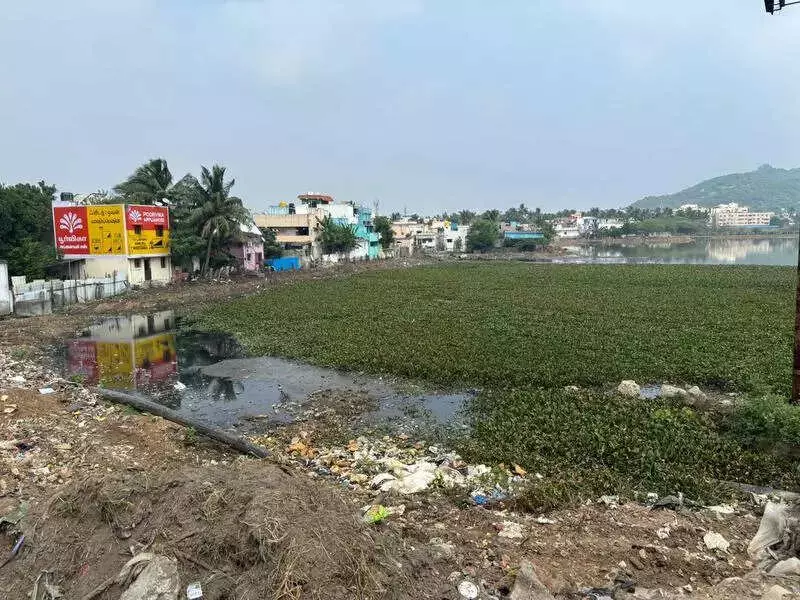
Despite the allocation of crores of rupees over several years, the Pallavaram Periya Eri, the largest lake along Chennai's 14.3-kilometre Pallavaram-Thoraipakkam Radial Road, continues to suffer from severe neglect. This critical water body, which could potentially double the local water supply, remains a tragic symbol of administrative failure and environmental decay.
A Freshwater Source Turned Sewage Dump
Once a major source of freshwater for the Pallavaram region, the sprawling 120-acre lake has undergone a drastic transformation. It is now a sewage-filled basin, choked by dense mats of water hyacinth. The unchecked inflow of untreated wastewater and rampant encroachments have systematically degraded its ecosystem.
The lake's potential remains starkly highlighted in a Tambaram Corporation report. Pallavaram currently receives an average water supply of 15.2 million litres per day (MLD). Experts state that this supply could be effectively doubled if Pallavaram Periya Eri is successfully restored and revived as a functional freshwater source.

Roots of Decay: Waste Dumping and Encroachments
The lake's deterioration began approximately two decades ago when municipal authorities started dumping solid waste at its southern end. Following prolonged legal battles, the National Green Tribunal (NGT) intervened, ordering biomining and remediation of this legacy waste. This process involves excavating landfills, segregating solid waste, and stabilising the remaining material to reclaim the land.
However, waste is only part of the problem. The lake is fed by three major inlets originating from the Tirusulam hills, Thiruneermalai via Moongil Eri, and Veeraraghavan Lake via Chrompet. These vital canals, which were once nearly 80 feet wide, have now narrowed to a mere 5-10 feet due to extensive encroachments, severely crippling the natural water flow into the lake.
Activist and Pallavaram resident David Manohar revealed alarming findings. "After filing an RTI application, we discovered there were 1,300 encroachments along the lake. Now, the number of encroachments has only increased," he stated. He urged the corporation to collaborate with the Water Resources Department (WRD) to evict the encroachers and save the water body.
Persistent Pollution and a Cycle of Blame
The contamination is compounded by illegal sewer connections and direct sewage discharge from tanker lorries. Furthermore, numerous commercial buildings and apartment complexes in the area release untreated sewage directly into the lake, turning it into a toxic pool.
M Gandhi, president of the Pallavaram Residents' Welfare Association, emphasised a critical point. "Unless the sewage inlets connecting to the lake are permanently removed, the problem will persist and eventually destroy the water body completely," he warned.
When questioned about the restoration delays, WRD Executive Engineer R Arunmozhi explained the jurisdictional complexities. "Although the lake comes under the WRD, it was previously maintained by the Tambaram Corporation. We have sent a proposal to the government, and as soon as the funds are sanctioned, the lake will be restored," he said.
However, residents like Gandhi express deep frustration with this cycle of promises. "Several years have passed, and regardless of which body is managing it, the restoration work has never materialised on the ground," he countered, highlighting the gap between official proposals and tangible action.
The story of Pallavaram Periya Eri is a cautionary tale of how crucial urban water bodies can be lost to bureaucratic inertia, pollution, and unchecked urbanisation, depriving cities of precious resources and ecological balance.






