

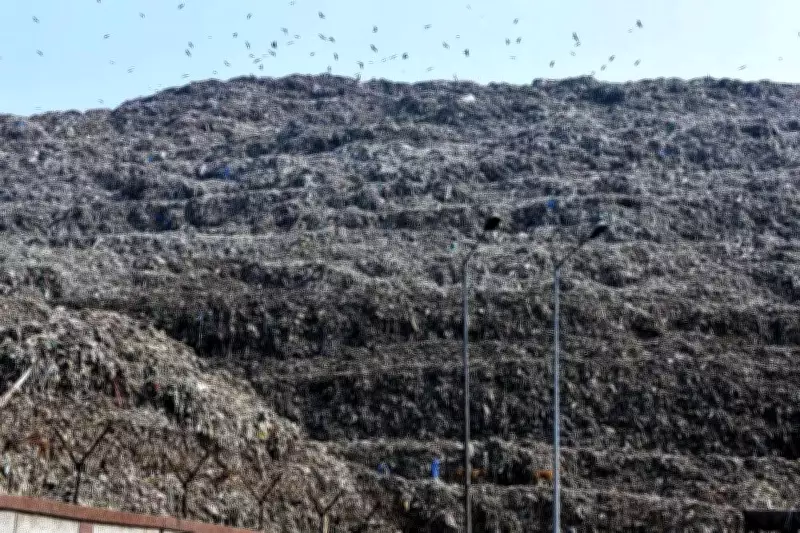
NGT Commissioner Urges Independent Audit for Ghazipur Landfill Operations
A court commissioner appointed by the National Green Tribunal has strongly recommended the necessity for an independent third-party audit to comprehensively evaluate the reduction in height and volume of the Ghazipur landfill. This audit would also assess methane mitigation and fire-prevention measures that have been implemented thus far.
Background and Tribunal Action
Following a major fire incident at the landfill site in April 2024, the NGT took suo moto cognisance based on a media report. The Municipal Corporation of Delhi submitted a status report in October of the previous year, prompting the tribunal to direct the court commissioner to conduct a detailed examination of the situation.
Critical Findings in the Commissioner's Report
A report dated April 6, filed by court commissioner Katyayni and submitted to the tribunal, revealed alarming statistics. It noted that approximately 1,700 metric tonnes of fresh waste continue to be dumped at the Ghazipur site daily. The report elaborated that the sanitary landfill receives between 2,400 to 2,600 MT of fresh waste every day, with the waste-to-energy plant processing only 700 to 1,000 MT per day, leaving a significant residual amount.

The commissioner highlighted a critical operational failure: the Ghazipur WTE plant remained non-operational for an extended period of eight months between April and December 2025. This shutdown resulted in an additional 900 tonnes per day of waste being added directly to the landfill, exacerbating the accumulation problem.
Inadequate Leachate Management and Plant Deficiencies
The report further flagged that leachate management at the site appears to be inadequate, posing environmental risks. It emphasized that the WTE plant is being utilized under capacity or is deficient in its operations. The nominal capacity is 1,300 MT per day, with an operational capacity of 800 to 850 MT per day, yet it only receives 700 to 1,000 MT daily.
Repeated shutdowns occurred due to fires in the boiler area and other operational failures. The commissioner stated that these admissions fundamentally undermine the contention that the WTE facility meaningfully mitigates waste accumulation at the Ghazipur landfill.
Concerns Over Construction Waste and Methane Production
The report highlighted that MCD admitted construction and demolition waste is received and stacked at the landfill site. However, it is spread over the landfill to curtail fires produced by methane production. The commissioner raised critical questions: Does C&D waste halt subsurface anaerobic processes that generate methane? What is the action plan for capturing methane through an engineered gas collection system?
She suggested an independent third-party verification specifically for fire risk mitigation and methane emissions to ensure accountability and effectiveness.
MCD's Response and Commissioner's Critique
In its affidavit, MCD mentioned that leachate flows through kachcha drains. It stated that a drain near gate number 2 was originally a pucca drain but has deteriorated over time, and a proposal has been moved to strengthen or reconstruct it. Another drain connected to the leachate tank is located near the fish market.
The court commissioner responded critically, noting that while the problem has been identified, a concrete solution is still awaited, and no definite timeline has been provided for addressing these infrastructure issues.
This comprehensive report underscores the urgent need for transparent and effective waste management practices at one of Delhi's largest landfill sites, calling for independent oversight to drive meaningful environmental improvements.






