

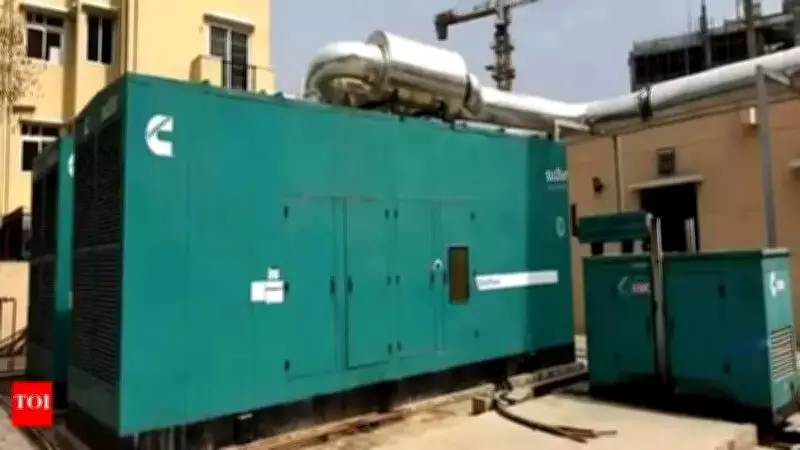
NGT Demands Fresh Inspection of Diesel Generators in Punjab Over Pollution Concerns
The National Green Tribunal (NGT), principal bench in New Delhi, has expressed serious concern regarding the compliance status of diesel generator sets across Punjab. In a significant directive, the Tribunal has ordered the Punjab Pollution Control Board (PPCB) to conduct a fresh, targeted inspection and submit a comprehensive report within eight weeks.
News Report Triggers NGT Action
The matter came before the Tribunal following a news report published in The Times of India titled 'DG Sets Contributing Significantly to Punjab's Pollution.' This investigative piece highlighted the outsized role of unregulated generator emissions in the state's deteriorating air quality, prompting judicial scrutiny.
Previous Inspection Findings Reveal Compliance Gaps
During the hearing, the PPCB presented its inspection findings covering diesel generator sets across industries and commercial establishments throughout Punjab. The Pollution Control Board reported that out of 1,323 units inspected, 1,129 were found compliant with existing environmental norms. However, the remaining units demonstrated systemic non-adherence to regulations.

The PPCB submission revealed specific violations:
- 156 units were operating without valid consent from authorities
- 181 units were found in violation of prescribed emission standards
- 179 show-cause notices had been issued
- Enforcement action against two units was already underway
NGT Identifies Critical Deficiency in Report
The Tribunal identified a significant deficiency in the PPCB submission, noting that the report failed to specify whether inspections specifically tested compliance with the revised emission standards notified under GSR 804(E), 2022. The NGT described these standards as the primary regulatory benchmark governing generator set emissions in India.
The Tribunal held that without this crucial determination, the compliance exercise could not be considered complete or conclusive. This observation underscores the importance of aligning inspections with current regulatory frameworks rather than outdated benchmarks.
Fresh Inspection Mandated with Specific Focus
Consequently, the NGT directed the PPCB to conduct a fresh, comprehensive inspection of all diesel generator sets, specifically assessing adherence to norms prescribed under GSR 804(E), 2022. The Pollution Control Board must submit a detailed report within eight weeks, with the matter listed for further hearing on July 21.
Understanding the GSR 804(E) Notification
The GSR 804(E) notification, issued by the Ministry of Environment, Forest and Climate Change in 2022, significantly tightened permissible emission limits for particulate matter, nitrogen oxides, and hydrocarbons from diesel generator sets. A PPCB official explained that compliance often requires retrofitting older units or replacing them entirely—an obligation many commercial operators have been slow to fulfill.
The official added that instructions would soon be passed for fresh inspection of diesel generator sets to ensure compliance with NGT orders, indicating immediate action following the Tribunal's directive.
Broader Context of Punjab's Air Quality Challenges
Punjab's air quality has remained under regulatory scrutiny, with stubble burning and vehicular emissions traditionally drawing the most attention. However, stationary diesel generators used across industries, hospitals, commercial complexes, and data centers are increasingly identified as a significant and under-regulated source of fine particulate pollution, particularly in urban areas of the state.
The NGT intervention signals a sharper focus on this contributor, with enforcement now tied to current regulatory standards rather than outdated benchmarks. This development represents a critical step toward addressing a previously overlooked pollution source that contributes substantially to Punjab's environmental challenges.
The Tribunal's directive emphasizes the need for rigorous monitoring and enforcement mechanisms to ensure that diesel generator emissions comply with contemporary environmental standards, potentially setting a precedent for similar actions in other states facing comparable air quality issues.






