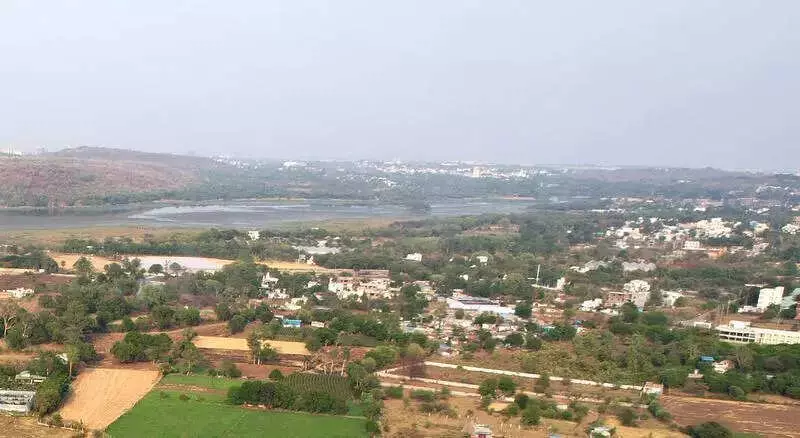
For years, the Upper Lake in Bhopal, a crucial source of drinking water and a designated Ramsar wetland of international importance, has been suffering from severe environmental degradation. The twin problems of rampant encroachments within the prohibited no-construction zone and the continuous flow of untreated sewage have plagued this vital water body, with authorities failing to implement effective solutions.
Legal Battle and NGT's Stern Observations
Frustrated by the persistent inaction, environmental activists and concerned students from the city have approached the National Green Tribunal (NGT), the country's environmental watchdog. Multiple petitions on the issue are currently under hearing. In a significant order dated September 17, 2026, the NGT hearing a petition filed by Aarya Shrivastava, a former student of NLIU, expressed strong disapproval.
The tribunal noted that despite its repeated directives, the illegal encroachments have not been cleared, and the discharge of untreated wastewater into the lake continues unabated. It specifically highlighted a glaring gap analysis of more than 130 MLD (Million Litres per Day) in sewage treatment capacity that has not been properly addressed by the authorities.

Authorities in the Dock for Non-Compliance
The NGT's frustration was further evident in its remarks on a separate petition filed by environmental activist Rashid Noor Khan. The tribunal reprimanded the Bhopal Municipal Corporation (BMC) for failing to submit its replies on time, ignoring clear directions from a previous hearing. During the proceedings, Khan presented photographic evidence showcasing illegal constructions, including houses, farmhouses, resorts, and access roads, all occurring within the legally protected 50 metres from the Full Tank Level (FTL) of the Upper Lake.
This visual proof underscored the scale of violations in the ecologically sensitive zone. The tribunal's orders have consistently pointed fingers at the collective inability of the district administration and the BMC to halt the pollution, even though there are nine Sewage Treatment Plants (STPs) situated along the lake's banks.
A Persistent Crisis with No Solution in Sight
The core issue remains unresolved. The lake, which should be protected as a precious natural resource, is being choked by human negligence and administrative apathy. The untreated sewage inflow directly contaminates the drinking water source for a significant portion of Bhopal's residents, posing serious public health risks. The encroachments not only violate environmental laws but also permanently damage the lake's catchment area and biodiversity.
Despite judicial pressure and clear mandates from the NGT, the ground situation shows little improvement. The case exemplifies a chronic struggle between environmental conservation and urban mismanagement, leaving the future of the Upper Lake hanging in the balance as legal hearings proceed without yielding concrete remedial action on the ground.