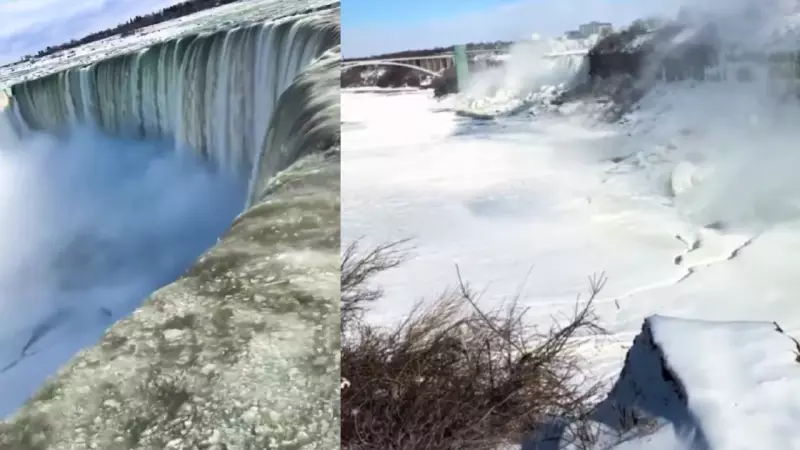
Arctic Blast Freezes Niagara Falls as Polar Vortex Brings Extreme Cold
A powerful polar vortex recently swept across North America, bringing unprecedented Arctic conditions to the iconic Niagara Falls region. Temperatures plunged dramatically below −20°C around the waterfalls, creating conditions far colder than typical winter weather patterns for this area.
Instant Freezing Creates Magical Ice Formations
The mist and spray from the thundering waterfalls, which normally remains liquid even during regular winter conditions, encountered the extreme freezing air and transformed almost instantly into ice. This rapid freezing process coated everything in sight with crystalline layers of frozen water.
Cliffs, riverbanks, and sections of the Niagara River became blanketed with thick sheets of ice, creating a surreal winter landscape. While water continued to flow over the falls, the airborne mist froze in midair, producing spectacular visual effects that captivated both locals and weather observers.

Local Videos Capture Otherworldly Scenes
Videos shared by area residents reveal the extraordinary transformation:
- Strange, intricate ice formations building on every surface
- Frozen spray creating delicate ice sculptures
- Rainbows catching the light through icy mist particles
- A quiet, almost supernatural atmosphere enveloping the entire area
The waterfalls themselves never stopped flowing, but the surrounding environment appeared suspended in time, creating a fascinating contrast between movement and stillness.
Science Behind the Rapid Freezing Phenomenon
The meteorological explanation for this dramatic transformation lies in the physics of water droplets and extreme cold. Normally, mist and spray from the waterfalls consist of tiny water droplets that may freeze slowly on surrounding surfaces during typical winter conditions.
However, when temperatures drop below −20°C, the freezing process accelerates dramatically. Water droplets in the mist and spray freeze instantly upon contact with any cold surface, creating what scientists describe as a flash freezing effect.
This rapid freezing gradually builds a frozen shell around the edges of the waterfalls and across the surrounding landscape. The constant freezing process produces breathtaking ice formations that resemble natural glass sculptures, reflecting the low winter sun with surprising brilliance.
Partial River Freezing Creates Striking Contrasts
The extreme cold affected the Niagara River itself in fascinating ways. Large sheets of ice formed in areas where the river moves more slowly, while faster-flowing sections remained liquid. This created an uneven, patchwork appearance along the waterway.
The river and falls together presented a scene that felt both alive and restrained, with ice thickening where conditions allowed while leaving gaps for flowing water to continue its journey. This interplay between frozen and moving water appeared chaotic yet peaceful simultaneously, as if nature itself was pausing to rehearse a different seasonal performance.
Niagara Falls: Winter Transformation of a Natural Wonder
Niagara Falls, straddling the border between the United States and Canada, consists of three main sections: Horseshoe Falls, American Falls, and Bridal Veil Falls. Normally, millions of litres of water cascade over these cliffs every second, generating the characteristic mist that hovers above the area.
During winter, and particularly during extreme cold events like this polar vortex, that mist hardens into ice. While the falls themselves never become silent or completely still, their icy surroundings transform the entire area into something uncanny and magnificent.
Annual visitors witness dramatically different faces of this natural wonder: lush green summers with tourist boats, contrasted with winters featuring frozen cliffs and ethereal ice formations. Weather extremes like this recent polar vortex remind us that even the most powerful, familiar landscapes can undergo dramatic transformations, revealing a quieter, frozen dimension of places that typically pulse with constant energy and movement.