India's Monumental $22.7 Trillion Pathway to Net Zero Emissions by 2070
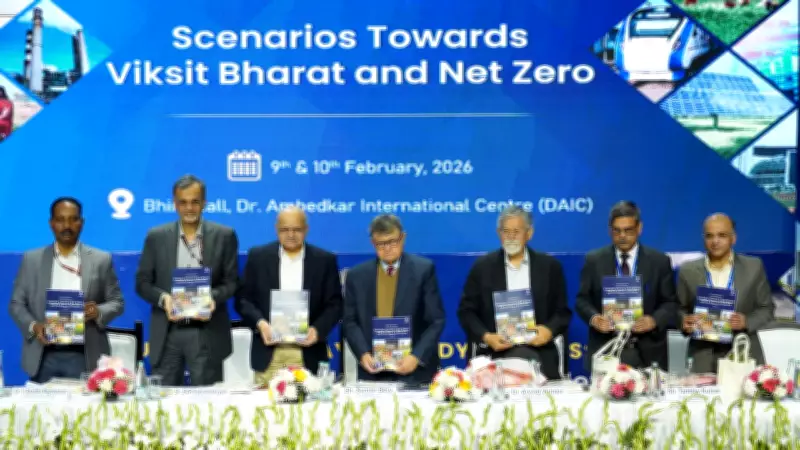
As India intensifies efforts toward its 2035 climate action targets, the government's premier policy think tank, NITI Aayog, has unveiled a groundbreaking roadmap to achieve the nation's ambitious 'net zero' emission goal by 2070. The comprehensive strategy reveals that this historic transition will demand cumulative investments reaching an astonishing $22.7 trillion, translating to approximately $500 billion annually, to finance critical high-level actions that balance the dual objectives of 'Viksit Bharat' (Developed India) and long-term carbon neutrality.
Massive Financing Requirements and External Funding Needs
The report, titled Scenarios Towards 'Viksit Bharat' and Net Zero: An Overview, emphasizes that at least $6 trillion of the total investment requirement must originate from external sources. This staggering financial commitment underscores the scale of transformation needed across India's economy and infrastructure systems.
On an annualized basis, this cumulative requirement translates into average flows of approximately $500 billion per year, compared with actual annual investment of around $135 billion in 2024, of which only $70–80 billion currently supports clean energy initiatives. The power sector alone accounts for over half of total investment needs, reflecting its central role in enabling economy-wide electrification and the expansion of low-carbon generation capacity.

Coal Consumption Reality and Clean Energy Transformation
In a significant revelation, the government think tank underlined that India's coal consumption will continue to rise until 2047, providing crucial insights into what India's updated climate action commitments—Nationally Determined Contributions (NDC)—for 2035 might encompass. Despite this fossil fuel reality, the report projects dramatic shifts in energy generation:
- Non-fossil fuel power generation (including captive) share is expected to increase from 23% in 2025 to 65% in the current policy scenario and 80% in the 'net zero' scenario by 2050
- This share is further expected to rise above 80% by 2070 in the current policy scenario, and to 100% in the 'net zero' scenario
Five-Pillar Strategy for Net Zero Transition
The roadmap outlines a clear five-pillar strategy for achieving net zero emissions:
- Electrify energy use across all sectors of the economy
- Generate green and clean electricity through renewable sources
- Control demand through Mission LiFE (Lifestyle for Environment)
- Focus on circularity and efficiency in resource utilization
- Secure cheaper external finance to bridge funding gaps
B.V.R Subrahmanyam, CEO of NITI Aayog, emphasized the opportunity: "India can leapfrog to be a global leader in clean technologies. 85% of India of 2047 is yet to be built and can be built to be climate-friendly." He further clarified that India's coal consumption will increase until 2047 even as energy intensity decreases and efficiency improves, while simultaneously working toward net zero goals.
Comprehensive Action Areas and Institutional Recommendations
Beyond clean energy, the roadmap identifies multiple high-level actions for India's net zero transition, including:
- Enhanced focus on circular economy principles
- Transformation of urban mobility systems
- Development of energy-efficient buildings
- Strategic land use planning
- Securing critical minerals supply chains
- Establishing robust data for monitoring, reporting & verification (MRV) systems
The think tank identified a substantial financing gap of $6.5 trillion, with an estimated aggregate flow of only $16.2 trillion expected against the 'net zero' scenario investment requirement of $22.7 trillion. To address this challenge, the report recommends establishing a "National Green Finance Institution" specifically designed to meet the country's climate financing needs.

Front-Loaded Investments and Technological Challenges
Approximately $8 trillion must be front-loaded by 2050, including nearly $5 trillion in the power sector alone, given the capital-intensive nature of most low-carbon technologies. The report acknowledges significant technological hurdles, noting that "many of the technologies needed for net zero have yet to reach commercial maturity, while mature low-carbon technologies often demand large up-front investments."
Creating a New Development Model
Despite these challenges, NITI Aayog expressed strong confidence in India's approach, asserting that the net zero transition will create a new 'Indian Development Model' combining economic vitality, technological leadership, and environmental sustainability. "The pathways India shows will be a lighthouse for the developing world. The Indian Development Model will set the trend for others," declared the think tank.
V Anantha Nageswaran, Chief Economic Advisor to the government, highlighted the significance of the exercise: "NITI Aayog has undertaken a comprehensive and rigorous exercise that will serve as a benchmark – a starting point for future discussions on 'Viksit Bharat' and 'net zero'. The reports are a great resource for policymakers and researchers on charting India's course to these twin objectives."
Methodological Rigor and Comprehensive Scope
The landmark study represents India's first government-led, multi-sectoral, integrated assessment of development scenarios that simultaneously deliver on the Viksit Bharat 2047 vision while reducing net greenhouse gas (GHG) emissions to zero by 2070. The research encompasses 11 detailed reports based on a scenario-based analytic modeling exercise that integrates economic growth, India's development priorities, and climate commitments.
This extensive analysis was prepared by 10 inter-ministerial working groups that examined long-term transition scenarios across key domains including:
- Macroeconomic aspects of the transition
- Sectoral low-carbon transition in power, transport, industry, buildings, and agriculture
- Financing mechanisms for climate action
- Critical minerals security
- Research, development and manufacturing capabilities
- Social implications of the energy transition
The roadmap emphasizes that achieving both developed nation status by 2047 and carbon neutrality by 2070 will require a "delicate balancing act" between economic development and environmental sustainability, setting the stage for one of the most significant economic transformations in modern history.