Odisha Chief Minister Unveils Ambitious Eco-Restoration Plan for Chilika Lagoon
In a significant move to combat ecological and geo-morphological instability, Odisha Chief Minister Mohan Charan Majhi announced a new scheme on Friday aimed at revitalizing the Chilika lagoon. The initiative, titled 'Eco-restoration Work in Chilika Lagoon,' will involve extensive dredging operations in key channels, including the lead, Balugaon, and Magarmukh channels, as well as the ferry route and Palur canal.
Addressing Critical Instability in Asia's Largest Brackish Water Lagoon
Chilika, recognized as Asia's largest brackish water lagoon and India's first Ramsar site, is currently facing severe ecological challenges. Chief Minister Majhi emphasized the urgency of the situation, stating that the lagoon's unique marine brackish freshwater ecosystem is under threat. The government's budget for 2026-27 includes plans for consolidation and eco-restoration work, which are expected to restore tidal exchange, improve salinity balance, and revitalize the fish population.
Comprehensive Restoration Efforts and Technical Support
Earlier efforts saw the Odisha government, with technical assistance from IIT Chennai, prepare a draft detailed project report (DPR) valued at Rs 2,000 crore for the restoration of Chilika. Law and Works Minister Prithiviraj Harichandan and Puri MP Sambit Patra have met with Union Finance Minister Nirmala Sitharaman to seek central support for the lagoon's ecosystem and tourism redevelopment.

The preliminary project report (PPR) outlines several key interventions:
- Opening a new tidal mouth based on detailed numerical model analysis.
- Desilting critical internal channels alongside maintenance and dredging activities.
- Conducting detailed bathymetric and hydro-sedimentological surveys to assess lake bed conditions.
Environmental Challenges and Historical Data
Forest Minister Ganesh Ram Singkhuntia highlighted in the assembly that Chilika's depth has been decreasing annually, with his department extracting 326,716 cubic metres of muddy sludge over the past five years. Each year, approximately 8,00,000 metric tonnes of muddy soil enter the lagoon, exacerbating the issue. Currently, the lake's depth ranges from a minimum of 0.38 metres to a maximum of 6.20 metres.
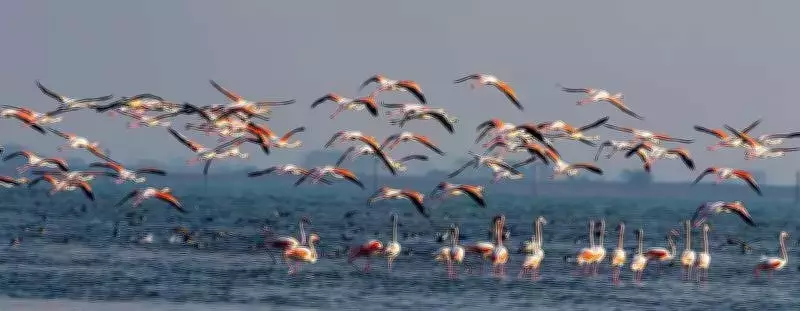
The PPR emphasizes that reopening the tidal mouth is essential to maintain salinity levels, improve fish migration, reduce stagnation, and control weed growth. Chilika lagoon, spanning 1,100 square kilometres, features diverse habitats such as reed swamps at Mangalajodi, mudflats and reed swamps at Nalabana, beaches at Satapada, and open water areas at Rambha.
This comprehensive restoration scheme aims to safeguard Chilika's ecological integrity and promote sustainable tourism, marking a crucial step in preserving one of India's most vital natural resources.