

Riverside Communities Turn to Crocodile Worship for Survival in Odisha
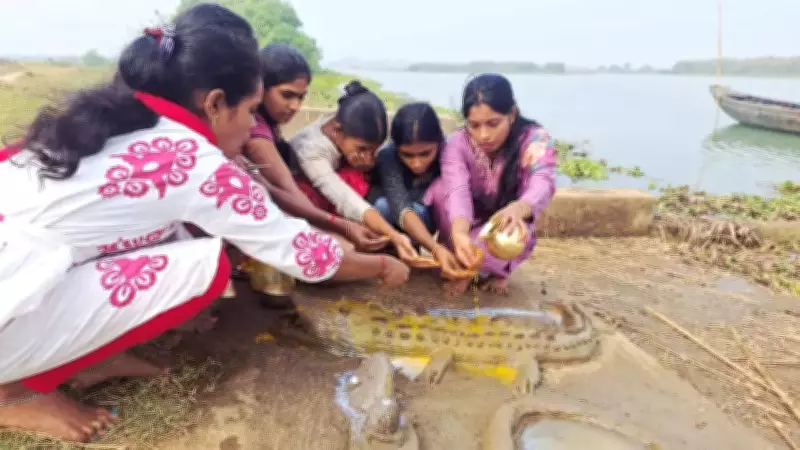
In a poignant response to escalating danger, numerous villagers, predominantly unmarried young women residing in the riverside settlements encircling Bhitarkanika National Park in Kendrapada district, have initiated a unique spiritual practice. They are now venerating earthen effigies of salt-water crocodiles at river ghats, fervently praying for divine protection against lethal crocodile assaults that have plagued their communities for years.
Rituals of Appeasement and Personal Tragedies
Recent ceremonies have been meticulously organized in villages including Eakamania, Nalapahi, and Dakhinadia, where locals gather to perform traditional rites. "We presented offerings of fresh flowers, pure milk, ripe bananas, and crystalline sugar to pacify the crocodile deity and safeguard our precious lives," recounted Baisakhi Behera, a 17-year-old resident of Eakamania, highlighting the community's desperate hopes.
The rituals are deeply personal, born from profound loss. Manasi Behera, aged 16 from Nalapahi village, shared her heart-wrenching story: "My beloved father, Sibaram Behera, was tragically killed by a crocodile on May 4, 2022, while he was merely bathing in the Brahmani River. In his memory and for our safety, I solemnly garlanded the earthen idol of the crocodile." This sentiment is echoed by Santosh Behera, a 45-year-old villager from Dakhinadiha, who stated, "We hold crocodiles in utmost reverence, viewing them not just as animals but as sacred objects of worship."

A Grim Battle for Livelihood in Crocodile-Infested Waters
The backdrop to this spiritual movement is a harsh economic reality. Local inhabitants frequently venture into the crocodile-infested rivers and winding creeks to catch crabs and fish, selling their hauls to earn a meager income. However, this livelihood comes at a deadly cost. Reliable sources indicate that annually, approximately 12 to 15 individuals perish due to crocodile attacks within the park's water bodies and adjacent regions.
"Human beings and saltwater crocodiles are engaged in a grim, unrelenting battle here in Bhitarkanika," explained Alekha Jena, the former MLA of Rajnagar. "Exasperated by the relentless crocodile attacks, people have commenced worshipping crocodiles over the past five years as a protective measure. These communities are primarily involved in fishing, crab catching, honey collection, farming, and wood gathering. Yet, the land and resources available to them are insufficient for sustenance, compelling them to risk their lives in the rivers, which remain a vital source of livelihood."
Conflicting Priorities: Survival vs. Ecosystem Preservation
Ahalya Biswal, the sarpanch of Eakanania gram panchayat, underscored the societal dilemma: "The impoverished segments of our society have historically relied on the mangrove forests and rivers for their survival in Bhitarkanika. Regrettably, their interests are frequently overshadowed in the pursuit of the greater cause of ecosystem preservation. In just three years, three individuals from our gram panchayat have been fatally attacked by crocodiles."
Official Warnings and Safety Measures
Authorities and experts have issued stern cautions against this perilous coexistence. Dr. Sudhakar Kar, a renowned herpetologist, advised, "Local residents must refrain from fishing in the rivers and creeks of Bhitarkanika, as it is exceedingly hazardous." He emphasized that worship alone cannot guarantee safety.
Echoing this, Manas Das, the assistant conservator of forest (ACF) for Bhitarkanika, detailed practical interventions: "Merely worshipping crocodiles will not preserve their lives. To mitigate risks, we have erected protective fencing around approximately 120 river ghats and ponds in the vicinity of Bhitarkanika. We have consistently instructed villagers to avoid entering these water bodies and strongly advised them to utilize water exclusively within the barricaded areas for their safety."
This unfolding narrative from Odisha illustrates a profound human-animal conflict, where spiritual faith intersects with dire economic necessity and ecological conservation efforts, creating a complex tapestry of survival, tradition, and tragedy in the heart of Bhitarkanika.






