

Oman Emerges Unscathed as Missiles Rain Across Gulf in Iran-Israel Confrontation
In a dramatic escalation of Middle East tensions, coordinated strikes by the United States and Israel on Iran have triggered a fierce retaliatory response, with missiles lighting up skies across the Gulf region. Explosions were reported in Tehran following the initial assault, while Iran's Islamic Revolutionary Guard Corps (IRGC) launched a counter-operation dubbed 'Truthful Promise 4', targeting US-linked military installations. Amidst this chaos, one nation conspicuously avoided being hit: Oman.
Gulf States Under Fire as Retaliation Unfolds
The retaliation saw ballistic missiles strike multiple Gulf Cooperation Council (GCC) countries. Bahrain confirmed that the headquarters of the US Navy's Fifth Fleet was targeted, while Kuwait reported attacks on Ali al-Salem Air Base, though all projectiles were intercepted. Qatar's Defence Ministry stated it successfully thwarted several attacks, with missiles intercepted before reaching Qatari territory. In the United Arab Emirates, near Abu Dhabi, one person was killed by shrapnel from an intercepted missile, according to state media. Saudi Arabia also reported attacks on Riyadh and its eastern region, which were repelled, with the kingdom condemning them as a blatant violation of sovereignty.
All affected states—Bahrain, Kuwait, Qatar, and the UAE—temporarily closed their airspace in response. US President Donald Trump justified the initial campaign as aiming to eliminate imminent threats from the Iranian regime and dismantle its nuclear program. Israeli Prime Minister Benjamin Netanyahu described the assault as necessary to remove an existential threat.

Why Oman Was Not Targeted in the Missile Barrage
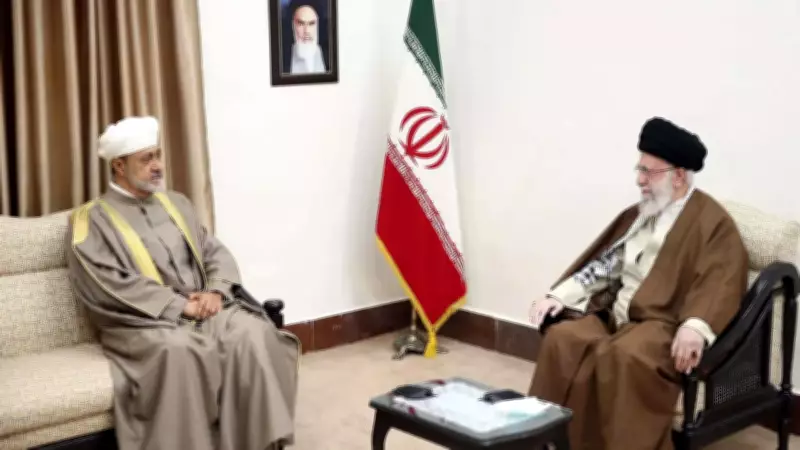
Unlike its GCC neighbors, Oman did not face missile strikes, a distinction rooted in its unique geopolitical stance. Crucially, Oman does not host a major permanent US combat base directly involved in offensive operations against Iran. While Washington has access to facilities like RAFO Masirah under defense agreements, these are largely rotational and logistical, not strike hubs. More significantly, Oman has long served as a diplomatic bridge between Tehran and Washington, a role that likely shielded it from retaliation.
Omani Foreign Minister Badr bin Hamad Al Busaidi recently met with US Vice President JD Vance ahead of the escalation and has been central to indirect US-Iran talks held in Oman and Geneva. According to the Oman News Agency, Al Busaidi noted that nuclear discussions had achieved significant, important, and unprecedented progress, expressing optimism that peace was within reach. He highlighted Iran's agreement not to stockpile enriched uranium as a breakthrough. However, hours later, the US-Israel strikes effectively collapsed these diplomatic efforts.
Military Targets Versus Mediation: Iran's Calculated Strikes
The GCC comprises Bahrain, Kuwait, Oman, Qatar, Saudi Arabia, and the UAE. Iran's strikes appeared focused on states with visible American combat presence that directly facilitate US operations. Bahrain, Qatar, and the UAE host major US military infrastructure, making them prime targets. In contrast, Oman's neutral posture and consistent mediation role likely spared it from attack, as Tehran's calculus reflected in the pattern of strikes targeted countries perceived as enablers of US aggression.
As Gulf capitals remain on high alert and missile exchanges continue, Oman stands as the sole GCC state not struck in this round of escalation. This preserves, for now, a fragile diplomatic channel in an increasingly militarized region, underscoring the value of its intermediary position amidst rising conflicts.






