

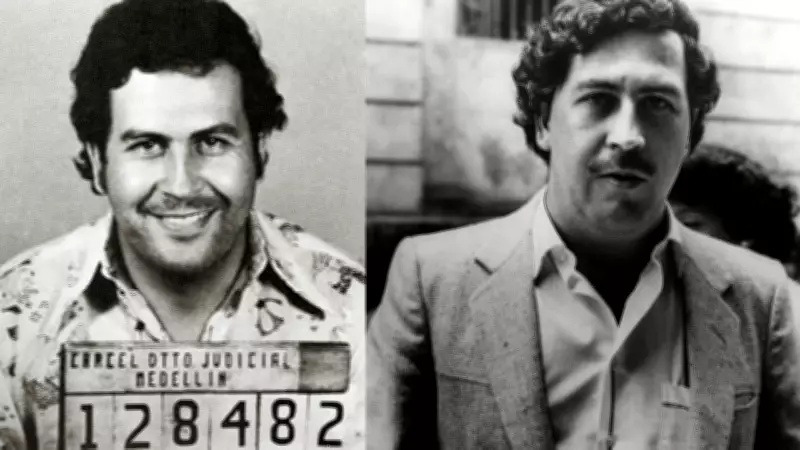
The Unmanageable Fortune of Pablo Escobar
At the peak of his dominance, Pablo Escobar was not merely affluent; he operated on a level where conventional financial concepts became meaningless. As the leader of the Medellín Cartel, Escobar oversaw a vast criminal enterprise that saturated the United States with illegal narcotics throughout the 1980s, amassing colossal sums of cash on a daily basis.
By 1987, Forbes magazine had recognized him as one of the wealthiest individuals globally, estimating his net worth at approximately $25 to $30 billion. However, what truly distinguished Escobar's wealth was not its sheer magnitude but the logistical nightmare of safeguarding it. Unlike legitimate fortunes secured in assets or financial institutions, his earnings arrived as physical U.S. currency, flooding in at a pace that outstripped counting, laundering, or concealment efforts.
The Overwhelming Burden of Cash Management
This deluge of money created a surreal scenario: Escobar was not administering wealth but grappling with mountains of banknotes. Former cartel associates and historical records indicate that the organization allocated thousands of dollars monthly to mundane supplies like rubber bands, solely for bundling cash stacks. Reports suggest around $2,500 per month was spent on rubber bands alone, a figure that has come to symbolize the ludicrous scale of his operations.

Yet, this expense paled in comparison to the core storage dilemma. With no secure or lawful means to hoard billions, cash was secreted away in walls, buried in fields, and crammed into warehouses and safe houses across Colombia. When money remains stagnant in humid, unregulated settings, it inevitably deteriorates.
Nature's Toll: Rodents and Decay
Escobar reportedly confessed that about 10 percent of his stored cash vanished annually, succumbing to water damage, rot, or consumption by rats. In subsequent narratives, this loss has been widely quoted as billions of dollars literally disappearing into the earth. Bundles of currency, tightly bound with rubber bands, proved vulnerable targets.
In rural hideouts and subterranean caches, rodents chewed through piles of notes, reducing segments of his fortune to worthless fragments. Additional portions simply decomposed, with ink bleeding and paper disintegrating in damp conditions. This detail borders on the surreal: one of history's wealthiest criminals forfeiting funds not to law enforcement but to time, moisture, and wildlife, underscoring a profound lesson about excess.
A Desperate Act: Burning Millions for Warmth
Perhaps the most iconic anecdote of Escobar's monetary struggles stems not from his empire's heyday but from a moment of desperation. In the early 1990s, as Colombian authorities tightened their grip and his dominion crumbled, Escobar fled with his family. During a mountain hideout, exposed to frigid temperatures with scarce resources, he made a legendary choice.
According to his son, Juan Pablo Escobar (later known as Sebastián Marroquín), Escobar ignited stacks of cash valued at roughly $2 million to warm his young daughter, using banknotes as firewood. This stark image captures a man who constructed his existence around money, sacrificing it to flames to shield his child. In that instant, currency reverted to a primal role—no longer symbolizing wealth, power, or status, but serving as mere fuel.
The Paradox of Unusable Wealth
Tales like these persist not only for their shock value but because they lay bare the contradictions of extreme wealth amassed outside legal frameworks. Escobar commanded billions yet lacked safe avenues to spend, invest, or conventionally store it. He purchased estates, established private zoos, financed football fields, and aided local communities in Medellín.
Nevertheless, a significant share of his riches existed in a peculiar limbo—physically present but functionally inaccessible. This explains why so much evaporated: portions were confiscated, others were misplaced, and some were literally devoured.

When Abundance Becomes Vulnerability
Escobar's narrative is frequently recounted through lenses of violence, authority, and criminality. Yet, his money unveils a distinct saga—one of excess turning fragile, wealth failing to endure, and abundance silently decaying. He earned beyond imagination, expended beyond comprehension, and still forfeited millions in almost absurd manners. Rats, dampness, time, and fire are not typical elements in billionaire chronicles, but for Escobar, they were inescapable forces.





