

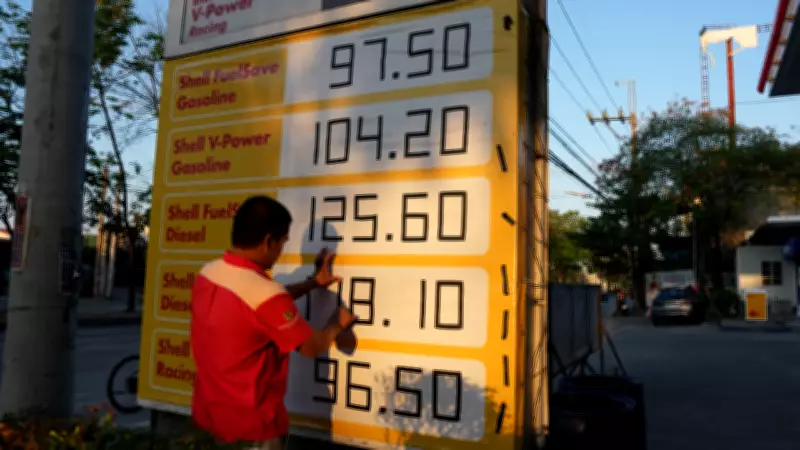
Philippines Declares National Energy Emergency Amid Middle East Conflict
The Philippines has officially declared a national energy emergency, issuing a stark warning about an "imminent danger" to the country's fuel supplies. This critical decision comes as the escalating conflict in the Middle East poses a severe threat to disrupt global oil flows and energy markets worldwide.
Executive Order and Urgent Measures
President Ferdinand Marcos Jr. signed an executive order late Tuesday, emphasizing that immediate and decisive steps are essential to safeguard the nation's energy stability, maintain economic activity, and protect essential services. This declaration represents the Philippines' first nationwide emergency proclamation since the height of the COVID-19 crisis in 2020, marking a significant moment in the country's recent history.
The executive order establishes a framework for the government to implement sweeping measures to manage the developing crisis. A special committee will be formed to oversee the supply and distribution of fuel and other critical commodities. Authorities have been directed to enforce conservation protocols, prevent hoarding activities, and accelerate fuel procurement processes to ensure continuity of supply.

Vulnerable Energy Position and Supply Concerns
The Philippines finds itself in a particularly vulnerable position due to its heavy dependence on imported oil. The nation sources nearly all of its petroleum products from the Middle East, making it exceptionally sensitive to regional disruptions. Government officials have revealed that as of March 20, the country maintained approximately 45 days of fuel supply, raising serious concerns about potential shortages if the Middle East situation continues to deteriorate.
President Marcos specifically highlighted the aviation sector as potentially among the hardest-hit industries. He stated there is a "distinct possibility" that commercial flights could be grounded due to insufficient jet fuel availability. Philippine Airlines, the country's flag carrier, confirmed it has secured fuel supplies only through June, with significant uncertainty about availability beyond that timeframe.
Government Response and Economic Impact
The emergency declaration empowers various government agencies to implement comprehensive response measures. Transport authorities are preparing to roll out subsidies, extend rail operations, and suspend certain fees to alleviate the burden on commuters facing potential transportation disruptions. Welfare agencies have been tasked with monitoring price spikes and accelerating assistance programs for affected citizens.
Unlike some neighboring Southeast Asian countries that provide broad fuel subsidies, the Philippines lacks such comprehensive consumer protections. This policy difference leaves Filipino consumers more directly exposed to rising global oil prices and potential supply disruptions. The government is also making preparations for the possible return of overseas Filipino workers from the Middle East region should conditions worsen.
Global Context and Market Disruption
The current crisis is directly linked to escalating tensions around the Strait of Hormuz, a critical maritime artery through which approximately one-fifth of the world's petroleum passes. Instability in this region has already rattled global energy markets, pushing fuel costs sharply higher and creating uncertainty about future supply reliability.
Industry officials have indicated they have not ruled out implementing fuel rationing measures if the crisis deepens further. The emergency declaration will remain in force for up to one year unless lifted earlier by presidential order, providing the government with extended authority to manage what could become a prolonged energy challenge.
This development underscores how regional conflicts can have far-reaching consequences for energy-dependent nations, particularly those without significant domestic production capabilities. The Philippines' emergency response will be closely watched as a case study in how governments address sudden energy vulnerabilities in an interconnected global economy.






