

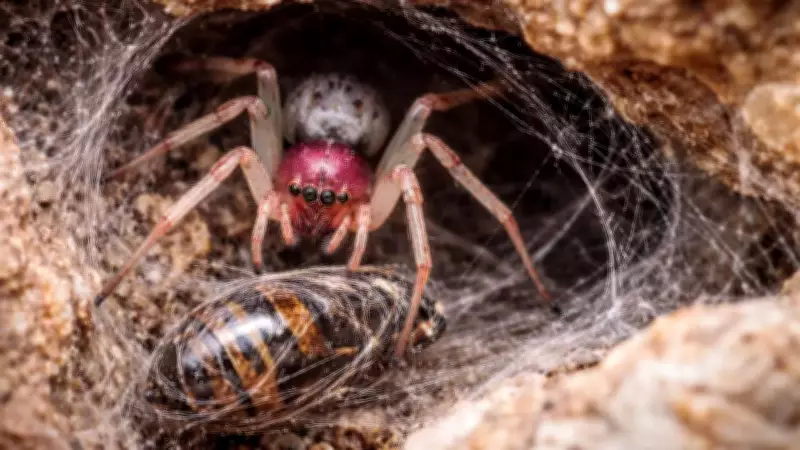
Pink Floyd Spider: A Tiny Urban Hunter with Superior Skills
An emerging spider species, named after the iconic rock band Pink Floyd, has captured international attention not only for its unique name but also for its extraordinary hunting abilities. Researchers have uncovered evidence of this minuscule spider capable of capturing prey many times its own size, demonstrating that even the smallest creatures can dominate their ecosystems. This discovery underscores the vast, unexplored realms of biodiversity, particularly within urban environments, where this spider thrives with specialized adaptations.
What Is the Pink Floyd Spider?
The recently identified spider, scientifically named Pikelinia floydmuraria, belongs to a family of crevice-inhabiting spiders. These spiders are known for occupying cracks, walls, and other hidden locations, often near human settlements. Found in Colombia, this species has evolved to flourish in urban settings. The name floydmuraria combines Floyd, a nod to Pink Floyd, with muraria, meaning wall, reflecting its habitat. This finding was detailed in the paper Another web in the wall: A new Pikelinia from Colombia, providing valuable insights into the spider's taxonomy, natural habitat, and biology.
How Does This Spider Hunt Prey Larger Than Itself?
One of the most remarkable features of the Pink Floyd spider is its ability to catch prey up to six times its own size, a rare feat for such a tiny creature. Unlike many spiders that rely on agility and physical strength, this species employs strategically placed webs, often erected near artificial lighting sources that attract insects. This method increases the likelihood of capturing larger prey with minimal effort, showcasing an efficient hunting strategy that maximizes food resources while conserving energy.

Diet and Feeding Behavior
The Pink Floyd spider primarily consumes smaller insects such as ants, flies, and beetles, which are abundant in urban areas, making it well-suited for habitats close to human settlements. Ants are among its most common prey, followed by flies, indicating a crucial role in regulating insect populations. Additionally, its ability to consume larger insects highlights adaptability in feeding habits, contributing to ecosystem balance by controlling pests that could otherwise spread diseases or harm agriculture.
Why This Discovery Matters
Despite its small size, this spider plays a significant role in maintaining ecological balance. Spiders are vital for regulating insect populations, which can impact human health and agriculture. The discovery of the Pink Floyd spider sheds light on the diverse organisms often overlooked in urban areas, proving that even well-explored habitats hold untapped secrets. It emphasizes the importance of urban biodiversity and the need for continued exploration.
Survival and Adaptability in Urban Ecosystems
A key characteristic of the Pink Floyd spider is its adaptability to human-dominated environments. It inhabits walls and structures of homes, utilizing spaces typically ignored. By spinning webs around light sources to exploit insect movements, it demonstrates a highly adaptive nature. This finding reveals that biodiversity can thrive in unexpected places, challenging the perception that urban settings are devoid of natural life and highlighting the resilience of organisms in adapting to changing landscapes.






