

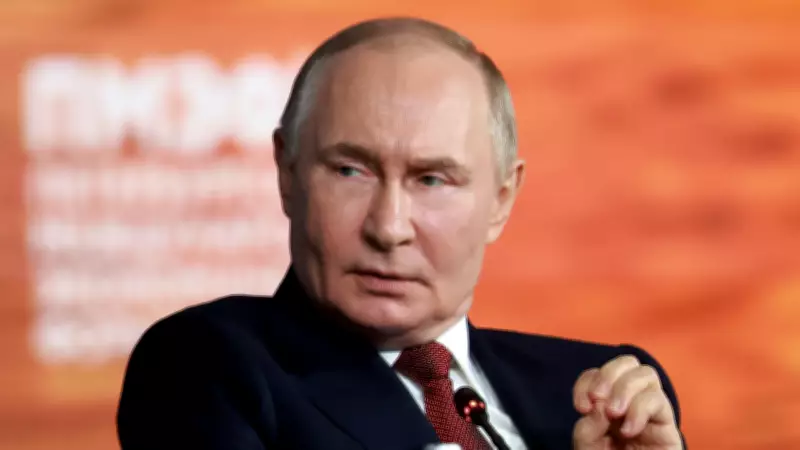
Putin Compares Middle East Conflict Fallout to COVID-19 Pandemic Impact
Russian President Vladimir Putin has issued a stark warning about the escalating conflict in the Middle East, stating that its consequences remain difficult to predict and could potentially rival the global disruption caused by the COVID-19 pandemic. Speaking to business leaders in Moscow, Putin emphasized the conflict's immediate effects on international logistics, production networks, and supply chains, while noting it places significant pressure on hydrocarbon, metals, and fertilizer industries worldwide.
Unpredictable Consequences and Global Economic Disruption
"The consequences of the conflict in the Middle East are still difficult to accurately predict," Putin declared during his address. "It seems to me that those who are involved in the conflict cannot predict anything themselves, but for us it is even more difficult." The Russian leader elaborated on the potential severity of the situation, revealing that some assessments compare the possible fallout directly to the coronavirus epidemic's impact.
Putin reminded his audience that the COVID-19 pandemic dramatically slowed development across all regions and continents without exception, suggesting the Middle East conflict could produce similar widespread economic and social consequences. His comments come as global markets experience increased volatility, particularly in energy sectors directly affected by regional tensions.

Russia's Surging Energy Revenues Amid Regional Turmoil
As Putin delivered his warning, Russia's energy revenues have experienced a significant surge linked directly to turmoil in global oil markets connected to the Iran-Israel conflict. According to analysis from the Kyiv School of Economics (KSE) Institute, Russia is currently estimated to be earning at least $760 million daily from oil and gas exports, with monthly revenues potentially doubling from approximately $12 billion to $24 billion.
This remarkable increase is driven by multiple factors including:
- A sharp spike in global energy prices due to regional instability
- Temporary sanctions relief granted by former US President Donald Trump
- Increased demand as markets adjust to Middle East supply uncertainties
Russia's Diplomatic Positioning and Support for Iran
While the conflict deepens, Moscow has taken deliberate steps to publicly signal support for Tehran. Putin recently congratulated Iranian leaders on Nowruz, the Iranian new year, sending formal greetings to Supreme Leader Ayatollah Mojtaba Khamenei and President Masoud Pezeshkian. According to Kremlin statements, Putin emphasized that Moscow remains a loyal friend and reliable partner to Iran during this period of heightened tension.
However, the actual extent and nature of Russia's support for Iran remains a subject of international debate and speculation. Some Iranian sources have expressed disappointment, claiming they have received little substantive assistance from Moscow during what has been described as Iran's most significant crisis since the 1979 revolution that overthrew the US-backed Shah.
Broader Regional Implications and International Reactions
Russia has consistently positioned itself as a critic of US and Israeli actions in the region, arguing that attacks on Iran have pushed the Middle East closer to a broader regional crisis while triggering a major global energy shock. Putin has specifically condemned the killing of the Iranian Supreme Leader as a "cynical" murder, though details surrounding this event remain contested in international reporting.
The Russian president's warnings about the conflict's potential global impact reflect growing international concern about:

- The stability of critical maritime choke points like the Strait of Hormuz
- Potential expansion of conflict zones to include strategic locations like Bab al-Mandeb
- Long-term disruption to global trade routes and energy supplies
- Humanitarian consequences for civilian populations across the region
As global leaders monitor the situation, Putin's comparison to the COVID-19 pandemic serves as a sobering reminder of how regional conflicts can produce worldwide consequences that transcend geographical boundaries and affect economies, supply chains, and international relations for years to come.





