

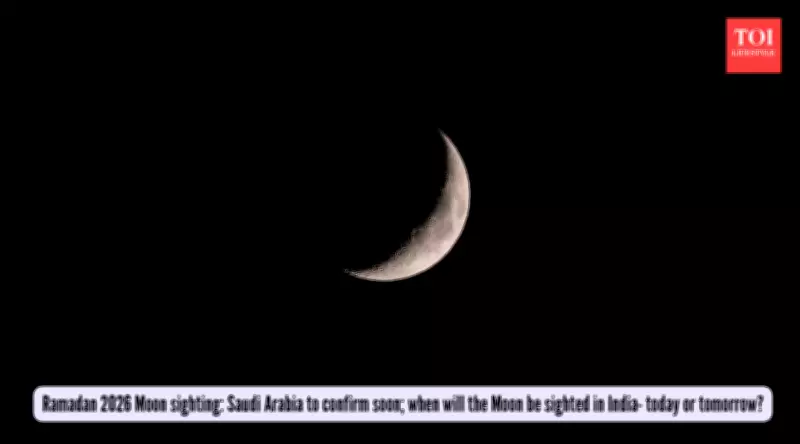
Ramadan 2026 Moon Sighting: Saudi Arabia to Announce; India's Timing Differs
Ramadan represents a profound period of spiritual renewal, where Muslim communities worldwide turn their gaze skyward, eagerly anticipating the first glimpse of the crescent moon that heralds Islam's holiest month. This celestial event signals a time of deep reflection, intensified prayer, and communal unity, transcending mere calendar dates to offer a spiritual reset for billions.
The Global Ritual of Anticipation
As sunset approaches on key evenings, a palpable wave of excitement sweeps through Muslim families globally. They step outside, eyes meticulously scanning the horizon for that elusive sliver of the new moon. This timeless ritual transforms ordinary evenings into moments of divine anticipation and shared hope. The sighting marks the commencement of dawn-to-dusk fasting, special Taraweeh prayers, and acts of charity, fostering patience, gratitude, and spiritual discipline across continents.
From bustling Middle Eastern souks to serene home iftars, this lunar rhythm connects diverse cultures, reminding believers of faith's enduring beauty amidst life's complexities. It's a tradition that relies not on digital apps or clocks, but on natural observation and communal witness, strengthening bonds of humility and unity.

Saudi Arabia Leads the Official Sighting
Religious authorities in Saudi Arabia initiated their formal search for the Ramadan crescent on the evening of Tuesday, February 17, 2026. The Supreme Judicial Council is expected to make an official announcement around 6:00 PM local time. If the crescent is confirmed, fasting will begin across the Kingdom, the United Arab Emirates, and neighboring Gulf states on Wednesday, February 18, 2026. This date would mark the end of Dhu al-Hijjah or Sha'ban and the commencement of sacred Taraweeh prayers that night.
However, astronomical predictions present challenges. According to the UK's Nautical Almanac Office, the astronomical new moon occurs at 3:01 PM Mecca time (12:01 GMT) on February 17. This timing leaves the crescent exceptionally young and setting very soon after sunset, significantly reducing visibility odds. A coinciding solar eclipse further complicates the sighting, though officials remain vigilant for any potential visual confirmation.
Gulf Coordination and Regional Alignment
The UAE's Moon-Sighting Committee, along with similar bodies in Qatar, Kuwait, and Bahrain, will closely align with Saudi Arabia's declaration. As reported by Gulf News, these nations are poised to begin fasting on February 18 if the sighting is confirmed. Ramadan, obligatory for healthy adult Muslims, spans 29 to 30 days based on the lunar cycle, culminating in the joyous celebrations of Eid al-Fitr.
India and South Asia's Distinct Timeline
In India, Pakistan, Bangladesh, and Sri Lanka, Ramadan typically commences one day after the Gulf nations. This difference stems from variations in moon visibility, local sunset times, and geographical viewing angles. Should Saudi Arabia confirm the crescent on Tuesday, these regions will likely conduct their searches on Wednesday, with fasting beginning on Thursday, February 19, 2026.
Communities across South Asia look to trusted religious authorities for guidance. In India, figures like Delhi's Jama Masjid Shahi Imam Syed Ahmed Bukhari, along with leading seminaries in Lucknow (such as Nadvatul Ulama), Kolkata, and Mumbai, provide the final word. Notably, Muslims in Kerala often spot the crescent first within India due to the state's western coastal location, a pattern mirrored in Pakistan's Khyber Pakhtunkhwa province.
Pakistan's national Ruet-e-Hilal Committee will scan skies nationwide on Wednesday, though local committees in Khyber Pakhtunkhwa may initiate searches on Tuesday, frequently pioneering the sighting due to the province's advantageous western position, as noted by Dawn newspaper. Bangladesh and Sri Lanka generally follow cues from either local sightings or announcements from Saudi Arabia.

The Profound Significance of Moon Sighting
Moon sightings hold deep theological and communal importance in Islam. They determine the precise start and end of Ramadan, the sacred month of fasting. This time-honored practice emphasizes physical eyewitness testimony over purely astronomical calculations, fostering a tangible sense of community participation, humility, and shared faith.
The sighting initiates a period of spiritual rigor—dawn-to-dusk abstention, nightly Taraweeh prayers, and increased charity—culminating in the festive celebration of Eid-ul-Fitr. While slight regional differences in visibility create diverse observance patterns, the global shared anticipation and unity in purpose powerfully strengthen the collective faith of the Ummah worldwide.





