

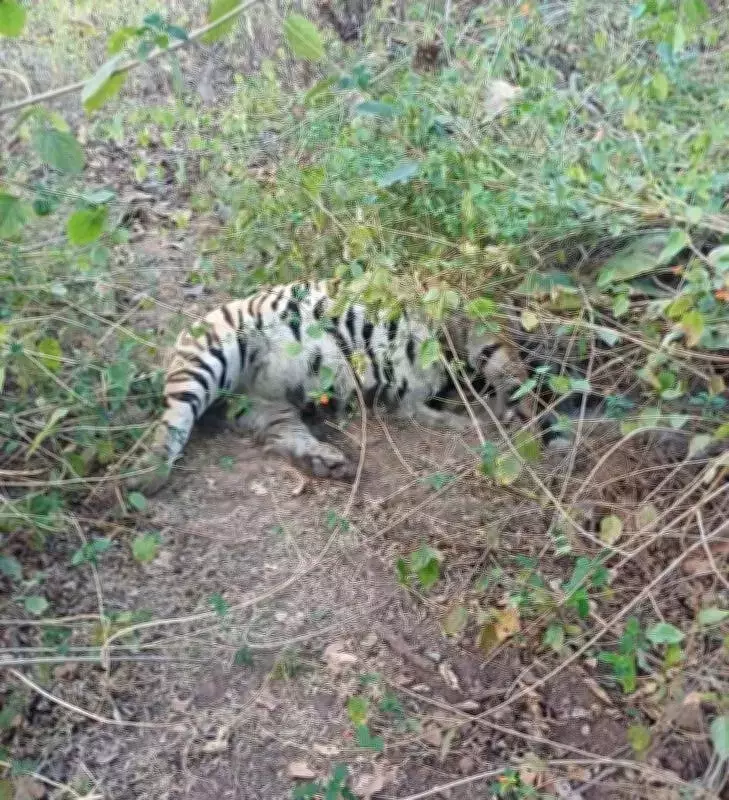
Rewilded Tiger Found Dead in MP Sanctuary Amid Rising Big Cat Mortality
A sub-adult male tiger, recently translocated as part of a state conservation initiative, was discovered dead under mysterious circumstances within the core zone of Nauradehi Wildlife Sanctuary in Sagar district, Madhya Pradesh. Forest officials confirmed the grim finding on Monday, just two days after the Madhya Pradesh High Court reprimanded authorities over unnatural tiger deaths across the state.
Alarming Death Toll Reaches 11 in Early 2026
This incident brings the total number of tiger fatalities in Madhya Pradesh to 11 within the first one and a half months of 2026, raising serious concerns about conservation efforts and wildlife protection mechanisms. The deceased tiger, aged approximately 33 to 35 months, had been relocated under the state's tiger expansion programme, which aims to revive big cat populations in low-density forest landscapes beyond traditional strongholds like Kanha and Pench Tiger Reserves.
Discovery Through Satellite Monitoring
According to forest department officials, the carcass was located in compartment number 159 of Manegaon Beat under the Mohali Range during routine monitoring operations. The tiger had been fitted with a satellite radio collar prior to its release, enabling continuous tracking from a dedicated control room. Over the preceding two days, monitoring data indicated the animal's location had remained stationary at a single point, triggering immediate alarm among the surveillance team.

Frontline staff reached the GPS coordinates late in the evening, finding the tiger motionless within dense forest terrain in the sanctuary's core zone. As darkness descended, the area was secured overnight to preserve evidence and ensure safety.
Comprehensive Investigation Underway
A full-scale investigation has been launched in accordance with National Tiger Conservation Authority (NTCA) protocols. This includes:
- Deployment of specialized dog squads to assist in evidence collection
- Systematic gathering of forensic samples from the scene
- Detailed post-mortem examination by veterinary experts
- Preservation of viscera samples for comprehensive toxicology testing
- Analysis of pugmarks and other field evidence to eliminate potential causes
Senior forest officers, veterinarians, and wildlife experts rushed to the location on Tuesday morning to oversee the investigative process. Authorities are examining multiple possibilities including territorial conflict, poisoning, electrocution, or other unnatural causes of death.
Background of the Rewilded Tiger
The deceased tiger had a remarkable conservation backstory. Nearly three years ago, it was rescued as a 4-5 month old orphaned cub from the Rukhad range of Pench Tiger Reserve. Subsequently transferred to Kanha Tiger Reserve's Ghorela rewilding enclosure near Mukki, the animal underwent structured training in:
- Hunting live prey under controlled conditions
- Developing independent survival skills
- Adapting to semi-wild environments
After being declared fit for release by a team of veterinarians and scientists, the tiger was tranquilized, medically examined, and fitted with its satellite collar before transportation to the Nauradehi landscape. This vast forested area had been identified under long-term tiger conservation strategy as a potential expansion zone with contiguous habitat and sufficient prey base to support establishing territories.
Judicial Scrutiny and Conservation Concerns
The timing of this death is particularly significant given recent judicial intervention. During a hearing last week, the Madhya Pradesh High Court demanded greater accountability and stricter monitoring mechanisms concerning unnatural tiger deaths. Wildlife activist Ajay Dubey has called for a time-bound, independent inquiry into the incident, emphasizing that "every rewilded tiger represents years of dedicated effort and substantial public resources. Such deaths must be transparently investigated to prevent future occurrences."

Forest authorities have maintained that no foul play has been officially confirmed at this preliminary stage. A senior officer stated, "The precise cause of death will be established only after thorough scientific examination and laboratory reports are completed." Further actions will be determined based on post-mortem findings and NTCA guidelines, officials added.
The radio collar data from the previous 72 hours is being meticulously analyzed to reconstruct the tiger's final movements and behavioral patterns before its demise. This tragic incident highlights the ongoing challenges in tiger conservation and rewilding efforts, particularly as Madhya Pradesh grapples with an alarming spike in big cat mortality during the early months of 2026.





