

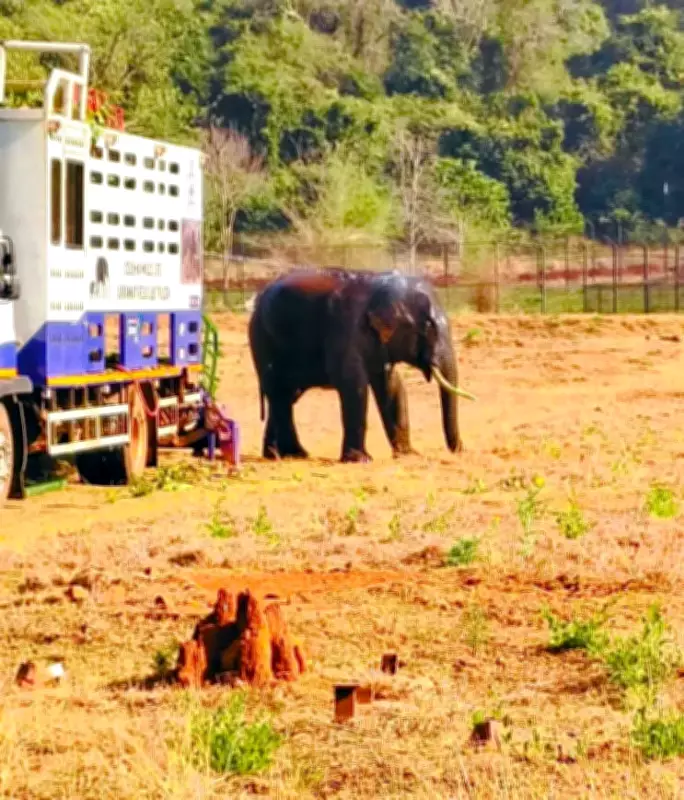
Chandaka's Rogue Tusker Safely Relocated to Satkosia After Night Operation
In a meticulously coordinated operation on Tuesday night, forest authorities successfully tranquilized, radio-collared, and relocated a problematic wild tusker from the Chandaka wildlife sanctuary. The elephant was transported to the Satkosia Tiger Reserve in Angul district using a specialized elephant rescue vehicle known as the 'Airawat'.
Challenging Four-Hour Relocation Effort
Although the initial tranquilizer dart was administered at 8:30 PM, the operation required approximately four hours of careful work by a team of thirty personnel. Forest officials explained that after the first shot, a supplemental dose was necessary to ensure prolonged sedation while fitting the radio collar. Due to the remote forest location, a temporary access road had to be created to allow the crane and 'Airawat' vehicle to reach the site.
"After midnight, we confirmed the elephant was stable inside the vehicle and ready for relocation," stated DFO (Chandaka) Binod Acharya. "Teams from Nandankanan, Bhubaneswar circle's rapid response team, and Angul forest divisions collaborated on this mission. The elephant arrived at Satkosia Tiger Reserve by 3 AM, and we opened the vehicle doors early morning for its release."

Release in Protected Core Area
The aggressive pachyderm was released in Raigoda, a deep core area of Satkosia Tiger Reserve specifically chosen for its absence of nearby human settlements. Wildlife officials expressed hope that the elephant would adapt to its new habitat without dispersing.
"We will continuously monitor its movements through the radio collar," explained Swanjay Swain, regional chief conservator of forests (Angul circle). "This release location was selected after thorough discussions with senior authorities to ensure minimal human-wildlife conflict."
Background of Human-Wildlife Conflict
The 25-year-old tusker had been under surveillance since Monday morning after straying from Bharatpur into human-inhabited areas. This well-built elephant with prominent tusks belonged to a herd frequently observed around Bharatpur. Prior to relocation, it caused significant damage including:
- Boundary walls near the Regional Plant Resource Centre (RPRC)
- Multiple concrete structures
- Security fencing in and around the RPRC facility
This incident follows similar human-wildlife conflicts in the region. In December last year, Chandaka authorities temporarily suspended tourism activities around Sikharchandi, a popular tourist spot, when two wild tuskers entered human settlements, causing panic among residents. Normal activities resumed three days later with continued monitoring by both police and forest personnel.
The successful relocation represents a significant achievement in Odisha's wildlife management efforts, demonstrating coordinated action between multiple forest divisions to address human-elephant conflict while ensuring animal welfare.






