

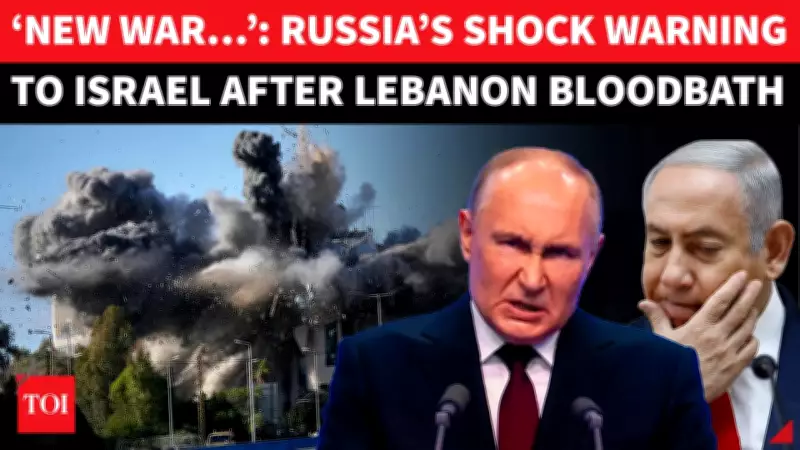
Russia Issues Fierce Condemnation Over Israel's Devastating Lebanon Airstrikes
Russia has delivered a scathing rebuke to Israel following a series of deadly airstrikes in Lebanon that have left a trail of destruction and casualties. The attacks, which Moscow described as a "horrific mistake," have reportedly killed hundreds of people and injured more than a thousand, marking one of the most severe escalations in the region in recent months.
Moscow's Grave Warning on Regional Stability
In a strongly worded statement, Russian officials expressed deep concern that Israel's military actions could completely derail the fragile diplomatic efforts that had been underway. These efforts followed a recent ceasefire agreement brokered between the United States and Iran, which had offered a glimmer of hope for de-escalation in the volatile Middle East.
Russia has explicitly warned that the continuation of such attacks poses a direct threat to regional peace and stability. The Kremlin emphasized the dangerous nature of this escalation, urging all parties to exercise maximum restraint to prevent the situation from spiraling out of control.

Immediate Ceasefire and Return to Negotiations Demanded
Moscow has called for an immediate cessation of hostilities and a prompt return to negotiation tables. Russian diplomats stressed that only through dialogue and diplomatic channels can a lasting solution be achieved, rather than through military means that inevitably lead to further loss of life and destruction.
The Russian warning comes amid growing international apprehension about the potential for a wider regional conflict. Tensions have been steadily rising across the Middle East, with various factions and state actors positioning themselves in response to the latest developments.
Broader Implications for Middle East Diplomacy
The condemnation from Russia represents a significant diplomatic development, as major powers navigate the complex geopolitical landscape of the Middle East. The warning underscores the delicate balance of power in the region and how unilateral military actions can threaten painstakingly negotiated agreements.
As casualties mount and infrastructure lies in ruins, the international community watches anxiously to see whether diplomatic pressure will prevail over military escalation. The coming days will be crucial in determining whether the region descends further into conflict or finds a path back to negotiation and reconciliation.






