Sahara Dust Feeds Amazon Rainforest: NASA Study Reveals Vital Phosphorus Transfer
In a groundbreaking discovery, scientists have confirmed that vast plumes of dust from the Sahara Desert play a crucial role in replenishing phosphorus in the Amazon rainforest. This finding links the world's largest desert to its largest rainforest through what researchers describe as one of the planet's most significant natural nutrient transfers. The research, led by atmospheric scientist Hongbin Yu of the University of Maryland's Earth System Science Interdisciplinary Center (ESSIC) in collaboration with NASA's Goddard Space Flight Center, was detailed in papers published in Geophysical Research Letters and Remote Sensing of the Environment in 2015.
A 10,000-Mile Atmospheric River of Dust
For decades, scientists have observed large plumes of Saharan dust traveling thousands of miles across the Atlantic Ocean, forming expansive tan clouds visible from space before settling over South America. In April 2015, NASA characterized this connection as a "10,000-mile long intermittent atmospheric river of dust" that bridges Africa and the Amazon basin. Using data from NASA's Cloud-Aerosol Lidar and Infrared Pathfinder Satellite Observation (CALIPSO) satellite, launched in 2006, Yu and his team quantified for the first time the exact amount of dust completing this trans-Atlantic journey.
According to their analysis, an average of 182 million tons of dust depart the Sahara Desert each year. Of this immense volume, approximately 27.7 million tons, or about 15 percent, are deposited over the Amazon basin annually. Another independent analysis reported a slightly higher figure of 28.8 million tons reaching the region. To put this into perspective, NASA equated the annual dust departure to roughly 689,290 semi-trucks' worth of material, with about 104,908 dust-filled semi-trucks being dumped into the Amazon every year.

The CALIPSO satellite employs a laser-based lidar instrument that emits pulses of light to bounce off atmospheric particles, allowing it to distinguish dust from other aerosols based on optical properties. This technology enabled three-dimensional tracking of the Sahara-Amazon dust plume between 2007 and 2013, providing unprecedented insights into this natural phenomenon.
Phosphorus: A Critical Nutrient for the Amazon
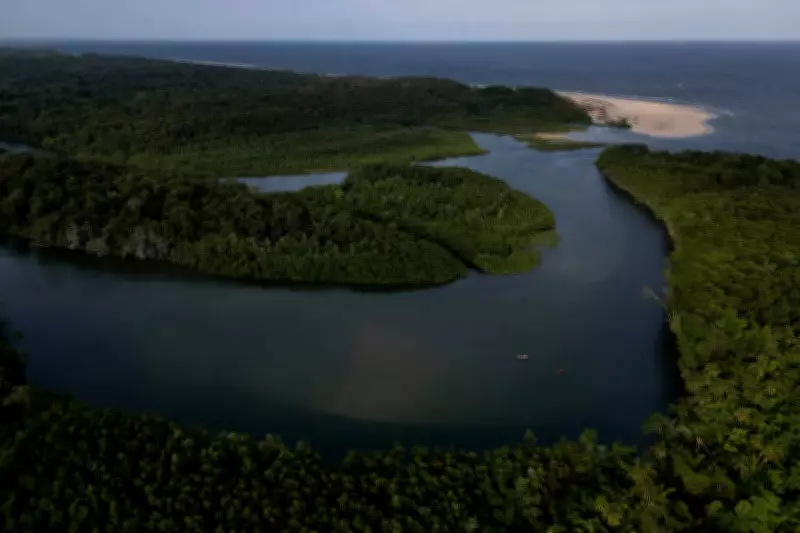
The Amazon rainforest, celebrated for its unparalleled biodiversity, paradoxically suffers from nutrient-poor soils. Approximately 90 percent of Amazonian soils are deficient in phosphorus, an essential element for plant growth and ecosystem health. Heavy rainfall and extensive river systems wash away tens of thousands of tons of nutrients, including phosphorus and nitrogen, from the basin each year, creating a constant need for replenishment.
Across the Atlantic, the Sahara Desert harbors significant phosphorus deposits, particularly in the Bodélé Depression in Chad. This ancient lakebed is rich in the remains of long-dead microorganisms, making it a prime source of phosphorus-rich particles. Frequent dust storms from this region lift these particles into the atmosphere, setting the stage for their trans-Atlantic journey.
In their 2015 paper, Yu and colleagues provided the first satellite-based estimate of phosphorus transport within the dust. By analyzing CALIPSO data alongside dust samples collected from research stations in Chad, Barbados, and Miami, the team concluded that around 22,000 tons of phosphorus reach the Amazon annually from the Sahara. This figure closely aligns with the estimated amount of phosphorus lost each year from the rainforest through hydrological processes, suggesting a delicate balance maintained by this natural transfer.
"This is a small world, and we're all connected together," Yu remarked at the time. The researchers emphasized in their paper that African dust may have important implications for sustaining the health of Amazon rainforests over the long term. Without this phosphorus input, hydrological losses could deplete soil phosphorus reservoirs over decades or centuries, potentially affecting the productivity and vitality of the rainforest. However, they cautioned that uncertainties remain, noting that the exact amount of dust needed to provide adequate phosphorus for the Amazon's needs is still unknown.

Extreme Variability and the Sahel Connection
The study also revealed significant year-to-year fluctuations in dust transport across the Atlantic. Between 2007 and 2011, there was an 86 percent difference between the largest dust plume recorded in 2007 and the smallest in 2011. Yu and his colleagues identified a potential link between rainfall in the Sahel, a semi-arid region south of the Sahara, and dust transport volumes. When Sahel rainfall increased, the amount of dust carried across the Atlantic decreased.
The precise mechanism behind this correlation remains uncertain. Yu hypothesized that higher rainfall might promote vegetation growth in the Sahel, reducing exposed soil available for wind erosion. Alternatively, rainfall patterns could correlate with wind systems that lift dust into the upper atmosphere, which serves as a transport corridor toward the Americas. "We know that dust is very important in many complex ways," Yu stated. "Dust affects climate and, at the same time, climate change will affect dust." He added that researchers are focused on two fundamental questions: "How much dust is transported? And how does climate change affect the amount of dust that travels across the Atlantic?"
A Global Earth System Connection
Each individual dust particle measures only a fraction of the width of a human hair, yet collectively they form one of the largest intercontinental material transfers on Earth. The work by Yu and colleagues highlights how distant ecosystems remain intricately interconnected through atmospheric processes. By quantifying both the total dust flux and its phosphorus content, the 2015 studies provided compelling evidence that the Sahara Desert plays a measurable role in sustaining the long-term nutrient balance of the Amazon rainforest.
This research underscores the delicate trans-Atlantic exchange that supports one of the planet's most vital ecosystems, even as scientists continue to investigate how climate variability may influence this process. The findings serve as a reminder of the complex and often unseen links that bind our global environment, emphasizing the need for continued study and conservation efforts.