

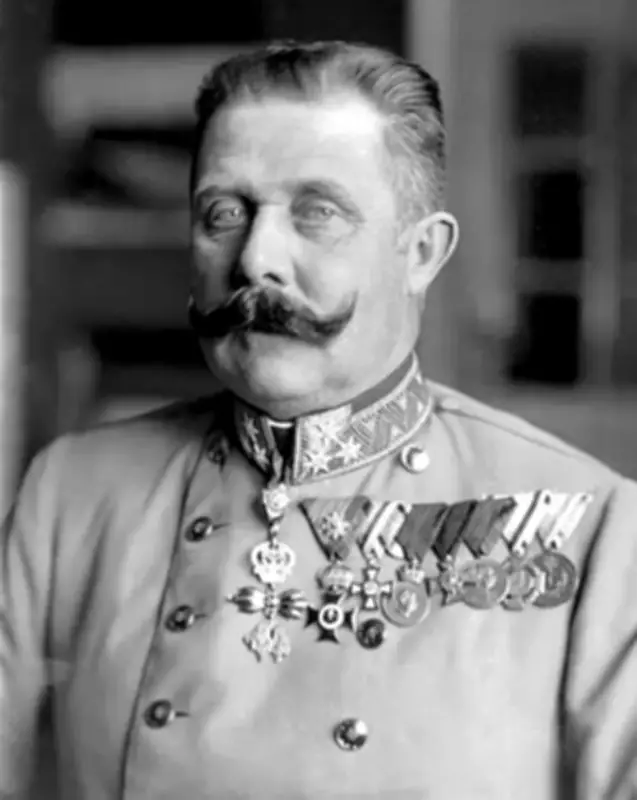
The Fateful Day That Changed World History: June 28, 1914
A single violent incident on June 28, 1914, would become the pivotal moment from which world history took an irreversible and catastrophic turn. The murder of Archduke Franz Ferdinand, heir to the Austro-Hungarian throne, alongside his wife, Duchess Sophie of Hohenberg, was far from an ordinary political assassination. This event directly marked the starting point of the First World War, transforming what might have been viewed as a localized politically motivated act into a devastating global conflict involving all major world powers.
Behind this dramatic event lay years of mounting tension, fierce rivalries, and complex political maneuvering across the European continent. The assassination did not occur in a vacuum but rather within a volatile environment primed for explosion.
Sarajevo Assassination: The Critical Moments of That Day
According to Cambridge University Library historical records, Archduke Franz Ferdinand was visiting Sarajevo, a city under Austro-Hungarian control. This visit carried significant national implications for the Serbian population, who viewed it with deep apprehension and resentment.

Nationalist conspirators positioned themselves along Sarajevo's streets, anticipating an opportunity to strike. Following an initial failed assassination attempt using a bomb that injured bystanders but missed the Archduke's vehicle, events took an unexpected turn due to a simple navigational error.
The motorcade carrying the Archduke made a wrong turn, bringing the vehicle directly alongside one of the conspirators, Gavrilo Princip. Princip, who was associated with the secret Serbian nationalist organization known as the Black Hand (officially called Unification or Death), seized this chance encounter and fired shots into the vehicle, fatally wounding both the Archduke and his wife.
As documented by the Imperial War Museums, this assassination triggered an immediate chain reaction that rapidly escalated into the full-scale commencement of the First World War. The remarkable aspect of this historical turning point involves the element of chance—had the driver not taken that wrong turn, the assassination might never have occurred, potentially altering the course of twentieth-century history.
Underlying Causes of World War I: Why This Assassination Mattered So Profoundly
As Norwich University historical analysis confirms, while the assassination served as the immediate catalyst, numerous deeper factors had been building toward continental conflict over preceding decades. The European political landscape had grown increasingly tense and unstable due to four powerful forces: rampant nationalism, aggressive militarism, intricate alliance systems, and intense imperial rivalries.
The complex web of alliances proved particularly significant in transforming a regional incident into a worldwide war. When Austria-Hungary placed full blame for the Archduke's death on Serbia and issued a severe ultimatum, Serbia's inadequate response provided the justification for Austria-Hungary to declare war.
This action then triggered a domino effect of military mobilizations: Russia mobilized against Austria-Hungary to protect Serbian interests, Germany mobilized against Russia to honor its alliance with Austria-Hungary, and ultimately France and Britain entered the conflict through their own treaty obligations. These interlocking alliances ensured that what might have remained a localized Balkan crisis instead engulfed the entire European continent and beyond.
Historical Impact: How One Event Transformed the Global Landscape
The ramifications of this single day in Sarajevo proved truly monumental. Within weeks of the assassination, the entire European continent plunged into warfare. What military leaders initially anticipated would be a brief conflict stretched into a protracted, grueling four-year struggle that redefined modern warfare.
The First World War resulted in millions of military and civilian casualties while causing the collapse of major empires including the Austro-Hungarian Empire, the Ottoman Empire, Imperial Germany, and Tsarist Russia. The conflict radically altered political boundaries, redrew national maps across Europe and beyond, and toppled longstanding political regimes.

This historical event continues to captivate scholars and historians not only for its direct consequences but also for the profound lessons it offers about human decision-making during crisis situations. As historian Christopher Clark noted in an interview with Radio Free Europe, "the leaders of Europe were sleepwalkers, watchful but unseeing, haunted by dreams, yet blind to the reality of the horror they were about to bring into the world."
Looking back more than a century later, we can clearly observe how a single moment—shaped by ideology, coincidence, and accumulated tension—irrevocably altered the trajectory of human history. The Sarajevo assassination demonstrates with chilling clarity how seemingly minor events can unleash forces that reshape civilizations.





