

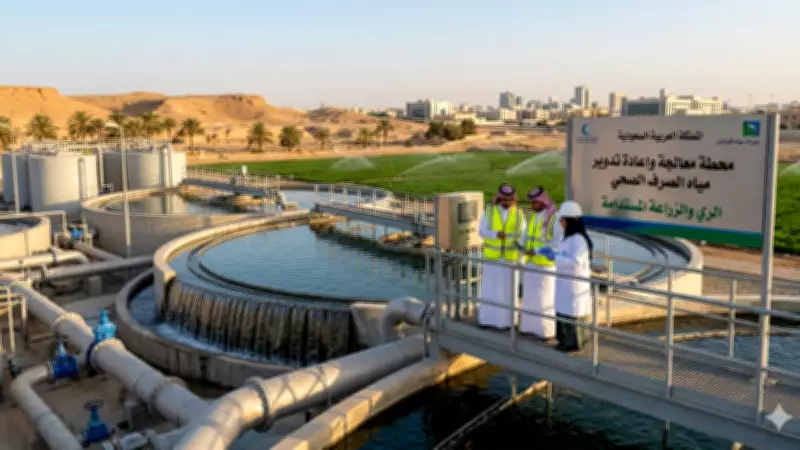
Saudi Arabia's Revolutionary Water Strategy Transforms Deserts into Green Belts
In the arid landscapes of Saudi Arabia, a groundbreaking initiative is redefining water utilization through innovative environmental restoration. The Kingdom has implemented a strategic approach that employs treated wastewater to establish continuous green belts across its desert regions. This ambitious effort represents a significant step toward achieving long-term sustainability goals while addressing critical ecological challenges.
Wastewater Reuse: A Cornerstone of Saudi Arabia's Vision 2030
Saudi Arabia's wastewater reuse plan is directly integrated with the country's comprehensive transformation efforts, particularly the Vision 2030 initiative. Remarkably, the Kingdom now aims to reuse up to 70% of treated wastewater, a substantial increase from previous decades' targets. According to the Ministry of Environment, Water and Agriculture (MEWA), this treated water is extensively utilized for irrigation, landscaping, and afforestation projects throughout the nation.
MEWA emphasizes: "Treated wastewater represents a precious resource that significantly contributes to sustainability while reducing dependence on finite natural resources, especially non-renewable groundwater reserves." This approach aligns with global environmental trends and has become a fundamental solution for overcoming severe water shortages in arid regions.

Green Corridors: Combating Desertification Through Innovation
The creation of green corridors stands as one of the most notable achievements resulting from Saudi Arabia's wastewater reuse program. These vegetated areas serve multiple crucial functions: stabilizing soil, controlling sandstorms, and fostering microclimates that support biodiversity development. Research conducted by King Abdullah University of Science and Technology (KAUST) confirms the positive environmental impacts of these projects.
The study titled "Monsoonal Imprint on Late Quaternary Landscapes of the Rub' al Khali Desert" demonstrates that vegetation improvement in desert environments can be effectively achieved through irrigation using treated wastewater, which simultaneously enhances soil fertility. Beyond environmental benefits, these green belts significantly improve quality of life by cooling urban areas and providing recreational spaces for residents.
Advanced Water Management and Future Expansion
Saudi Arabia remains committed to implementing cutting-edge methodologies in water treatment, ensuring recycled water meets stringent safety standards for both environmental protection and public health. Current state-of-the-art treatment facilities employ multi-stage filtration and purification processes that render water suitable for agricultural and landscaping applications.
The Saudi Water Partnership Company (SWPC) highlights in its reports that public-private partnerships are driving efficiency and innovation in wastewater treatment and reuse systems. Future project expansions will prove crucial for achieving sustainable development objectives, enabling the creation of larger green corridors that transform additional desert territories into sustainable ecosystems.
Despite being one of the most arid regions on Earth, Saudi Arabia continues to demonstrate how innovation combined with sustainability principles can reshape environmental realities. The Kingdom's wastewater transformation initiative serves as a model for other water-scarce nations seeking to balance development with ecological preservation.






