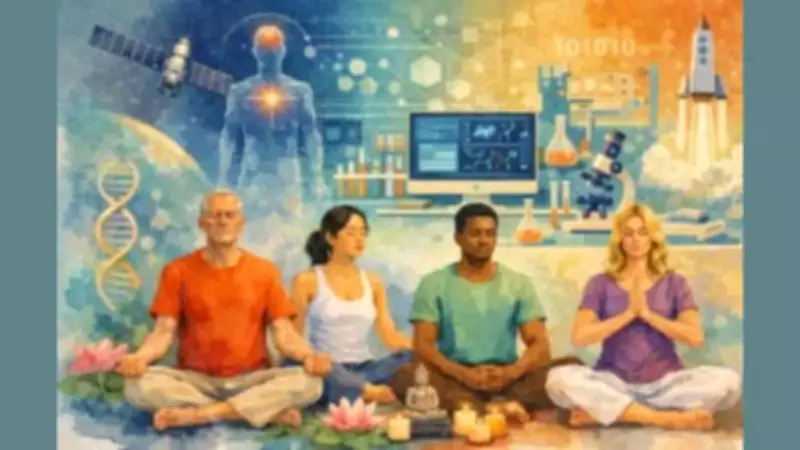
The Convergence of Science and Spirituality for a Better World
In today's interconnected world, humanity faces a multitude of complex and interdependent challenges, including climate change, inequality, and conflict. These issues are global in scope and cannot be resolved through technological advancements alone. They demand a profound shift in human consciousness and a deeper understanding of our shared reality. Interestingly, we are now witnessing a remarkable convergence of two powerful streams of human endeavor: science and spirituality. Both disciplines aim to comprehend reality and alleviate suffering, albeit through distinct methodologies. When engaged in respectful dialogue, they can mutually illuminate each other, contributing to a more compassionate, wiser, and harmonious global society.
Two Distinct Yet Complementary Ways of Knowing
Science operates through observation, rigorous analysis, and empirical evidence to explore the physical universe, from subatomic particles to vast galaxies, and from brain activity to intricate ecosystems. In contrast, spirituality turns inward, investigating the mind and emotions, cultivating compassion, and seeking inner transformation. Science primarily asks questions like "What is it?" and "How does it work?" while spirituality delves into "What does it mean?" and "How should I live?" For centuries, these two domains were often viewed as separate or even conflicting. However, in recent decades, there has been a growing recognition of their potential for mutual learning and synergy.
While science excels at providing factual knowledge and technological solutions, it does not inherently offer wisdom or ethical guidance. Conversely, spirituality may not explain physical processes in detail, but it provides frameworks for living meaningfully and ethically. When science and spirituality come together, they can promote both a deeper understanding of the world and enhanced human well-being, addressing not just external problems but internal growth.

Shared Questions and Emerging Conversations
In traditions like Buddhism, there is an emphasis on investigation and examining beliefs through reasoning, discouraging blind faith. This approach aligns closely with the scientific spirit of inquiry, as both value evidence, though their tools differ significantly. One relies on telescopes, microscopes, and experiments; the other utilizes meditation, introspection, and contemplative practices. A growing number of scientists have taken an interest in studying the mind, exploring not only its disorders but also its vast potential. Neuroscientists, for instance, are now addressing questions long pondered by contemplative traditions:
- Can attention be effectively trained?
- Can compassion be strengthened through practice?
- What is the fundamental nature of consciousness?
Through initiatives like the Mind & Life Institute, dialogues between scientists and spiritual practitioners have investigated how meditation affects brain structure and function, how ethics influence behavior, and how cultivating inner peace can help individuals face modern challenges. Research has demonstrated that practices such as mindfulness and compassion meditation can reduce stress, improve overall well-being, and even reshape neural pathways. This suggests that human nature is not fixed; we can actively cultivate qualities like kindness and mental clarity, much like we train our bodies for physical fitness.
The Ethical Dimensions of Scientific Progress
Yet, science alone cannot dictate how we should live our lives. With the advent of powerful technologies, from artificial intelligence to genetic engineering, we confront ethical questions of immense significance. Science informs us about what is possible, but it does not provide guidance on what is morally right or desirable. That direction must stem from our sense of responsibility and inner values. In this context, spirituality is not confined to religious doctrines; it refers to the cultivation of basic human qualities such as compassion, patience, forgiveness, and contentment. These virtues are not the exclusive property of any single tradition but represent the essence of our shared humanity.

Without these ethical foundations, scientific progress may lead to imbalance, exploitation, or even destruction. With them, science can be harnessed wisely to serve humanity, ensuring that advancements benefit all beings and promote sustainable development. This integration is crucial for navigating the ethical dilemmas posed by rapid technological change.
A Common Responsibility for Global Challenges
The global challenges we face, including climate change, inequality, and conflict, are deeply interconnected and require collective action. They cannot be solved by technology in isolation; they necessitate a shift in consciousness and a broadening of our ethical concern. Science can measure, model, and analyze these problems, but it cannot inherently teach us to care or empathize. That must originate from the heart and our shared human experience.
If we recognize that all beings, like ourselves, seek happiness and wish to avoid suffering, our actions will naturally be guided by compassion. This sense of shared humanity should be at the core of education systems worldwide. Alongside teaching science and technology, we must incorporate ethics and emotional awareness into curricula. Only then can we nurture a generation equipped not merely with knowledge but with the wisdom to apply it responsibly and humanely.
Moving Forward Through Dialogue and Collaboration
In the twenty-first century, dialogue is essential—among cultures, nations, religions, and between science and spirituality. Dialogue does not imply agreement but fosters mutual respect and a willingness to learn from diverse perspectives. The ultimate goal shared by all is to reduce suffering and increase peace in the world. To scientists, the message is clear: let your work be guided by a warm heart and ethical considerations. To spiritual seekers, the advice is to let your faith be illuminated by reason and critical thinking. And to all of humanity, the call is to walk together with open minds and kind hearts, collaborating for the benefit of all beings and the planet we share.