

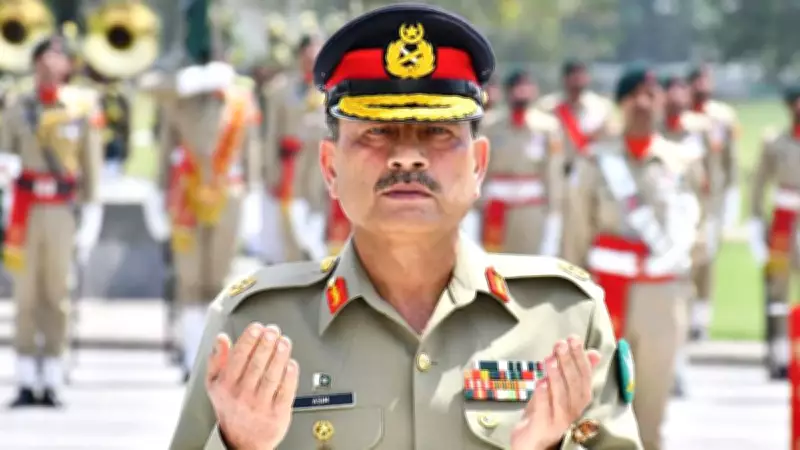
Shia Leaders in Pakistan Denounce Army Chief's Controversial Iran Remark
Shia leaders in Pakistan have issued a sharp rebuke against Army Chief General Asim Munir for his recent statement suggesting that those dissatisfied with the country should "go to Iran." The leaders have leveled serious allegations, claiming that General Munir is acting in the interests of the United States and Israel, a charge that has intensified sectarian and political divisions within the nation.
Escalating Sectarian Tensions Over Munir's Comment
The controversy erupted when General Asim Munir, during a public address, made a remark interpreted as dismissive towards critics, implying they could relocate to Iran if unhappy with Pakistan's situation. This statement has been met with widespread condemnation from Shia communities, who view it as inflammatory and divisive. Leaders argue that such rhetoric undermines national unity and exacerbates existing sectarian fault lines.
Key Allegations by Shia Figures:

- Accusations that General Munir is covertly aligned with US and Israeli agendas, potentially compromising Pakistan's sovereignty.
- Claims that his comment reflects a broader pattern of marginalization against Shia Muslims in Pakistan.
- Concerns that this could fuel further instability in a region already grappling with geopolitical tensions.
Broader Implications for Pakistan's Domestic and Foreign Policy
This incident has significant ramifications for Pakistan's internal cohesion and its international relations. Domestically, it highlights the fragile state of sectarian harmony, with Shia leaders warning that such statements could incite violence or discrimination. In terms of foreign policy, the allegations of US-Israel influence challenge the military's perceived neutrality and could strain Pakistan's delicate balancing act with neighboring Iran and global powers.
Analysts note that this controversy comes at a critical juncture, as Pakistan navigates economic challenges and seeks to maintain stability amidst regional conflicts. The army's role, traditionally seen as a stabilizing force, is now under scrutiny, with calls for greater accountability and sensitivity in public discourse.
Historical Context and Ongoing Sectarian Dynamics
Pakistan has a long history of sectarian strife between Sunni and Shia Muslims, often fueled by political and external influences. The current uproar over General Munir's remark is seen as part of this continuum, with Shia leaders expressing frustration over what they perceive as systemic biases. This episode underscores the need for inclusive policies and dialogue to address deep-seated grievances and prevent further polarization.
As the situation unfolds, observers are closely monitoring the response from the Pakistani government and military establishment. The outcome could influence not only domestic politics but also Pakistan's strategic partnerships in the Middle East and beyond.






