

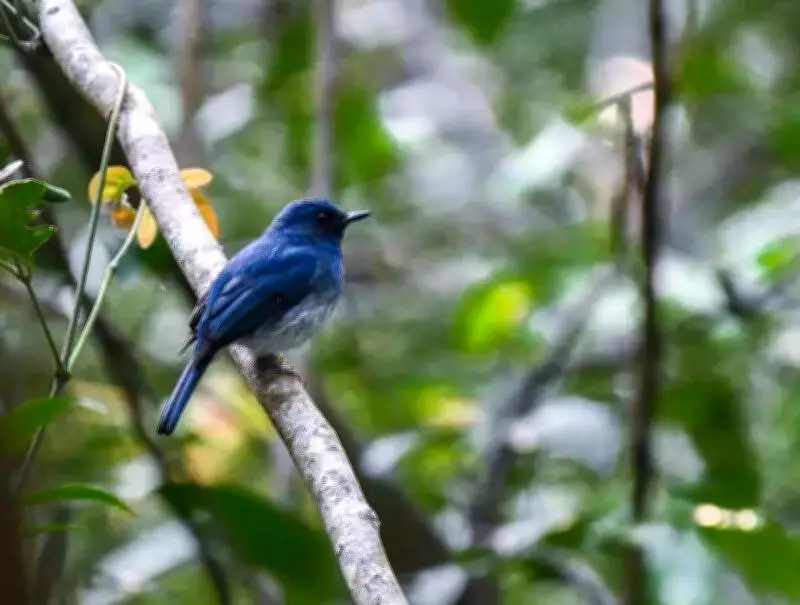
Silent Valley National Park Bird Survey Uncovers 192 Avian Species in Landmark Study
A groundbreaking and comprehensive bird survey conducted across Silent Valley National Park has documented an impressive 192 species, marking a significant milestone in understanding the park's avian biodiversity. The survey, held from March 6 to 8, represents the first-ever effort to cover both the protected forest and its buffer zone, providing unprecedented insights into the region's ecological richness.
Expanded Scope Reveals Greater Diversity
While a previous bird survey in 2023 was confined to the park's core area and recorded 175 species, the latest initiative spanned all 21 forest camps, including high-altitude locations such as Poochipara, Koomban, Sispara, Meenbhani, and Walkkad. Forest officials emphasized that this expanded approach was crucial for capturing the full spectrum of avian life.
"Typically, bird surveys are limited to the core area of the park, which covers 89.54 square kilometers," explained a forest official. "This time, we extended the exercise to include the 154-square-kilometer buffer zone as well. We discovered distinct species of birds in both areas, highlighting the importance of this broader perspective."

Key Findings and Species Highlights
The survey recorded rare migratory birds such as the Asian House Martin and Western House Martin, alongside a rich diversity of birds of prey, including nocturnal species like owls and nightjars. Notably, 20 bird species endemic to the Western Ghats were identified, including the Nilgiri Laughingthrush, Black-and-Orange Flycatcher, White-bellied Treepie, Nilgiri Pipit, White-bellied Blue Flycatcher, and Nilgiri Sholakili.
Jafar Palot, a scientist with the Zoological Survey of India, provided critical insights into the distribution of species. "The rare bird species are predominantly found in core areas," Palot noted. "However, we observed the highest diversity of bird species in the buffer zone. Birds prefer this area due to the availability of different food sources from diverse habitats, including plantations. We also documented breeding nests of various species, with the breeding season occurring before the arrival of rains."
Breeding Evidence and Regional Distribution
Evidence of breeding was documented for several species, including the Sri Lankan Frogmouth, Indian Nightjar, Bronzed Drongo, Malabar Trogon, Crimson-backed Sunbird, Purple-rumped Sunbird, Malabar Grey Hornbill, and Malabar Imperial Pigeon. This finding underscores the park's role as a vital breeding ground for avian populations.
The survey revealed that the highest number of species was recorded in Anavaayi (95), followed by Thathengalam (94), Uppukandam (93), and Keeripara (92). This regional variation highlights the diverse microhabitats within the park that support different avian communities.
Collaborative Effort and Conservation Implications
Conducted jointly by the state forest department and the Malabar Natural History Society, the survey involved 85 birdwatchers from Kerala and Tamil Nadu. This collaborative effort not only enhanced the accuracy of data collection but also fostered regional cooperation in conservation initiatives.
The findings emphasize the critical importance of Silent Valley National Park for both resident and migratory bird species. By extending the survey to the buffer zone, researchers have provided a more detailed account of avian diversity, which can inform future conservation strategies and habitat management practices. This comprehensive approach sets a new standard for biodiversity assessments in protected areas across India.






