Six Cave-Dwelling Animals That Have Mastered Life in Darkness
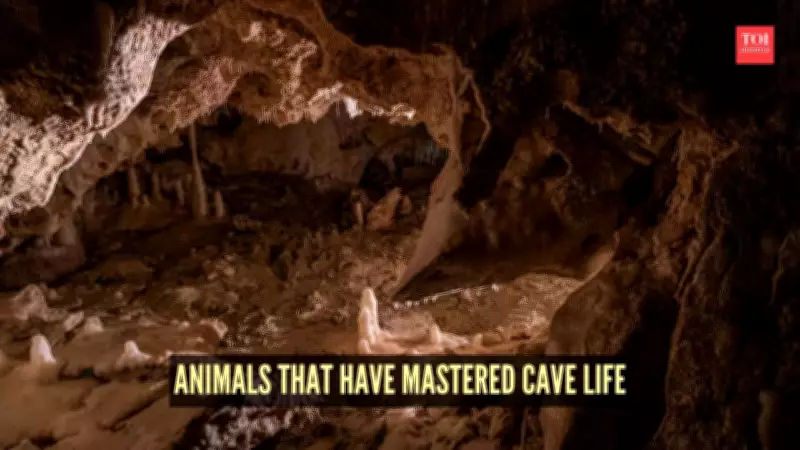
Caves represent one of Earth's most enigmatic and challenging habitats. Characterized by perpetual darkness, constant temperatures, and scarce food resources, these subterranean environments have fostered the evolution of unique life forms over millions of years. Animals that inhabit caves, known as troglobites, have developed remarkable adaptations to survive without sunlight, relying on enhanced senses other than vision. Their secluded existence means they are seldom encountered by humans, making them fascinating subjects of scientific study.
Kauaʻi Cave Wolf Spider
The Kauaʻi cave wolf spider (Adelocosa anops) is a highly specialized predator exclusive to lava tube caves on Kauaʻi Island in Hawaii. This tiny spider is completely blind, lacking eyes entirely. Instead of weaving webs, it hunts by sensing vibrations and chemical signals, ambushing prey from the cave floor. Its adaptation to total darkness showcases a unique predatory strategy in the animal kingdom.
Olm (Proteus anguinus)
Often called the "human fish," the olm is a pale, eel-shaped salamander found in the limestone caves of Europe's Dinaric Alps. Blind and with translucent skin, it thrives in low-oxygen conditions. Remarkably, olms can live up to 100 years and endure long periods without food. They navigate their dark world using a keen sense of smell and lateral line detection to find small invertebrates.

Blind Cavefish (Garra andruzzii)
Native to Somalia, the blind cavefish has evolved over millions of years in complete darkness. It lacks pigmentation and functional eyes, relying on non-visual mechanisms to perceive its environment. Research indicates its biological clock operates on an extended cycle, an evolutionary response to the absence of day-night cycles in caves.
Oilbird (Steatornis caripensis)
The oilbird is a nocturnal bird inhabiting caves in South America and Trinidad. Unlike most birds, it uses echolocation—similar to bats—to navigate pitch-black caves. Oilbirds feed on fruit at night and produce clicking sounds to map their surroundings. Their secretive nesting habits make them a rare sight for humans.
Texas Blind Salamander
Found in the Edwards Aquifer caves of central Texas, the Texas blind salamander (Eurycea rathbuni) is adapted to aquatic cave life. It is blind and translucent, with external gills for breathing underwater. This species exemplifies evolutionary specialization for dark, underground environments and is rarely observed due to its isolated habitat.
Blind Huntsman Spider
Discovered in caves in Laos, the blind huntsman spider has no eyes, a common trait among troglobites. It depends on vibrations and chemical cues to hunt and move in darkness. This spider's adaptations highlight how life can flourish independently of light, with behaviors finely tuned to hidden cave ecosystems.
These six animals demonstrate the incredible diversity and resilience of life in Earth's subterranean realms. From eyeless predators to echolocating birds, their adaptations are a testament to evolution's power in shaping organisms to extreme environments. Due to their isolated and dark habitats, these cave dwellers remain largely unseen by humans, offering a glimpse into the mysterious world beneath our feet.