

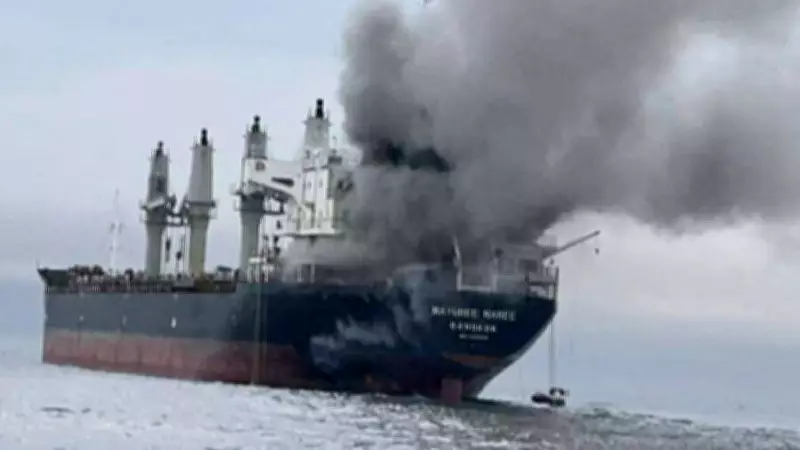
Six Merchant Vessels Targeted in Gulf and Strait of Hormuz as Regional Conflict Escalates
In a significant escalation of maritime tensions, six commercial vessels have been attacked in the Gulf and the strategic Strait of Hormuz, placing merchant shipping directly on the front lines of ongoing regional conflicts. The incidents underscore the growing risks to global trade routes amid heightened geopolitical instability.
Iran Issues Stark Warning Over Oil Shipments
Iran's Revolutionary Guards have issued a severe warning, stating that if attacks on Iranian territory or interests continue, they will prevent "one litre of oil" from being shipped from the Middle East to the United States, Israel, or their partner nations. This threat directly targets the vital energy exports that flow through these contested waterways, potentially disrupting global oil supplies.
The statement from Iran's elite military force highlights the precarious situation in West Asia, where commercial maritime operations are increasingly caught in crossfire. The attacks on the six vessels—details of which are still emerging—represent a dangerous broadening of conflict zones, moving beyond traditional battlefields to include critical international shipping lanes.

Strategic Waterways Become Flashpoints
The Gulf and the Strait of Hormuz are among the world's most crucial maritime chokepoints for oil transportation. Any sustained disruption here could have immediate repercussions for global energy markets and economies. The recent vessel attacks, coupled with Iran's explicit threat, signal a deliberate strategy to leverage control over these waterways as a geopolitical tool.
Analysts note that such actions could provoke stronger international responses, potentially drawing naval forces from multiple nations into direct confrontation. The situation places merchant ships and their crews in unprecedented danger, as they navigate waters that have rapidly transformed from trade corridors to potential war zones.
Global Implications and Regional Stability
The escalation comes amid broader regional tensions involving Iran, the US, Israel, and various Gulf states. Iran's warning about blocking oil shipments is seen as a direct response to perceived aggressions, aiming to exert pressure on adversaries by threatening economic lifelines. This move could:
- Increase insurance premiums for shipping in the region
- Force rerouting of vessels, raising costs and transit times
- Heighten military patrols and surveillance in key areas
- Impact global oil prices and supply chain stability
As the international community monitors developments, the safety of maritime commerce remains a pressing concern. The attacks on the six vessels serve as a stark reminder that in modern conflicts, economic and logistical targets are increasingly in the crosshairs, with far-reaching consequences for global trade and security.






