

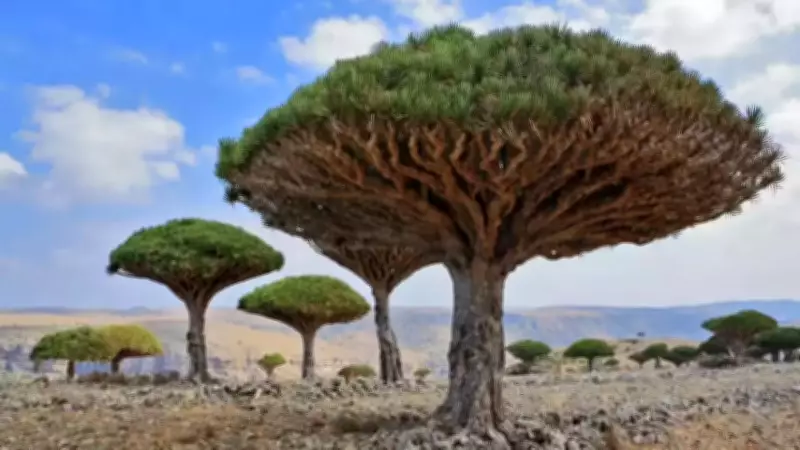
Socotra Archipelago: The Most Alien Place on Earth
Nestled in the Indian Ocean, the Socotra archipelago stands as a testament to nature's strangest and most fascinating creations. Often described as the most alien place on Earth, this remote cluster of islands captivates scientists and travelers alike with its bizarre, long-lost, and otherworldly features. Separated from the African mainland for an astonishing 18 million years, Socotra has evolved in complete isolation, transforming into a veritable evolutionary laboratory where unique life forms thrive.
Geological Origins and Isolation
The reason Socotra earns its extraterrestrial reputation lies deep in its geological history. The islands that comprise today's Socotra were once integral parts of the ancient supercontinent Gondwana. During the Miocene Epoch, approximately 18 million years ago, tectonic shifts severed these landmasses from Gondwana, creating a biological time capsule adrift in the Indian Ocean. Unlike volcanic islands, Socotra is classified as a 'continental fragment,' a distinction that has allowed it to develop independently from Africa for millions of years. This prolonged isolation has fueled vicariant speciation, forcing flora and fauna to adapt uniquely to Socotra's limestone plateaus and semi-desert climate, far removed from their African ancestors.
Unique Flora: A Botanical Wonderland
According to UNESCO reports, an astounding 37% of Socotra's 825 flowering plant species are endemic, meaning they exist nowhere else on the planet. The most iconic of these is the Dragon's Blood Tree (Dracaena cinnabari), renowned for its umbrella-shaped canopy. This evolutionary marvel has adapted to capture moisture from mountain mists, sustaining itself in the island's arid conditions. Another notable species is the Socotran Bottle Tree, or Desert Rose (Adenium obesum subsp. socotranum), which features bulging trunks that store water year-round, allowing it to bloom with beautiful pink flowers even during severe droughts.

The 'Galapagos of the Indian Ocean'
The International Union for Conservation of Nature (IUCN) and UNESCO frequently compare Socotra to the Galapagos Islands due to its incredible biodiversity and high rate of endemism. Data from the United Nations Environment Programme World Conservation Monitoring Centre (UNEP-WCMC) reveals that beyond plants, 90% of reptiles and 95% of terrestrial snails on Socotra are endemic. Key species like the Socotra Starling and Socotra Sunbird serve as vital biological indicators, reflecting the overall health of the island's delicate ecosystems.
Conservation Challenges and Efforts
Despite its alien appearance, Socotra faces very terrestrial threats. Climate change and shifts in local land use practices endanger this 'living museum' of ecological significance. Increased cyclone activity in the Indian Ocean brings heavy rainfall that could devastate slow-growing Dragon's Blood Forests. Organizations such as the IUCN are collaborating with local communities to balance modern needs with preservation efforts, ensuring that Socotra, designated a UNESCO World Heritage site in 2008, remains protected for future generations.
In summary, the Socotra archipelago is not just a geographical curiosity but a critical hub of evolutionary biology. Its unique geology, endemic species, and ongoing conservation battles highlight the fragile beauty of one of Earth's most extraordinary places.






