In 2021, researchers solved a long-standing historical puzzle by identifying a rare and remarkable finish line at L'Anse aux Meadows in Newfoundland, pinpointing Norse activity at the site to one exact year. Scientists used ancient tree rings and evidence of a massive solar storm to date the site of Norse activity to the precise year of 1021 AD.
This discovery made the famous Canadian ruins the only certain calendar date for Europeans in the Americas before Christopher Columbus. It demonstrated that a brief event on the Sun could leave an indelible mark on wood, solving a human mystery a thousand years old.
Why This Site Was Important
L'Anse aux Meadows has long been recognized as the only confirmed Norse settlement in the Americas. However, its timeline was blurry before this breakthrough. Previous archaeological work used data sets based on smaller plant materials such as twigs, which produced only a broad range of possible dates. This left a wide range of uncertainty and significant room for debate regarding when the Norse actually occupied the camp.

This general early medieval window was transformed by the new dating result into a precise calendar point. Scientists led by Margot Kuitems published their findings in the journal Nature, where they were able to date the wood samples at the site to 1021. This precision helps clarify how the site fits into larger history, aiding in defining the real scope of Norse movement across the Atlantic Ocean.
Mark of the Solar Storm
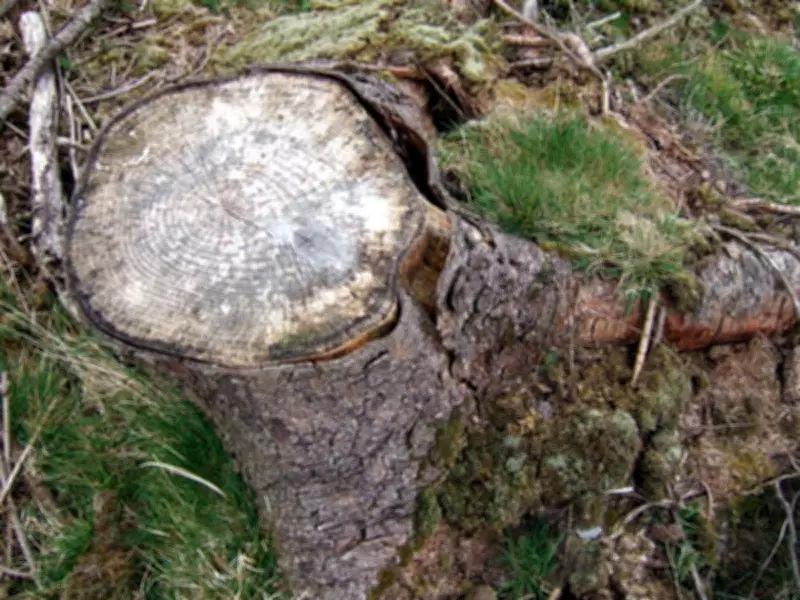
The key to unlocking this date was not a human record on paper but an environmental archive stored within tree rings. A major space-weather event occurred in the late 992 to early 993 period. This massive solar storm triggered a sudden, rapid increase in atmospheric radiocarbon levels all over the world. As trees absorb carbon from the atmosphere while growing, this particular cosmic ray pulse imprinted a unique, synchronous chemical signature in the annual rings of living trees worldwide.
To determine the precise year the timber was felled, the scientific team had to locate this 993 radiocarbon spike within the archaeological wood samples. This environmental signature was discovered in the inner growth sequences and provided a secure anchor point. From there, the researchers were able to count the subsequent annual growth rings outwards to the very edge of the bark, revealing the exact year the tree stopped growing.
How the Wood Yielded Its Year
The research team established their chain of evidence using three pieces of Norse wood recovered from the Newfoundland site. Most importantly, all three pieces of wood had been worked with metal tools – a sure sign of Norse workmanship, since the native people of the area at the time did not use metal tools.
The scientists were also able to identify the global AD 993 anomaly in the wood layers and counted forward through the preserved rings. They determined that the last layer of growth before the edge of the bark was laid down in AD 1021. The great merit of this method is its unusual precision. The year of felling was not based on a broad radiocarbon range from the record material of the woodcutters.
What the Finding Means
This cosmic signal provides a mind-bogglingly precise timeline for early Atlantic travel, but it is also important to understand what the finding does not prove. The data tells us exactly when these particular trees were cut, but does not reveal the whole story of how long the Norse stayed in Newfoundland, how many people lived in the camp, or how often they returned to the area.
In a paper published in Science Advances, it appears that L'Anse aux Meadows was a relatively small and short-lived settlement, though it certainly provided definitive evidence of a European presence in 1021. Nevertheless, the date is of great historical importance. It links solar physics, tree chemistry, and archaeology, demonstrating how a sudden burst of energy from the Sun can preserve one of archaeology's most precise dating tools.