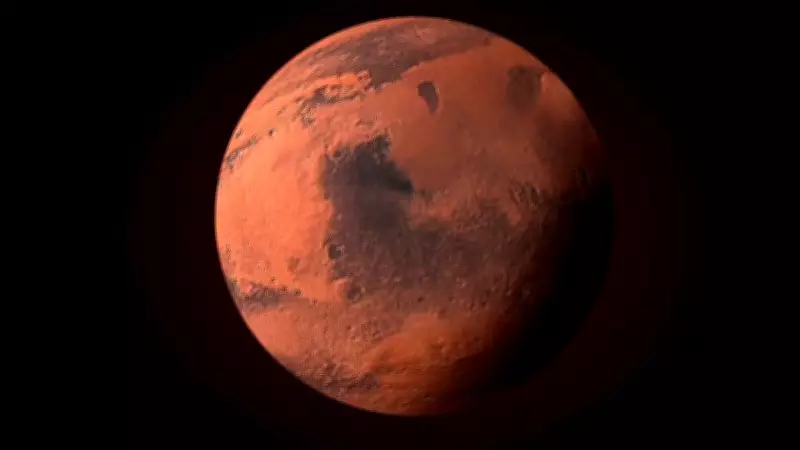
A powerful solar storm that struck Mars in May 2024 has provided scientists with unprecedented data on how the Red Planet is gradually losing its atmosphere. The event, captured by NASA's MAVEN orbiter, revealed that solar storms accelerate atmospheric escape, stripping away gases at a rate much higher than previously estimated.
Key Findings from the Solar Storm
The storm, classified as a coronal mass ejection (CME), hit Mars on May 20, 2024, causing a temporary increase in the planet's atmospheric loss rate. MAVEN's instruments detected a surge in the escape of oxygen and carbon dioxide ions, key components of the Martian atmosphere. According to researchers, the storm increased the escape rate by a factor of 10 to 20 compared to quiet solar conditions.
Implications for Mars' Climate History
This discovery sheds light on how Mars transformed from a warm, wet planet billions of years ago to the cold, dry world it is today. The continuous loss of atmosphere, driven by solar wind and storms, has thinned the air, reducing surface pressure and allowing water to evaporate into space. Scientists estimate that Mars has lost about 90% of its original atmosphere over the last 4 billion years.

Dr. Shannon Curry, MAVEN principal investigator at the University of California, Berkeley, stated: "This storm gave us a unique opportunity to see the atmospheric loss process in action. It confirms that space weather plays a critical role in Mars' long-term climate evolution."
How MAVEN Captured the Data
The Mars Atmosphere and Volatile Evolution (MAVEN) spacecraft, which has been orbiting Mars since 2014, was perfectly positioned to observe the storm. Its Solar Wind Ion Analyzer (SWIA) and Neutral Gas and Ion Mass Spectrometer (NGIMS) measured the increased outflow of particles. The data show that the storm heated the upper atmosphere, causing gases to expand and escape more easily.
- Oxygen escape rate: Increased by 15 times during the storm.
- Carbon dioxide escape rate: Increased by 12 times.
- Total atmospheric loss: Equivalent to removing a layer of air 1 kilometer thick over the entire planet in just a few days.
Broader Significance for Planetary Science
These findings are not only relevant to Mars but also help scientists understand how other planets, including Earth, interact with their parent stars. Earth's magnetic field protects it from the worst of solar storms, but Mars lacks such a global magnetic field, making it vulnerable. Studying this process can inform future missions to Mars and the search for past life.
The research, published in the journal Geophysical Research Letters, emphasizes the need for continuous monitoring of space weather. As humans plan to send astronauts to Mars, understanding these storms is crucial for ensuring safety and protecting equipment.
In conclusion, the May 2024 solar storm provided a natural laboratory for observing atmospheric escape on Mars. The insights gained will refine models of planetary evolution and help predict the future of Mars' thin atmosphere.