

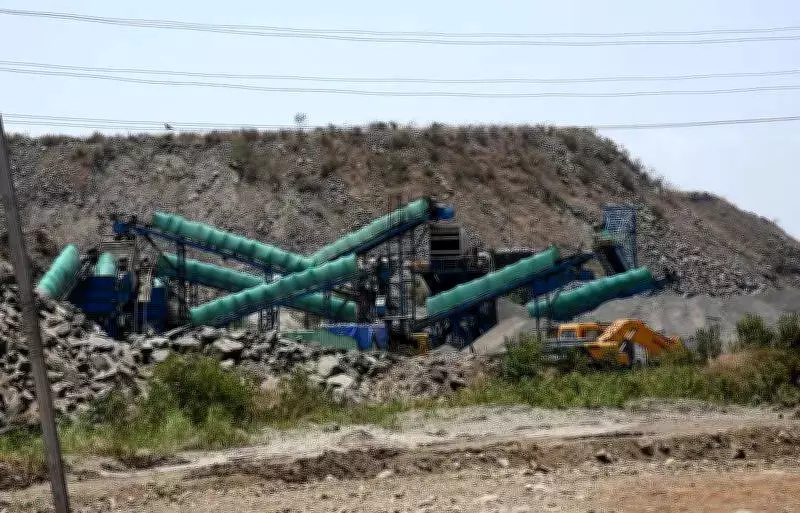
Himachal Stone Crusher Ordered to Repair Road or Pay Rs 20.75 Lakh
In a significant environmental enforcement action, the Mandi district administration in Himachal Pradesh has issued a strict directive to the proprietor of Mahalaxmi Stone Crusher in Baer village. The administration has demanded that the stone-crushing unit either repair a damaged road stretch it allegedly caused or deposit Rs 20.75 lakh with the Himachal Pradesh Public Works Department (HPPWD) for restoration work.
NGT Report Details Road Damage and Restoration Estimate
Mandi Deputy Commissioner Apoorv Devgan submitted a detailed status report to the National Green Tribunal (NGT) outlining the findings from an inspection conducted on March 17. During this inspection, officials discovered that a road stretch near the stone-crushing unit had sustained significant damage due to heavy vehicular movements associated with the unit's operations.
The executive engineer of HPPWD's Mandi division has prepared a comprehensive estimate of Rs 20.75 lakh for the complete restoration of the affected road section. This estimate covers all necessary repairs to return the road to its original condition and functionality.

"Accordingly, the proprietor of the stone-crushing unit has been asked either to restore the road to its original condition under the supervision and technical guidance of HPPWD or deposit the requisite amount with the department for the execution of the restoration work through the HPPWD," Deputy Commissioner Devgan stated in his official report to the NGT.
Additional Environmental Requirements and Compliance Findings
Beyond the road repair mandate, the administration has imposed additional environmental obligations on the stone-crushing unit. The proprietor has been instructed to implement a comprehensive afforestation plan in the affected area under the technical guidance of the forest department. This plan will include expert recommendations for appropriate tree species selection and planting strategies to enhance local ecological restoration.
Interestingly, despite resident complaints about environmental degradation, the Himachal Pradesh State Pollution Control Board (HPSPCB) inspection conducted on the same day found the unit operating within prescribed environmental norms. The ambient air quality monitoring revealed Suspended Particulate Matter (SPM) levels at 128 micrograms per cubic metre (µg/m³), well below the permissible limit of 600 µg/m³.
Noise pollution measurements also showed compliance, with recorded levels of 68.4 decibels (dB) falling within the 75 dB limit established for industrial zones in the region.
Background: Resident Petitions and Allegations
The NGT's involvement stems from a petition filed by residents of Baer village near Mandi town, who raised serious concerns about the stone-crushing unit's operations. On February 6, the tribunal directed multiple authorities—including the environment department principal secretary, Mandi deputy commissioner, HPSPCB, and M/s Mahalaxmi Stone Crusher—to implement appropriate remedial measures.
The villagers' petition contained several serious allegations:
- The Mahalaxmi Stone Crusher was allegedly functioning illegally without obtaining proper mining leases or requisite permissions
- The unit was accused of carrying out unscientific and indiscriminate mining activities in the area
- Residents claimed these operations resulted in significant environmental destruction in nearby areas
According to the petition, the stone-crushing activities have created multiple environmental problems:
- Piles of sand, gravel, and other raw materials scattered along roads leading to the unit
- Dust generated by passing vehicles causing substantial air pollution
- Complete damage to a road stretch near the unit
- Soil erosion and damage to trees in the vicinity
- Negative impact on local water sources
"Illegal mining has affected two water sources, and the accessibility to a spring located near the unit, the main water source of the village, has been blocked due to mining activities," the petition specifically noted, highlighting the severity of the alleged environmental impact on local water resources.

The administration's current directive represents a concrete step toward addressing these environmental concerns while ensuring that the responsible party bears the financial burden of necessary restoration work. The case continues to be monitored by the National Green Tribunal as part of its ongoing environmental oversight in the region.





