

The Enigmatic Tapir: A Bizarre Blend of Animal Features
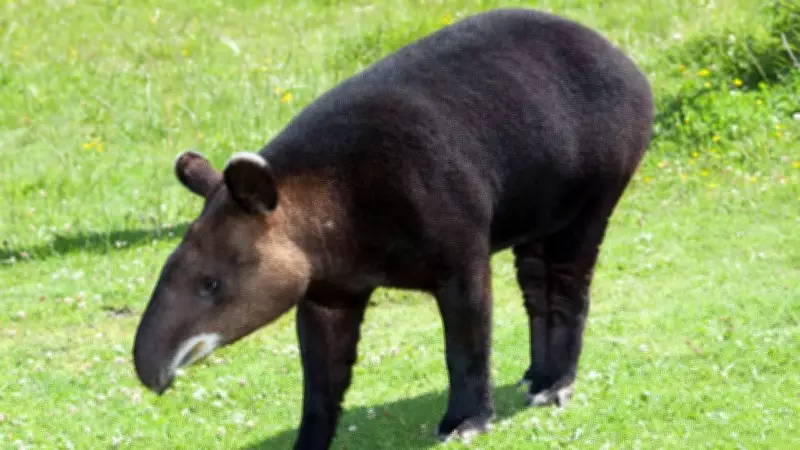
At first glance, the tapir appears to be a fantastical creature straight from mythology—a peculiar fusion of multiple animal species. With a body reminiscent of a stout hog and a distinctive small proboscis resembling an elephant's trunk, this mammal's odd appearance often leads observers to question its authenticity as a genuine animal species. However, far from being a mere curiosity, the tapir represents a distinct and ancient lineage within the mammalian world.
A Distinct Evolutionary Lineage
Contrary to common assumptions, tapirs are not closely related to pigs or any other familiar animals. They belong to the unique Tapiridae family, standing as evolutionarily distinct mammals with a heritage that stretches back millions of years. Often described as living fossils, tapirs have undergone minimal physical changes over their extensive evolutionary history, making them one of the few remaining mammals that offer a window into Earth's distant past.
Global Distribution and Habitat Preferences
This large herbivorous mammal exists in four primary species distributed across different continents. Three species inhabit the lush landscapes of Central and South America, while the fourth, known as the Malayan tapir, resides in Southeast Asia. These creatures exhibit a strong preference for specific environments that support their survival needs.

Tapirs predominantly occupy tropical rainforests and dense woodlands, particularly those adjacent to water bodies such as riverbanks and lake shores. These locations provide multiple advantages: abundant food sources, natural protection from predators, and suitable shelter. Their timid and secretive nature means they frequently conceal themselves within dense vegetation, making sightings by humans relatively rare despite their substantial size.
Unique Physical Characteristics and Adaptations
The Remarkable Proboscis
The tapir's most distinctive feature is undoubtedly its small, flexible trunk-like nose, which explains why people often compare these animals to a hybrid of pigs and elephants. This specialized organ serves multiple crucial functions in the tapir's daily life:
- Foraging assistance: The trunk enables tapirs to grasp leaves, fruits, and branches while feeding
- Sensory perception: It helps animals sense their surroundings and detect both food sources and potential dangers
- Aquatic adaptation: Tapirs are excellent swimmers who can breathe underwater using this unique appendage
Additional Physical Traits
Beyond their distinctive proboscis, tapirs possess several other noteworthy physical characteristics. Their bodies are round and robust, supported by short, sturdy legs. They have developed thick skin that provides protection when navigating through challenging terrain. Furthermore, their feet feature multiple toes that facilitate comfortable movement across muddy surfaces—an essential adaptation for their preferred wetland habitats.
Behavior, Diet, and Ecological Role
Tapirs exhibit predominantly solitary and nocturnal behaviors, strategies that help them avoid predators and minimize human disturbance. While their vision is relatively poor, they compensate with heightened sensitivity to sound and smell, which proves particularly advantageous when navigating dense forest environments.
As herbivores, tapirs primarily consume leaves, fruits, and twigs. Their dietary habits position them as crucial seed dispersers within their ecosystems. According to research published in Integrative Zoology titled "On tapir ecology, evolution and conservation," tapirs represent the oldest surviving species of large herbivore and play a fundamental role in forest ecology through their seed dispersal activities. This process promotes forest regeneration and enhances biodiversity, making tapirs integral components of healthy ecosystems.
Their affinity for water extends beyond mere habitat preference—tapirs are accomplished swimmers who frequently seek refuge in rivers or lakes when threatened. In aquatic environments, they can float while breathing through their specialized snout, demonstrating remarkable adaptability.

Conservation Challenges and Imperatives
Despite having survived for millions of years, tapirs now face significant threats that have rendered most species endangered or vulnerable. Several interconnected factors contribute to their declining populations:
- Habitat destruction: Widespread deforestation has dramatically reduced the forested areas tapirs depend on for survival
- Hunting pressure: Humans hunt tapirs for their skin and meat, further threatening their existence
- Reproductive limitations: Their slow reproductive rate makes population recovery particularly challenging
The conservation of tapirs extends beyond preserving an individual species—it represents a crucial investment in ecosystem health. As key seed dispersers, tapirs contribute significantly to maintaining forest vitality and biodiversity. Protecting these unique mammals therefore supports broader environmental stability and resilience.
Why Tapirs Matter: Uniqueness and Symbolism
Tapirs stand out as extraordinary creatures due to their unusual physical form, ancient evolutionary history, and vital ecological function. Their appearance—a seemingly random combination of animal features—actually represents a unique evolutionary pathway unlike any other species.
Their longevity as a species demonstrates remarkable adaptability across changing environmental conditions. However, their current endangered status highlights the profound impact of human activities on wildlife populations worldwide.
Studying and protecting tapirs carries significance that transcends the species itself. These creatures symbolize the incredible diversity of life on Earth and serve as indicators of ecosystem health. By conserving tapirs, we simultaneously preserve their habitats and the countless other species that share these environments, contributing to the protection of our planet's biological heritage for future generations.





