

Tiger Cub Succumbs to Crocodile Attack in Valmiki Tiger Reserve Wetland
A young tiger cub's struggle for survival ended tragically in the wetlands near the Manguraha forest range of Valmiki Tiger Reserve (VTR) in West Champaran on Wednesday morning. The incident serves as a stark reminder of the harsh realities of nature, where predator-prey dynamics play out with brutal consequences.
Desperate Struggle in the Wetlands
Separated from its mother and drawn toward water sources, the approximately seven-to-eight-month-old cub is believed to have wandered into the Don canal wetland area. Unaware of the dangers lurking beneath the water's surface, the young tiger encountered a territorial crocodile that proved to be its undoing.
Villagers in the vicinity reported hearing prolonged roars echoing through the area for nearly thirty minutes—clear indications of a fierce and desperate struggle between the two animals. By the time forest officials could respond to the situation, the battle had already concluded with the cub's demise.

Forest Department Investigation
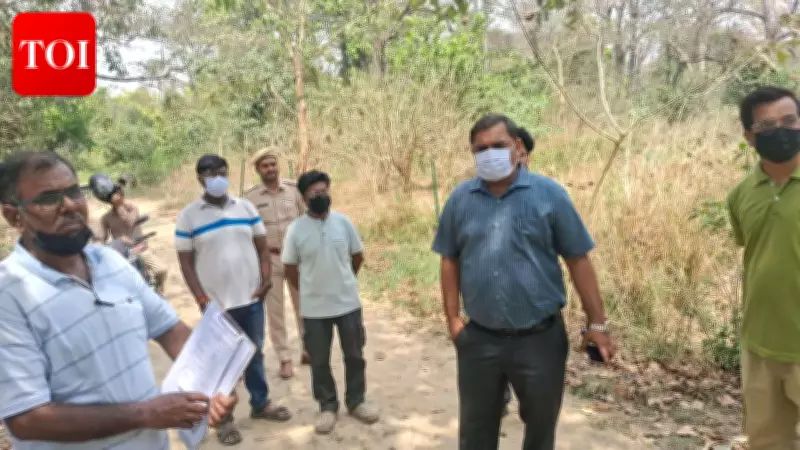
Forest officials received information about a tiger carcass near Meghauli Chowk close to the wetland area. A team promptly rushed to the location and conducted a preliminary examination. Gaurav Ojha, conservator and field director of VTR, stated, "The cub may have strayed from its mother in search of water and entered the wetland, where it was possibly attacked by a crocodile. Nearly 60-70% of the carcass had been consumed."
Teeth marks found on the remains provided conclusive evidence of the crocodile attack. The forest department transported the cub's remains to the Manguraha range office for further examination.
Postmortem and Forensic Analysis
A thorough postmortem was conducted on the young tiger's remains. Officials preserved viscera samples that will be sent to the Wildlife Institute of India (WII) in Dehradun for comprehensive forensic and DNA analysis. The exact circumstances surrounding the death will be determined once the analysis report is complete.
Local villagers provided additional context, with one resident explaining, "We heard loud roars of the tiger cub from a distance but were unaware that it was fighting a crocodile. In the morning, we found the cub dead and immediately informed the forest department."
Crocodile Habitat in Gandak River
Official wildlife data reveals that the Gandak river flowing through West Champaran represents India's second-largest habitat for crocodiles and alligators, surpassed only by the Chambal river. Conservation efforts have led to a steady increase in the crocodile population within this ecosystem.
Sameer Sinha, joint director of the Wildlife Trust of India, explained that crocodiles frequently move from the Gandak river into auxiliary canals including Tirhut, Triveni, and Don. "Alligators are generally more reclusive and less aggressive, while crocodiles are more territorial and aggressive, making them dangerous to other animals and humans in shared waterways," Sinha noted.
This tragic incident highlights the complex interactions between different predator species sharing overlapping habitats. While tiger conservation efforts have shown success in recent years, such natural conflicts remind us that wildlife management must consider the entire ecosystem, including other apex predators like crocodiles that inhabit the same waterways.






