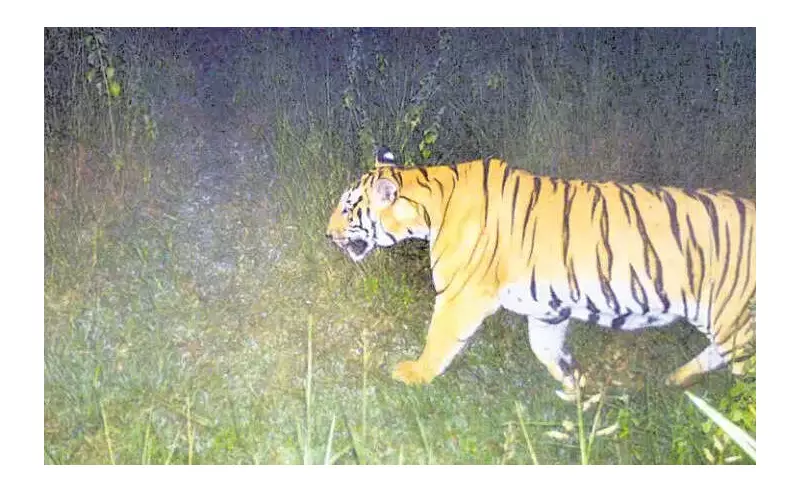
Wildlife authorities in Odisha are in the final stages of preparation to introduce tigers to the Debrigarh Wildlife Sanctuary, marking a significant step in the state's conservation efforts. Forest Minister Ganesh Ram Singkhuntia announced the progress on Monday, stating that the second phase of the tiger translocation programme is imminent.
Preparations and Infrastructure in Full Swing
The state forest department is actively working to meet all mandatory requirements for the successful translocation. A massive 120-kilometre-long steel mesh fencing is being erected along the sanctuary's boundary to create a barrier between the big cats and approximately 150 neighbouring villages. This critical infrastructure is designed to minimise human-animal conflict.
Other key preparations include selecting the right tigers for the move, conducting extensive sensitisation programmes for local villagers, constructing a soft release enclosure, and building capacity among forest staff. The authorities have also directed officials to set up watchtowers to monitor the tigers' movements post-release. A proposal worth Rs 70 crore has been submitted to the government to enhance nature tourism and bolster conservation infrastructure.

Formalities and the Path to a New Tiger Reserve
The National Tiger Conservation Authority (NTCA) has already granted its approval for the translocation. The state's current focus is on selecting the source habitat from where a compatible male and female tiger will be brought. Officials had earlier visited Madhya Pradesh to study potential source sites, but a final decision is pending.
A crucial step involves holding gram sabhas (village councils) in 55 villages adjoining the sanctuary, a mandatory procedure before it can be officially notified as a tiger reserve. An expert committee has already submitted its study report on the sanctuary. Once notified, Debrigarh will become the first tiger reserve in western Odisha, with a total area of 804 square kilometres. Its core area of 353 square kilometres, free from human habitation, is notably larger than the core areas of seven existing tiger reserves in India.
Long-Term Vision for Conservation
Officials emphasise that gaining the understanding and support of local communities and their representatives is vital for the project's long-term success. This will help manage any challenges smoothly after the tigers are released.
The NTCA, considering Debrigarh's favourable positioning regarding water sources and prey density, has recommended prey supplementation. This strategy, involving the translocation of prey species, is expected to create a sustainable ecosystem capable of supporting a thriving tiger population in the years to come. This translocation follows the first phase of the programme conducted at the Similipal Tiger Reserve.