

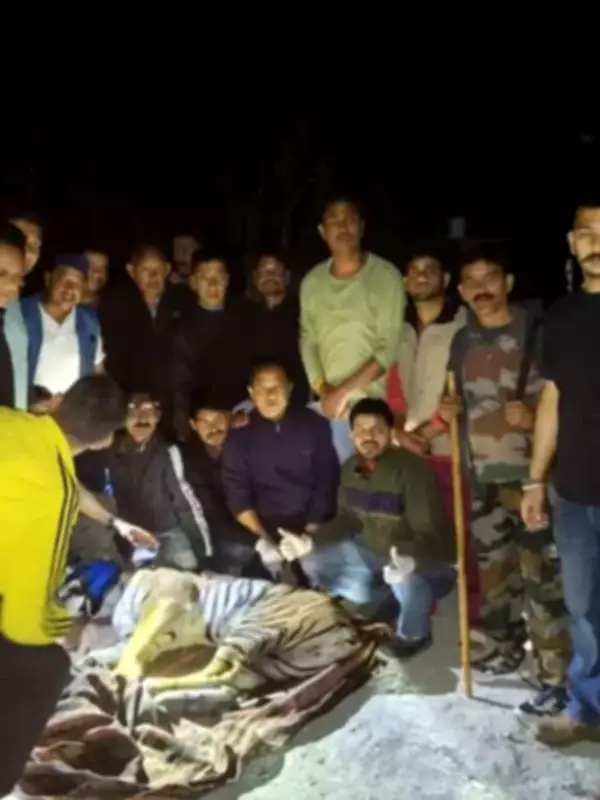
Tigress Suspected in Fatal Mauling Captured by Forest Department in Nainital
In a significant development, forest officials in Nainital have successfully tranquillised and captured a tigress believed to be involved in the fatal attack on a 60-year-old woman. The operation was conducted in Suryagaon village of Bhimtal, just two days after the tragic incident that claimed the life of Hansi Devi.
Operation Details and Immediate Response
The forest department launched a targeted operation in the Suryajala area, where the attack occurred. Acting on a sighting near the attack site on Sunday evening, officials deployed a specialized team that included two experienced veterinarians. After tracking the animal for several hours, the tigress was successfully darted late on Monday evening.
Divisional Forest Officer Akash Gangwar confirmed the capture, stating, "The animal has been captured and shifted to the Ranibagh Rescue Centre for observation." The tigress is now under close monitoring as authorities await crucial forensic evidence.

DNA Analysis to Confirm Responsibility
Officials have emphasized that a comprehensive DNA analysis will determine whether this particular tigress was responsible for the fatal attack. Samples collected from the scene have been sent to a forensic laboratory in Dehradun for detailed examination. This scientific approach aims to establish definitive evidence before any further decisions are made regarding the animal's future.
Rising Human-Wildlife Conflict in Uttarakhand
While the capture has provided temporary relief to local residents, it highlights the persistent and growing problem of human-wildlife conflict in the region. Uttarakhand Kranti Dal leader Narayan Singh Jantwal has pointed out that such incidents have been increasing alarmingly.
The statistics are concerning:
- Between February and April 2026, two elderly women were killed in separate tiger attacks in the June Estate and Suryajala areas of Bhimtal
- More than six fatalities have been reported in Nainital district alone during the first four months of this year
- Multiple incidents have occurred in close proximity, indicating a pattern of conflict
Political Response and Demands for Action
In response to the escalating crisis, the Uttarakhand Kranti Dal has submitted a detailed memorandum to District Magistrate Lalit Mohan Rayal. The document, addressed to the Chief Minister, outlines several critical measures to address the human-wildlife conflict:
- Establishment of a dedicated wildlife disaster management authority
- Implementation of advanced surveillance technologies including drones and thermal imaging
- Installation of solar fencing in vulnerable areas
- Increased compensation for victims' families
- Government employment opportunities for one family member of victims
- Enhanced accountability measures for forest department officials
The memorandum represents a comprehensive approach to what has become a recurring problem in the region, combining immediate relief measures with long-term strategic planning.
Broader Implications and Future Challenges
This incident underscores the complex challenges facing wildlife conservation and human safety in regions where natural habitats intersect with human settlements. The forest department's swift response demonstrates improved operational capabilities, but the underlying issues require sustained attention and innovative solutions.
As the captured tigress undergoes observation and the forensic analysis proceeds, authorities face the difficult task of balancing conservation priorities with community safety. The outcome of this case may set important precedents for how similar situations are handled in the future across Uttarakhand and other regions facing similar challenges.






