

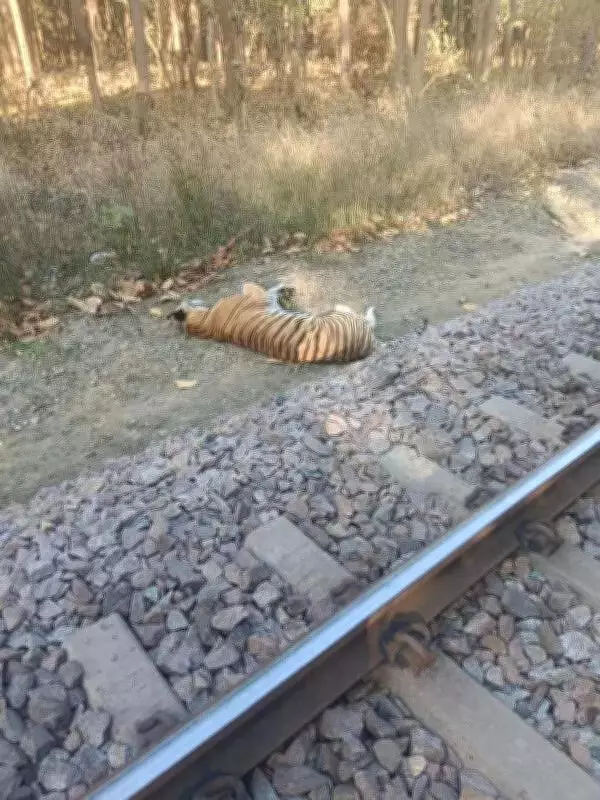
Tigress Death Near Railway Tracks Ignites Conflict Between Forest Authorities and Railways
The discovery of a tigress carcass beside railway tracks in the Dudhwa buffer zone has triggered a heated confrontation between forest department officials and the Northeast Railway's Lucknow division, with both sides offering starkly different explanations for the tragic incident. The body was located near the Bhikhampur Halt on the Mailani-Bankeganj railway section, sparking immediate concerns over wildlife safety in this ecologically sensitive corridor.
Conflicting Claims Over Cause of Death
Forest authorities suspect that the tigress may have been struck by a speeding train, as the carcass was found adjacent to the tracks. However, in an initial probe report, the railways have asserted that no physical evidence of a collision was detected at the site. The carcass was promptly sent for postmortem examination following National Tiger Conservation Authority protocols, with preliminary assessments indicating the incident likely occurred late at night, between 10 pm and 11 pm, approximately 10 to 12 hours before its discovery around 8:50 am on Wednesday.
Railways Deny Collision Evidence

Northeast Railway Lucknow divisional railway manager Gaurav Agarwal highlighted the absence of typical signs of wildlife collisions, such as drag marks, blood stains, or disturbances in the track ballast. He emphasized that none of the trains passing through the route reported any impact with the tigress, and no damage was observed on the locomotives. "All our trains operate under the restricted speed limit in the sensitive Dudhwa Buffer Zone," Agarwal stated, countering allegations of excessive speeds.
Postmortem Findings Suggest High-Velocity Impact
Dudhwa Buffer Zone deputy director Kirti Chaudhary pointed out that preliminary postmortem inputs indicate the incident likely happened during the late-night hours when trains were operational, though the specific train involved remains unidentified. She explained that in high-speed impacts involving large animals, the body can be thrown aside without leaving clear marks on the track, challenging the railways' claim of lacking physical evidence.
Dr. Daya Shankar, a member of the postmortem panel, detailed the extensive internal injuries sustained by the tigress, which are consistent with a powerful collision. "The force of impact displaced vital organs such as the heart and lungs into the abdominal cavity, while the trachea and oesophagus were twisted. Stomach contents were found in the trachea, and severe muscle damage was observed in the neck and facial regions," he reported, underscoring the severity of the trauma.
Ongoing Investigations and Broader Concerns
Chaudhary raised alarms about train speeds in the forest corridor, noting that while the prescribed limit is around 30 km per hour, trains are frequently observed exceeding it. She referenced past wildlife incidents in the same area, including deaths of a nilgai and a bear, highlighting persistent risks. In response, the forest department has deputed an investigation officer to probe the case in coordination with railway authorities.
Further investigation and detailed forensic analysis are deemed crucial for resolving the dispute. Viscera samples have been preserved and sent to the Indian Veterinary Research Institute in Bareilly for advanced forensic testing, while the carcass was cremated as per protocol in the presence of officials and local witnesses. The outcome of these analyses is expected to provide clearer insights into the exact circumstances surrounding the tigress's death.






